
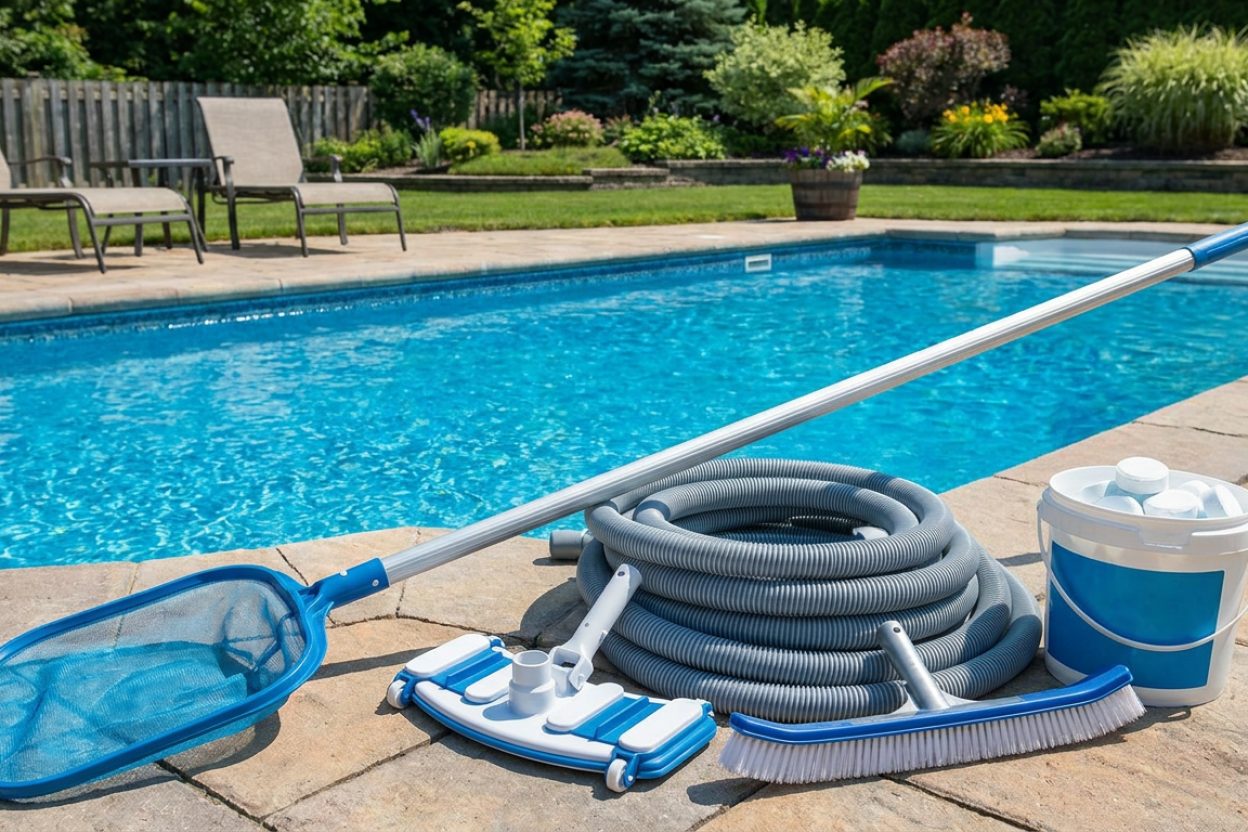
Weekly Pool Maintenance Checklist: Complete Guide
Quick Answer
Weekly pool maintenance involves testing and balancing water chemistry (pH 7.4-7.6, proper chlorine levels), cleaning skimmers and equipment, brushing walls, and vacuuming debris. Consistent weekly care prevents expensive repairs and keeps your pool safe for swimming year-round.
Quick Overview
Weekly pool maintenance is the foundation of keeping your pool clean, safe, and swim-ready year-round. Your weekly routine should include testing and adjusting water chemistry, cleaning equipment, removing debris, and monitoring your filtration system. Consistent weekly care prevents algae growth, equipment damage, and expensive repairs while ensuring your pool remains a healthy environment for swimming.
The key components of weekly maintenance are: water testing and chemical balancing, skimmer and pump basket cleaning, brushing walls and surfaces, vacuuming debris, backwashing filters when needed, and inspecting equipment for issues. Most pool owners can complete these tasks in 30-60 minutes per week.
Complete Weekly Pool Maintenance Checklist
Water Chemistry Testing and Balancing
Water chemistry is the most critical aspect of weekly pool maintenance. Poor water balance leads to algae growth, equipment corrosion, and unsafe swimming conditions. Test your water chemistry at least twice per week, preferably every 2-3 days during heavy use or hot weather.
Essential Tests to Perform Weekly:
- Free Chlorine (FCFree Chlorine — The chlorine actively sanitizing your water right now. This is the number you keep an eye on. how much you need →): Should be the right level for your CYACyanuric Acid (stabilizer) — Sunscreen for your chlorine — it keeps sunlight from burning it off. The catch: the more you have, the more chlorine you need to keep. learn more → (typically 4-8 ppm for a stabilized outdoor pool) for regular pools, with minimum levels based on your CYA level using the FC/CYAFC/CYA chart — The chart that sets your chlorine target from your stabilizer (CYA) level — the two go together. see the chart → chart. For pools with CYA 30-50 ppm, target 4-6 ppm; for pools with CYA 60-80 ppm, target 6-8 ppm.
- pH Level: Maintain between 7.4-7.6 for swimmer comfort and balanced water
- Total Alkalinity (TATotal Alkalinity — The buffer that keeps your pH from bouncing around. Get this in range and pH gets a lot easier to manage. learn more →): Keep at 60-80 ppm for saltwater pools, 80-120 ppm for traditional chlorine pools
- Cyanuric Acid (CYA): Target 30-50 ppm for regular pools, 70-80 ppm for salt water generators
- Calcium Hardness (CH): Maintain 250-350 ppm for plaster pools, 175-225 ppm for vinyl or fiberglass pools
Use a quality test kit like the Taylor K-2006 or TF-100 for accurate readings. Pool test strips are convenient but often inaccurate for precise chemical balancing.
When adjusting pH levels, you'll likely need both pH increasers and decreasers. Most pool owners need pH Up and pH Down chemicals to maintain the ideal pH range throughout the swimming season. If you need to raise pH specifically, add sodium carbonate (soda ash) for quick increases or sodium bicarbonate for gradual adjustments.
For alkalinity adjustments, add sodium bicarbonate (baking soda) to increase pool alkalinity. Always add chemicals with the pump running and allow 4-6 hours for circulation before retesting. Use our all-in-one pool calculator for a handy reference to calculate an estimate of chemicals needed. Alternatively, you can do it by hand, but note that the amount can vary with the product concentration, so the calculator is more reliable.
Chlorine Management and Shocking Schedule
Maintaining proper chlorine levels is essential for sanitization and algae prevention. Many pool owners wonder about shocking frequency - you don't necessarily need to shock your pool weekly as shocking frequency depends on usage, weather conditions, and current chlorine levels.
However, you should shock your pool when:
- Free chlorine drops below minimum levels for your CYA
- After heavy swimmer loads or pool parties
- Following heavy rain or windstorms
- When you notice algae development or cloudy water
- If you detect strong chloramine odors
When shocking is necessary, timing matters for chemical additions. You can shock your pool after adding alkalinity, but wait 4-6 hours first to allow proper circulation. Similarly, you can shock your pool after adding calcium hardness increaser by waiting 2-4 hours for the calcium to dissolve and circulate.
For severe algae problems, you may need consecutive shocking. You can shock your pool two days in a row if your chlorine levels haven't reached proper sanitization levels after the first treatment.
pH affects how much of your chlorine is in its most active (HOCl) form. You can shock a pool with high pH, but a larger share of the chlorine sits as the weaker hypochlorite ion, so it helps to bring pH toward 7.2-7.8 first—though chlorine still works across that range, so it isn't strictly required.
Physical Cleaning Tasks
Skimming and Debris Removal:
Remove floating debris daily, with thorough skimming as part of your weekly routine. Clean skimmer baskets and pump strainer baskets weekly to maintain proper water flow and prevent equipment strain.
Brushing Pool Surfaces:
Brush pool walls, steps, and corners weekly to prevent algae buildup and remove biofilm. Use appropriate brushes for your pool surface - steel brushes for concrete/gunite, nylon for vinyl, fiberglass, or painted surfaces. Pay special attention to areas with poor circulation like steps, corners, and behind ladders.
Vacuuming Requirements:
Most pool owners do need a pool vacuum for thorough cleaning, with the type depending on your pool size, debris load, and budget. Vacuum weekly or as needed based on debris accumulation.
When using chemicals and vacuuming, timing is important. You can vacuum your pool after adding most chemicals, but timing matters. Wait 15-30 minutes for liquid chemicals to circulate before vacuuming to avoid disturbing undissolved chemicals.
Equipment Inspection and Maintenance
Pool Pump Operations:
Check your pump operation weekly for unusual noises, leaks, or performance issues. You don't need to run your pool pump 24/7 - most pools require 8-12 hours of daily operation to achieve proper circulation and filtration.
If you notice pump problems, you need a new pool pump if it's over 8-10 years old, making loud grinding noises, or leaking water from the housing or connections.
Filter System Maintenance:
Understanding your filter system is crucial for effective maintenance. Pool filters work by pumping water through filter media that traps debris, dirt, and contaminants in three main types: sand, cartridge, and diatomaceous earth (DE).
Filter maintenance varies by type:
- Sand Filters: Sand filters last 5-7 years and require backwashing when pressure rises 8-10 psi above clean pressure
- Cartridge Filters: elements last 2-5 years with proper cleaning every 2-4 weeks. You cannot backwash a cartridge filter - they must be physically removed and cleaned
- DE Filters: DE filter grids typically last 5-10 years with proper maintenance, while DE powder needs replacement after each backwash
For sand and DE filters, backwash by turning off the pump, setting the multiport valve to BACKWASH, turning the pump back on until water runs clear, then rinse and return to filter mode.
DE pool filters require regular backwashing, typically every 4-6 weeks or when pressure rises significantly above starting pressure.
Saltwater Pool Specific Maintenance
Saltwater pools require additional weekly attention to the chlorine generator system and specific chemical needs.
Salt Cell Inspection:
Check your salt cell weekly for calcium buildup, debris, or damage. Pool salt cells use electrolysis to convert dissolved salt into chlorine gas and require clean electrodes for proper function.
Saltwater Chemistry Requirements:
Salt water pools still require chemicals for proper water balance, including pH adjusters, stabilizer, and alkalinity control. The salt cell only produces chlorine - all other chemistry must be managed manually.
Critical for saltwater pools: saltwater pools absolutely need cyanuric acid (stabilizer) to protect chlorine generated by the salt cell from UV degradation. Similarly, salt pools absolutely need stabilizer with target levels of 70-80 ppm for optimal chlorine protection.
Seasonal and Weather Considerations
Hot Weather Maintenance
During hot weather, increase testing frequency to every 2-3 days as heat accelerates chemical consumption and evaporation. UV rays break down chlorine faster, requiring higher levels or more frequent additions.
Winter Pool Maintenance
Pool closure and winterization requirements depend on your climate. Whether you need to winterize your pool depends on your climate zone - areas with freezing temperatures require full winterization while warm climates may only need reduced maintenance schedules.
For emergency closures, a properly winterized pool can stay closed for 6-8 months safely, while emergency closures should be limited to prevent equipment damage and water quality issues.
Storm Recovery
After storms, increase your maintenance routine to address debris, diluted chemicals, and potential contamination. Test water chemistry immediately and adjust as needed, paying special attention to chlorine levels that may be depleted from organic debris breakdown.
Troubleshooting Common Weekly Issues
Cloudy Water Problems
Cloudy water is one of the most common pool problems, typically caused by poor filtration, chemical imbalance, or organic contamination. Clear cloudy pool water by testing and balancing chemicals first, then shock with liquid chlorine to achieve proper sanitization levels.
For persistent cloudiness, clear cloudy pool water by first testing chemistry levels, then shocking to proper FC/CYA ratio and running the filter continuously until clarity returns.
Algae Prevention and Treatment
Weekly maintenance should prevent most algae problems through consistent chlorination and circulation. However, if algae appears, address it immediately to prevent spread.
A green pool means the sanitizer has been lost and you cannot see the bottom — the real risks are an invisible submerged swimmer and uncontrolled bacteria, so restore chemistry promptly.
For algae treatment, most pools don't need additional products beyond proper chlorination. Most pools don't need algaecide if you maintain proper chlorine levels (the right level for your CYA) and adequate CYA protection through consistent weekly maintenance.
Severe algae problems may require SLAMShock Level And Maintain — raise free chlorine to a target based on your CYA and hold it there until the algae is gone. It's a process, not a one-time dose. the SLAM walkthrough → (Shock Level And Maintain) treatment, where you maintain chlorine at shock level 24/7 until the pool is completely clear, combined chlorine (CCCombined Chlorine — "Used-up" chlorine left over from doing its job. Above about 0.5 ppm is the classic sign water needs a shock. learn more →) is 0.5 ppm or less, and it passes the overnight chlorine loss test. Use our all-in-one pool calculator to determine the shock level for your CYA.
Chemical Balance Issues
If you're struggling with pH drift, examine your total alkalinity levels. You absolutely need proper alkalinity in your pool water as it acts as a pH buffer preventing rapid pH changes that make weekly maintenance difficult.
For chlorine level problems, ensure you're not over-stabilizing your pool. High CYA levels above 100 ppm over-stabilize the water, where chlorine becomes much less effective unless you raise FC a lot.
Advanced Weekly Maintenance Tips
Phosphate Management
While not always necessary, some pools benefit from phosphate monitoring. Most pools don't need phosphate remover if you maintain proper chlorine levels, but pools with persistent algae issues despite good chemistry may benefit from phosphate testing and treatment.
Equipment Upgrades for Easier Maintenance
Consider equipment upgrades that simplify weekly maintenance:
- Variable Speed Pumps: Variable speed pool pumps use permanent magnet motors and electronic controls to provide more efficient filtration and save money by running at lower, more efficient speeds
- Automatic Cleaners: Reduce manual vacuuming requirements
- Salt Water Systems: Provide consistent chlorine generation
- Digital Controllers: Automate pH and chlorine adjustments
Record Keeping
Maintain a weekly log of chemical readings, weather conditions, and maintenance performed. This helps identify patterns and anticipate problems before they become serious issues.
Safety Considerations
Chemical Safety
- Always add chemicals to water, never water to chemicals
- Store chemicals in cool, dry, well-ventilated areas
- Never mix different chemicals together
- Wear appropriate protective equipment when handling pool chemicals
- Keep chemicals away from children and pets
Equipment Safety
Pool equipment safety is critical during weekly maintenance. Pool heaters are built to withstand moisture and humidity but should be protected from direct rain and flooding.
Pool Safety
Ensure your pool remains safe for swimming throughout your maintenance routine:
- Test water before swimming after chemical additions
- Never swim in cloudy or green water
- Maintain proper sanitizer levels to prevent illness
- Address equipment problems immediately to prevent safety hazards
When to Call a Professional
While most weekly maintenance can be handled by pool owners, certain situations require professional intervention:
- Major Equipment Failures: Pump motor replacement, heater repairs, or electrical issues
- Persistent Water Quality Issues: Problems that don't respond to normal treatment
- Structural Concerns: Fiberglass pools can leak through gel coat cracks, plumbing connections, or structural damage requiring professional assessment
- Complex Chemical Imbalances: Situations requiring specialized testing or treatment
- Safety Concerns: Any situation that could pose health or safety risks
Don't hesitate to consult professionals when you're unsure about proper procedures or when problems exceed your comfort level or expertise.
Cost-Effective Maintenance Strategies
Preventive Approach
Consistent weekly maintenance prevents expensive repairs and replacements. A $50 weekly chemical budget prevents $500+ emergency treatments and equipment damage.
Bulk Chemical Purchasing
Buy chemicals in bulk during off-season for significant savings. Muriatic acid and soda ash have long shelf lives when stored properly, but liquid chlorine does not — it loses potency over weeks to months (faster in heat), so buy it in smaller, fresher amounts.
Energy Efficiency
Optimize pump runtime and use energy-efficient equipment to reduce operational costs while maintaining water quality.
Frequently Asked Questions
How long should I run my pool pump each day?
Most pools require 8-12 hours of daily operation to achieve proper circulation and filtration. Adjust based on bather load, weather, and water clarity.
Can I do weekly maintenance myself?
Yes, most weekly maintenance tasks are suitable for DIY completion. Basic water testing, chemical additions, cleaning, and equipment inspection can be safely performed by pool owners with proper knowledge and safety precautions.
What's the most important weekly maintenance task?
Water chemistry testing and balancing is the most critical weekly task. Proper chemical balance prevents algae growth, equipment damage, and health hazards while making all other maintenance tasks more effective.
How do I know if my filter needs attention?
Monitor pressure gauges on sand and DE filters - backwash when pressure rises 8-10 psi above clean pressure. For cartridge filters, inspect weekly and clean when debris is visible or water flow decreases.
What should I do if I miss a week of maintenance?
Test water chemistry immediately and adjust as needed. Increase cleaning frequency for the next few weeks to catch up on debris removal and equipment maintenance. Consider shocking if chlorine levels are low or water appears cloudy.
Is weekly maintenance enough year-round?
Weekly maintenance frequency may need adjustment based on season, usage, and weather. Hot weather, heavy use, or storms may require more frequent attention, while winter months might allow reduced frequency in some climates.
Related Pool Maintenance Guides
For additional help with specific maintenance topics, explore these comprehensive guides:
- How to Lower Pool Chlorine Levels: 5 Proven Methods - For managing high chlorine situations
- Can Pool Algae Cause a Rash? Health Risks & Prevention - Understanding algae-related health concerns
- Above Ground Pool Installation: Complete Step-by-Step Guide - For new pool owners
- Why Is My Pool Water Cloudy? Diagnosis Guide - Clearing up cloudy water
- Signs Your Pool Pump Isn't Working Properly - Catching pump problems early
Remember, consistent weekly maintenance is an investment in your pool's longevity, safety, and enjoyment. Start with the basics, develop a routine, and don't hesitate to seek professional help when needed.
For the full breakdown of safe chlorine levels by CYA level, see our pool water chemistry guide.
Still need help? Ask a Pool & Spa Expert AD
Get a personalized answer from PoolGuy810 — 30 years owning a pool and spa repair company. Describe your issue and get step-by-step help.
Need More Help?
Try our free pool calculators and tools to help diagnose and fix your pool problems.
Browse Pool ToolsSLAM calculator, pH calculator, salt dosing & more