
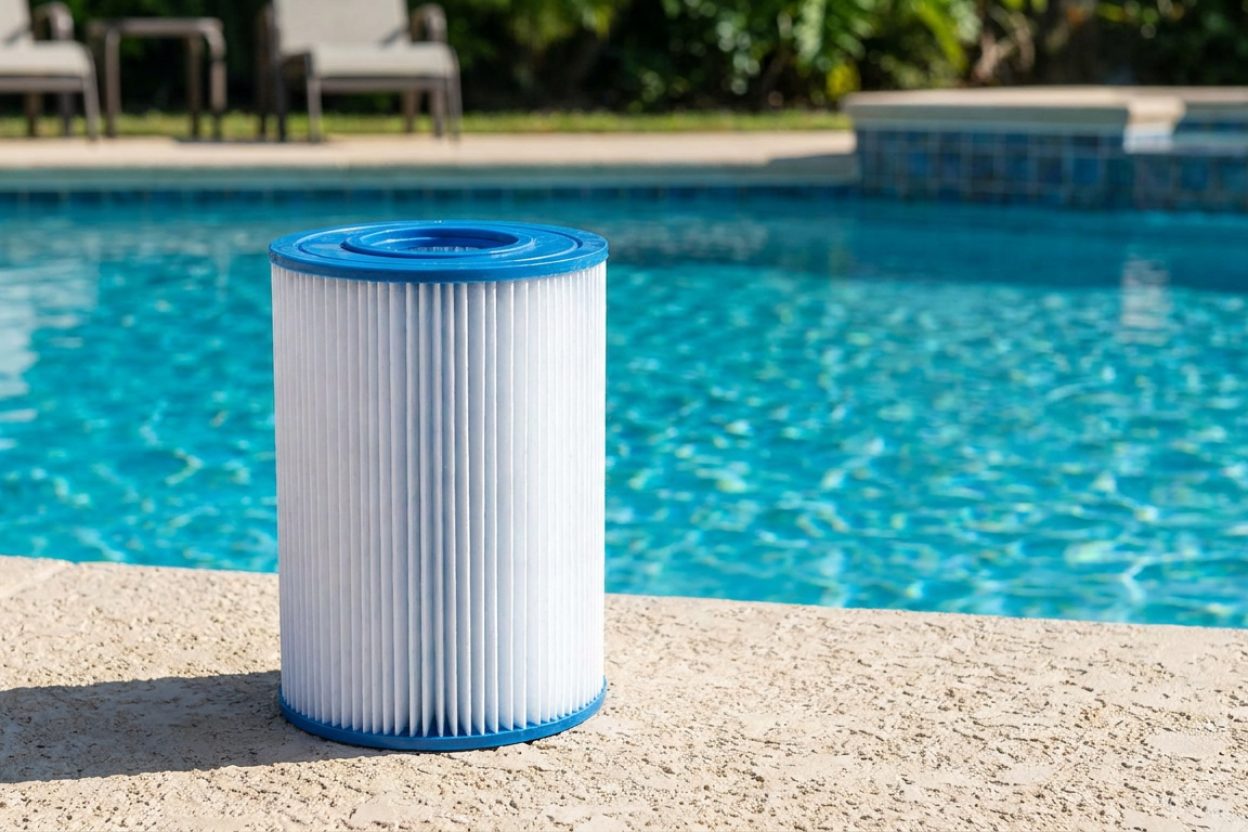
How Pool Filters Work: Sand, Cartridge & DE Filter Guide

What's the real difference between pool filter types?
Read full question
Pool store tried explaining the difference between sand, cartridge, and DE filters for 20 minutes and I walked out more confused than when I went in. My sand filter is dying and I need to pick a replacement but every type seems to have major trade-offs. How do these three actually compare?
Quick Answer
Pool filters work by pumping water through filter media that traps debris, dirt, and contaminants. The three main types are sand filters (use sand to trap particles), cartridge filters (use pleated fabric), and DE filters (use diatomaceous earth powder).
How Pool Filters Work: The Basics
Understanding how your filter actually works can save you hundreds in maintenance costs. Knowing how your specific filter type works helps you maintain it properly and troubleshoot issues when they arise.
All pool filters operate on the same basic principle: your pool pump pulls water from the pool through the skimmer and main drain, pushes it through the filter media where contaminants are trapped, then returns clean water to the pool through the return jets. The key difference lies in what type of filter media is used to capture debris.
Sand Filter Operation
Sand filters are the most common type, using a bed of specially graded silica sand as the filter media. Here's how they work:
- Water Entry: Pool water enters the top of the sand filter tank through the multiport valve
- Filtration Process: Water flows down through 18-24 inches of sand, which traps particles as small as 20-40 microns
- Clean Water Collection: Filtered water collects at the bottom of the tank via laterals with tiny slots
- Return to Pool: Clean water flows back to the pool through the return lines
A slightly dirty sand bed traps somewhat finer particles as debris narrows the pathways, but only up to a point. As debris builds it also increases pressure, requiring regular backwashing when pressure rises 8-10 PSI above the clean starting pressure.
Sand Filter Maintenance
Sand filters require backwashing every 1-2 weeks during swimming season. The sand itself should be replaced every 5-7 years, or sooner if you notice consistently cloudy water despite proper chemical balance. Use only #20 silica sand specifically designed for pool filters.
Cartridge Filter Systems
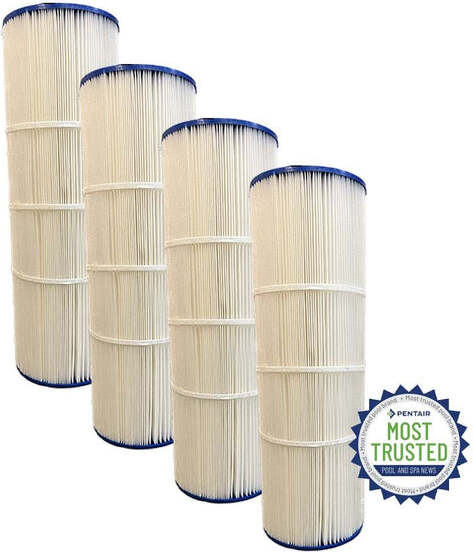
Cartridge filters use pleated polyester fabric or paper elements to trap debris. They're increasingly popular for smaller pools and spas because they're easy to maintain and filter particles down to 10-15 microns.
- Water Flow: Water enters the cartridge housing and flows from outside to inside of the pleated cartridge
- Physical Filtration: The pleated fabric traps particles in its fibers, including oils and some bacteria
- Clean Water Exit: Filtered water exits through the center core and returns to the pool
Cartridge filters don't require backwashing, making them more water-efficient than sand filters. Instead, you remove and rinse the cartridges every 2-4 weeks, depending on bather load and environmental factors.
Cartridge Filter Maintenance
Rotate between two sets of cartridges for best results. When pressure rises 8-10 PSI, remove cartridges and rinse with a garden hose from outside in. Monthly, soak cartridges overnight in a cartridge cleaner solution to remove oils and embedded debris. Replace cartridge elements every 2-5 years, or sooner if the pleated fabric becomes gray, torn, or damaged.
Diatomaceous Earth (DE) Filters
DE filters provide the finest filtration, capturing particles as small as 2-5 microns using diatomaceous earth powder made from fossilized diatoms.
- DE Coating: DE powder coats fabric grids inside the filter tank, creating the actual filter medium
- Ultra-Fine Filtration: Water passes through the DE coating, which traps even microscopic particles
- Grid Collection: Clean water passes through the grids and returns to the pool
DE filters require adding fresh DE powder after each backwash. Use 1 pound of DE per 10 square feet of filter area. Always pre-mix DE in a bucket of water before adding through the skimmer to prevent clogging.
DE Filter Maintenance
Backwash when pressure rises 8-10 PSI above starting pressure, then add fresh DE. Every 3-4 months, disassemble and clean the grids — soak in a filter degreaser/TSP solution first; use a dilute muriatic acid solution (1 part acid to 10 parts water) only to remove mineral scale. Always add acid to water, never water to acid, and wear protective equipment.
Which Filter Should You Choose?
Since you're replacing a dying sand filter, here's the quick trade-off:
- Sand — cheapest and lowest-maintenance (just backwash), but the coarsest filtration (~20-40 microns) and it uses the most water per cleaning. A straightforward like-for-like replacement.
- Cartridge — finer filtration (~10-15 microns) and no backwashing so it saves water, but you periodically pull and hose/soak the elements and replace them every few years. A good middle ground for most pools.
- DE — the finest water (~2-5 microns) but the most hands-on: you recharge DE powder after every backwash and tear it down a few times a year. Best if you want the clearest possible water and don't mind the upkeep.
For most homeowners replacing a sand filter, staying with sand or stepping up to cartridge is the easiest call; choose DE only if water clarity is your top priority.
Optimizing Filter Performance
Regardless of filter type, proper operation requires adequate circulation time. Run your filter system 8-12 hours daily during swimming season.
Maintain proper water chemistry to support filtration effectiveness:
- Free Chlorine: set by your CYACyanuric Acid (stabilizer) — Sunscreen for your chlorine — it keeps sunlight from burning it off. The catch: the more you have, the more chlorine you need to keep. learn more → level (roughly 7.5% of CYA — there is no single universal number) using the all-in-one pool calculator
- pH: 7.4-7.6 for comfort and balanced water
- Total Alkalinity: 80-120 ppm (60-80 for salt water pools)
- Calcium Hardness: 250-350 ppm for plaster pools
Common Filter Problems and Solutions
Poor filtration despite clean filter media often indicates inadequate circulation time, improper water chemistry, or pump issues. Cloudy water that won't clear may require a SLAMShock Level And Maintain — raise free chlorine to a target based on your CYA and hold it there until the algae is gone. It's a process, not a one-time dose. the SLAM walkthrough → (Shock Level And Maintain) process using liquid chlorine, maintaining shock level FCFree Chlorine — The chlorine actively sanitizing your water right now. This is the number you keep an eye on. how much you need → until water clears completely. To estimate the shock level for your CYA, use our all-in-one pool calculator.
Short cycles between cleanings suggest high bather load, inadequate sanitization, or the need for filter media replacement. Consider upgrading to a larger filter or adding a secondary cartridge filter for problem pools.
Remember that filters only remove physical debris - they don't sanitize water. Proper chlorination remains essential for killing bacteria and algae that filters cannot capture.
For the full breakdown of safe chlorine levels by CYA level, see our pool water chemistry guide.
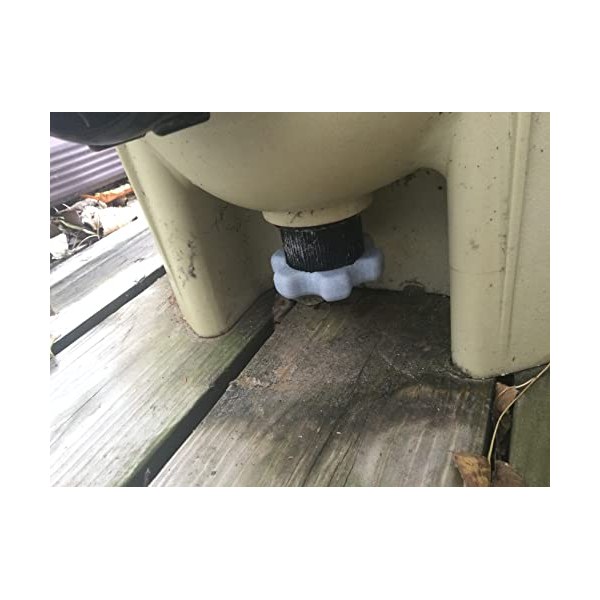 Filter Drain Plug Wrench (Pentair Clean & Clear/FNS)
Grips the drain plug on Pentair Clean & Clear and FNS filters. View on Amazon →
Filter Drain Plug Wrench (Pentair Clean & Clear/FNS)
Grips the drain plug on Pentair Clean & Clear and FNS filters. View on Amazon →
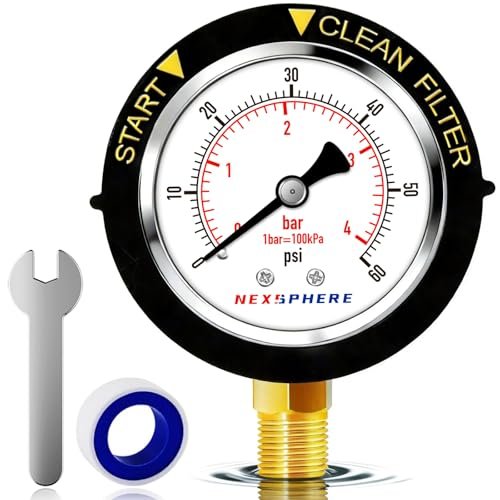 NexSphere Pool Filter Pressure Gauge, 0–60 PSI, 2 in Dial
Replacement back-mount gauge so you can read filter pressure and know when to backwash. View on Amazon →
NexSphere Pool Filter Pressure Gauge, 0–60 PSI, 2 in Dial
Replacement back-mount gauge so you can read filter pressure and know when to backwash. View on Amazon →
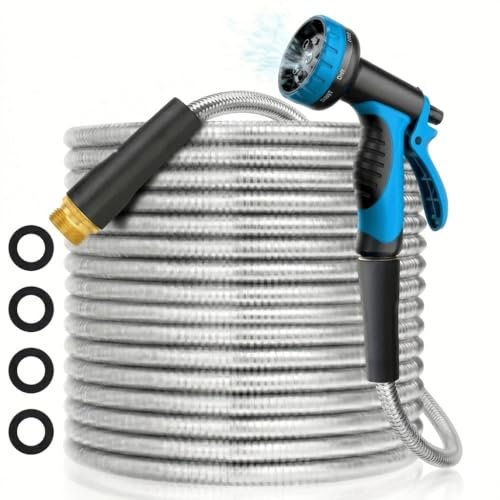 50 ft Flexible Metal Garden Hose (Kink-Free)
Durable hose for filling, priming, and rinsing equipment. View on Amazon →
50 ft Flexible Metal Garden Hose (Kink-Free)
Durable hose for filling, priming, and rinsing equipment. View on Amazon →
Still need help? Ask a Pool & Spa Expert AD
Get a personalized answer from PoolGuy810 — 30 years owning a pool and spa repair company. Describe your issue and get step-by-step help.
Related Pool Guides
Need More Help?
Try our free pool calculators and tools to help diagnose and fix your pool problems.
Browse Pool ToolsSLAM calculator, pH calculator, salt dosing & more