
Filters Filters — Can You Run Pool Filter Without Sand? Safe Alternatives

Can You Run Pool Filter Without Sand? Safe Alternatives

For informational purposes only. AI-assisted; may contain errors. full disclaimer ↓ Questions are representative examples based on common pool-owner searches; names and profiles are illustrative and not real individuals. Always verify chemical instructions against product labels and manufacturer guidance. For complex pool issues, consult a qualified pool professional. Terms.
Eric M.
Eric M.
Pool Service Hobbyist

Sand filter ran out of sand - what are my options for replacement?

Read full question

Before I discovered my sand filter was the culprit, my pool was eating through chlorine way faster than it should even with perfect 2.5 ppm levels and 7.4 pH. When I opened up the filter tank to check, I discovered that most of the sand has somehow disappeared - there's maybe 20% left at the bottom.

I'm waiting for a sand delivery that won't arrive for another week, but my pool is getting cloudier by the day. The filter is currently running with just the remaining sand, but I'm worried about potential equipment damage. Are there any safe alternatives I can use temporarily, or should I just shut down the system until I get proper sand? I've heard about filter glass and zeolite but don't know if they're compatible with my setup.

Quick Answer

Running a sand filter with no media filters almost nothing and returns debris to the pool, though a brief run won't damage the pump. Refill with #20 pool-grade silica sand, or upgrade to filter glass (finer, lasts ~10 years), zeolite (filters fine and absorbs ammonia), or filter balls. Cartridge and DE filters skip sand entirely.

Running a sand filter empty: what actually happens

The sand is the filter — it's the bed that traps dirt as water passes through. With no media, water flows straight through the laterals and back to the pool unfiltered, and the fine debris that should be caught gets returned. Nothing dramatic happens to the pump mechanically (filter media isn't a lubricant), but you've effectively switched your filtration off. Treat an empty tank as "fix it soon," not a way to run.

Before you open the tank: shut off the pump, set the multiport valve to "closed" or "winterize," and release system pressure with the air-relief valve.

Standard refill: pool-grade #20 silica sand

The default media is #20 pool-grade silica sand, which traps particles down to about 20-40 microns. It's cheap, reliable, lasts roughly 5-7 years (often longer), and is what most sand filters are built around. If you just want your filter working again, this is the simplest answer.

Sand alternatives that drop into the same tank

Filter glass

Recycled glass media filters finer than sand — down to about 5-10 microns — and you use roughly 20% less by weight. It resists channeling and can last up to 10 years, which makes it a popular upgrade.

Zeolite (ZeoSand)

A natural mineral media that filters finer than sand and also absorbs ammonia (chloramines), which can help with chlorine smell and water quality. It's lighter, too — roughly 50 pounds of zeolite replaces 100 pounds of sand.

Filter balls

Lightweight polyethylene-fiber spheres, by far the easiest to handle (a small bag replaces a 50-pound bag of sand). They're convenient, but real-world filtration reports are mixed, and owners generally replace them sooner than sand (commonly every 1-3 years). See our filter balls vs. sand guide for the full tradeoffs.

Or skip sand entirely: different filter types

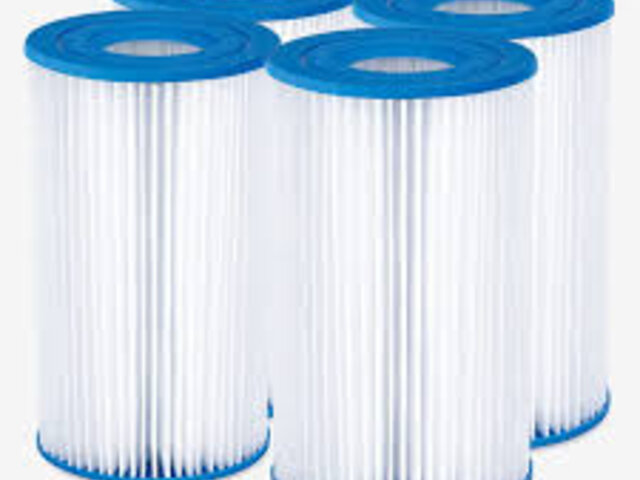
If you're rethinking the whole setup, the two non-sand filter types are cartridge filters (pleated elements, ~10-20 microns, no backwashing) and DE filters (diatomaceous earth, the finest at ~1-5 microns). These aren't drop-in media swaps — they're different equipment — but they're worth knowing if you want finer filtration.

Matching media to your filter

  • Follow your filter's manufacturer guidance for the correct media type and amount.
  • Don't mix media types in one tank.
  • Filter balls aren't backwashed the same way as sand — check the product instructions.
  • Dispose of old media according to local regulations.

For a deeper comparison of media options and when to replace them, see our complete pool filter types guide.

Safety first: follow every product label and your equipment manual, wear protective gear (gloves and eye protection), and call a pro when a job is beyond you. safety details ↓Handling chemicals: never combine concentrated pool chemicals with each other (for example chlorine with acid, or two different chlorine products) — pre-mixing them in a bucket or container can release toxic gas or start a fire. Add each chemical to the pool separately, let it circulate before adding the next, and use a clean, dedicated scoop for each. When a label says to pre-dissolve, add the chemical to water, never water to the chemical.

Still need help? Ask a Pool & Spa Expert AD

Get a personalized answer from PoolGuy810 — 30 years owning a pool and spa repair company. Describe your issue and get step-by-step help.

Chat with a Pool Expert 1,742 pool owners helped · Avg response under 5 min
Was this helpful? | Spotted something wrong? Tell us

Related Pool Guides

Report an issue

Need More Help?

Try our free pool calculators and tools to help diagnose and fix your pool problems.

Browse Pool Tools

SLAM calculator, pH calculator, salt dosing & more

Tags: #sand filter #filter media #pool filtration #sand alternatives