
How Long Do Pool Filters Last? Replacement Guide & Signs

When should I replace my pool filter? Different types?
Read full question
After following my pool filter manual religiously for years, I'm baffled why it says replace every 6 months when mine still looks spotless after twelve. Have cartridge now but considering switching. How long do different filter types actually last before they need replacing? What are the signs it's time for a new one?
Quick Answer
Pool filter lifespan depends on the type: cartridge filters last 2-5 years, sand filters last 5-7 years, and DE filters last 8-10 years. Replace when cleaning becomes ineffective or damage occurs.
First, Let's Diagnose Your Filter Type and Current Condition
Here's what to check first when you notice cloudy water or weak circulation: whether your filter has quietly hit its expiration date without you realizing it. Pool filters don't fail suddenly - they give clear warning signs that it's time for replacement.
Check your pool equipment pad and look for these three main filter types:
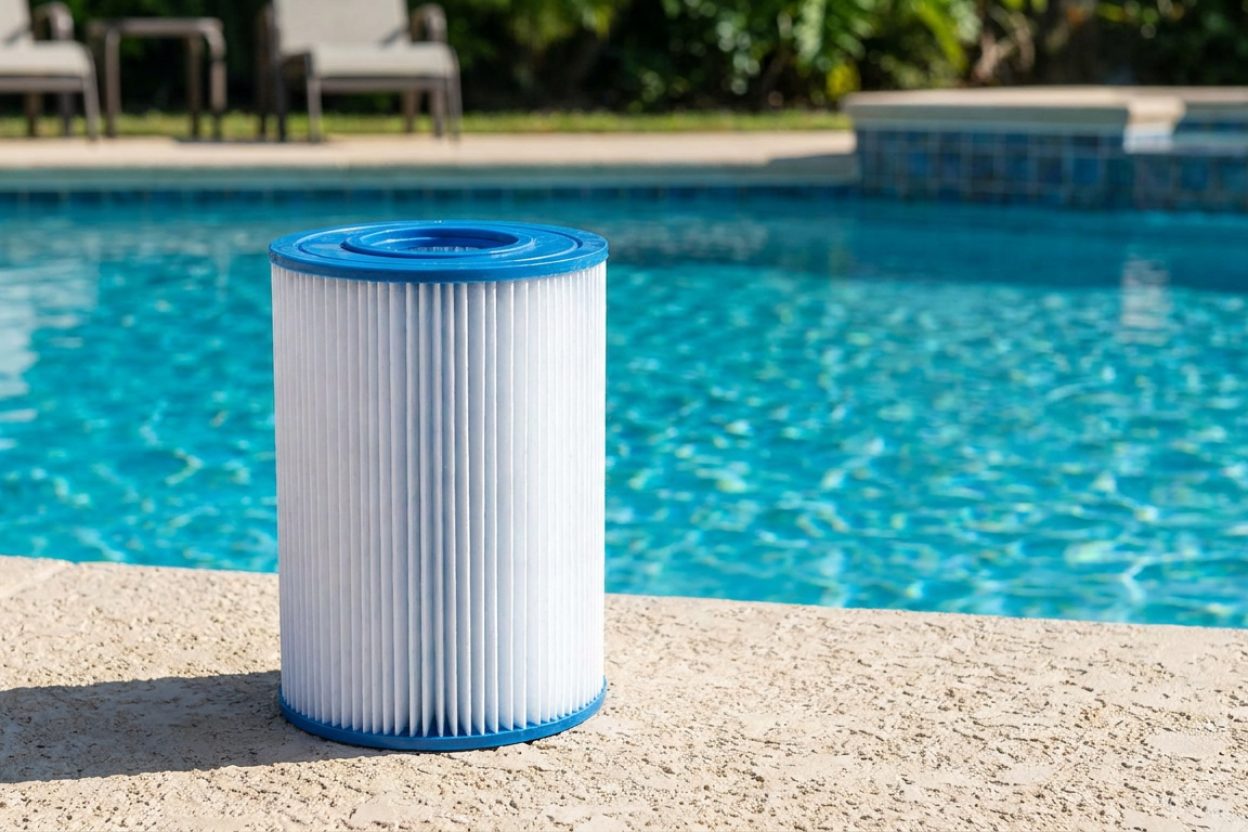
- Cartridge filters: White pleated cylindrical elements inside a tank
- Sand filters: Large round or top-mount tank filled with filter sand
- Diatomaceous Earth (DE) filters: Tank with internal grids coated with DE powder
Filter Lifespan by Type
Cartridge Filters: 2-5 Years
Cartridge filters have the shortest lifespan but are easiest to maintain. A quality cartridge like Unicel or Pleatco typically lasts 2-5 years with proper care. If your manual says "6 months," that's almost always the recommended cleaning interval, not a replacement deadline — a cartridge that still looks clean after a year is fine, so replace based on the wear signs below, not the calendar. Several factors affect this timeline:
- Pool usage: Heavy bather loads reduce lifespan to 8-12 months
- Environmental factors: Pools surrounded by trees or in dusty areas wear out cartridges faster
- Water chemistry: Consistently balanced water (pH 7.4-7.6, proper sanitizer levels) extends cartridge life
- Cleaning frequency: Rotating between 2-3 sets and cleaning weekly (rinse) and monthly (deep clean) maximizes lifespan
Replace cartridge filters when: The pleats remain discolored after cleaning, fabric appears frayed or torn, or cleaning cycles become more frequent than every two weeks.
Sand Filters: 5-7 Years
Sand filters use #20 silica sand as the filtration media. Quality filter sand like Mystic White or AquaQuartz typically lasts 5-7 years before replacement becomes necessary. The sand doesn't wear out - it becomes less effective as the sharp edges that trap particles become rounded.
Warning signs for sand replacement:
- Algae blooms despite proper chlorine levels and pH balance
- Cloudy water that doesn't clear after backwashing
- Shortened time between required backwashing cycles
- Fine debris passing through return jets
- Pressure gauge shows minimal change between clean and dirty cycles
Pro tip: If your sand is 3-4 years old and showing these symptoms, try a sand filter cleaner like Natural Chemistry's Filter Perfect before replacing the sand.
DE Filters: 8-10 Years
DE filters provide the finest filtration but have the longest-lasting filter elements. The internal grids (made by manufacturers like Hayward, Pentair, or Jandy) can last 8-10 years with proper maintenance. The DE powder itself needs regular replacement, but the grids are the long-term component.
Replace DE grids when:
- Fabric tears or separates from the plastic frame
- Grids become permanently stained and won't come clean
- Pressure rises rapidly after cleaning and recharging
- DE powder consumption increases significantly
- Fine particles pass through despite fresh DE coating
Factors That Shorten Filter Life
Poor Water Chemistry
Unbalanced water is the #1 filter killer. Low pH (below 7.2) causes rapid deterioration of filter media, while high pH (above 7.8) leads to scale buildup. Maintain pH between 7.4-7.6 using muriatic acid to lower or sodium bicarbonate to raise.
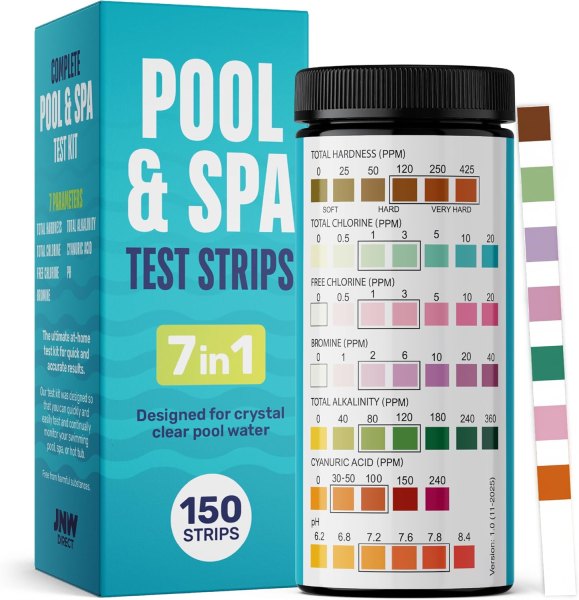
Total alkalinity should be 80-120 ppm for tablet-chlorinated pools, and lower (around 60-80 ppm) for salt-water generator and liquid-chlorine pools to limit pH rise, providing proper pH buffering. Test weekly with a quality kit like the Taylor K-2006.
Inadequate Cleaning Schedule
Each filter type requires specific cleaning protocols:
- Cartridges: Rinse weekly, deep clean monthly with filter cleaner
- Sand: Backwash when pressure rises 8-10 PSI above clean pressure
- DE: Backwash and recharge when pressure rises 8-10 PSI
Oversized Bather Loads
Pool parties and heavy usage introduce oils, lotions, and organic contaminants that clog filters rapidly. After heavy use, shock the pool to roughly 40% of your CYACyanuric Acid (stabilizer) — Sunscreen for your chlorine — it keeps sunlight from burning it off. The catch: the more you have, the more chlorine you need to keep. learn more → (commonly 12-20 ppm) of free chlorine and clean filters immediately.
Extending Filter Life
Maximize your filter investment with these proven strategies:
- Rotate cartridge sets: Use 2-3 sets of cartridges, rotating clean ones in while others dry and are cleaned
- Pre-filter large debris: Skim leaves and debris before they reach the filter
- Maintain proper water balance: Test and adjust chemistry weekly
- Use enzyme products: Monthly treatments with products like Natural Chemistry's Pool Perfect break down oils and organics
- Size filters properly: Oversized filters last longer and clean more effectively
When to Call a Professional
Consider professional service if you experience recurring filtration problems despite new filter media, or if you're unsure about proper sizing for your pool. A pool professional can assess your entire circulation system and recommend upgrades that improve both filtration effectiveness and longevity.
Remember: Investing in quality filter media and maintaining proper water chemistry is usually more cost-effective than frequent replacements of cheap filters or dealing with water quality problems.
For the full breakdown of safe chlorine levels by CYA level, see our pool water chemistry guide.
Still need help? Ask a Pool & Spa Expert AD
Get a personalized answer from PoolGuy810 — 30 years owning a pool and spa repair company. Describe your issue and get step-by-step help.
Related Pool Guides
Need More Help?
Try our free pool calculators and tools to help diagnose and fix your pool problems.
Browse Pool ToolsSLAM calculator, pH calculator, salt dosing & more