
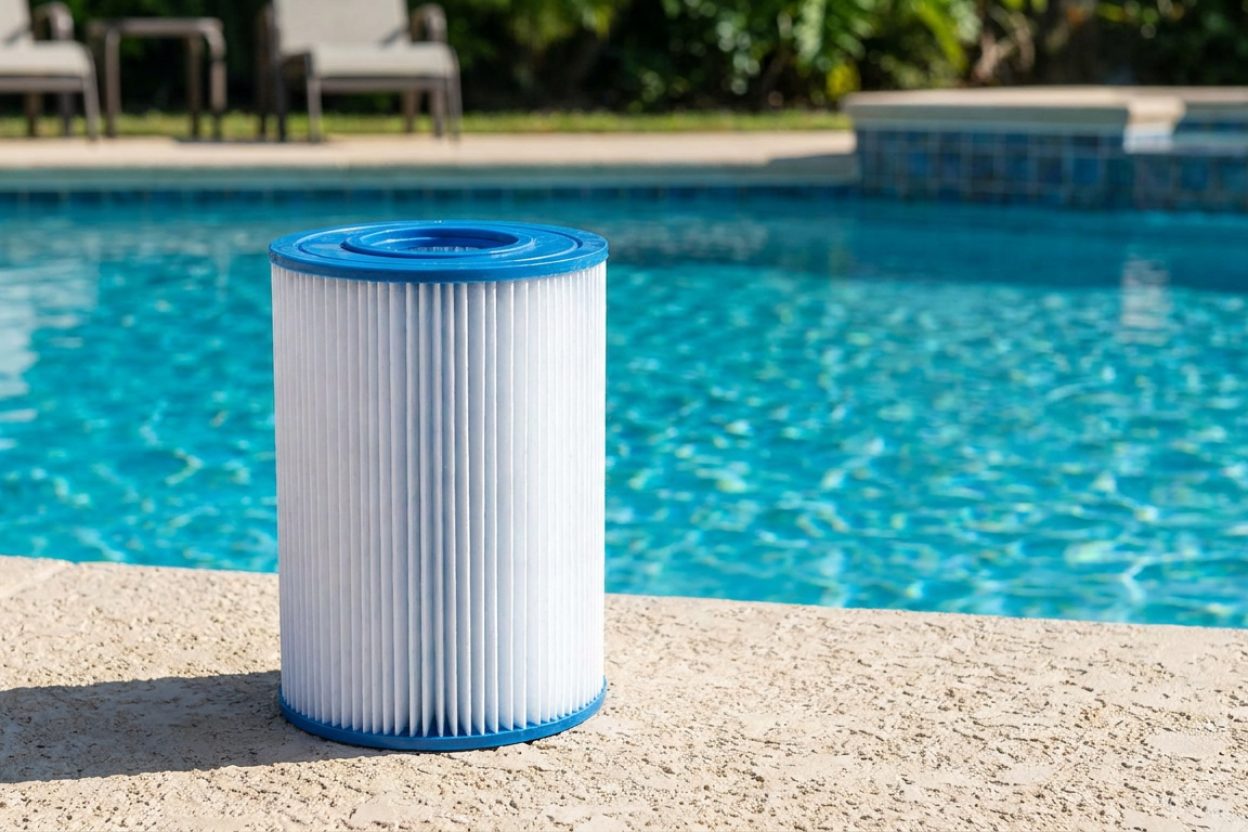
Can You Shock Pool Without Running Filter? Safe Method

New pool owner - can I shock without the filter running?
Read full question
Spent years shocking my old above-ground pool without running the filter and it worked perfectly, but now I'm questioning if it's actually safe for this new setup. I need to shock my pool but I'm wondering if I absolutely have to have the filter system running while I do it? The pool store mentioned something about circulation being important, but they weren't super clear about whether that meant the filter specifically or just water movement in general.
I'm trying to figure out if there's a safe way to shock the pool even if my filter isn't running - maybe by brushing or using the return jets? Any guidance would be really appreciated since I don't want to mess this up!
Quick Answer
You can shock your pool without running the filter system, but you must ensure proper circulation through brushing and the return jets. The filter doesn't need to be running, but water movement is essential for even chemical distribution. Follow the step-by-step process for safe shocking, including testing water chemistry, calculating shock dosage, and maintaining circulation. Monitor and test FC levels and pH closely, and return to normal filtration after maintenance.
When You Can Skip the Filter
There are several legitimate scenarios where you might need to shock without your filter running:
- Filter maintenance periods: When you're cleaning DE grids, replacing cartridges, or backwashing sand filters
- Equipment repairs: During filter housing repairs or valve replacements
- Clogged filter media: When your filter is completely blocked and needs immediate attention
- Emergency shocking: After contamination events where immediate chlorination is critical
Safe Method for Shocking Without Filter
Essential Circulation Requirements
Running the pump (set to recirculate) is the easiest way to circulate water through the return jets. If you have no pump running at all, you can still distribute the shock by adding liquid chlorine slowly around the perimeter and brushing thoroughly and repeatedly — which is how many above-ground owners have long done it. Set your multiport valve to "Recirculate" mode if available. This allows water to flow through the pump and back to the pool without passing through the filter media.
Step-by-Step Process
- Test your water chemistry using a reliable test kit like Taylor K-2006. Record FCFree Chlorine — The chlorine actively sanitizing your water right now. This is the number you keep an eye on. how much you need → (free chlorine), pH, and CYACyanuric Acid (stabilizer) — Sunscreen for your chlorine — it keeps sunlight from burning it off. The catch: the more you have, the more chlorine you need to keep. learn more → (cyanuric acid) levels
For a quick estimate, our all-in-one pool calculator works out how much shock to add from your pool size and current vs. target levels, so you don't have to work through the FC/CYAFC/CYA chart — The chart that sets your chlorine target from your stabilizer (CYA) level — the two go together. see the chart → figures manually.
Calculate proper shock dosage based on your CYA level using the FC/CYA chart. For pools with 30-50 ppm CYA, target 12-20 ppm FC for shock level (12 ppm for 30 ppm CYA, 20 ppm for 50 ppm CYA)- Set pump to recirculate mode or bypass the filter while maintaining water circulation
- Add liquid chlorine slowly around the pool perimeter with pump running. Add enough liquid chlorine to reach shock level for your CYA, using the calculator above to size the amount
- Brush the entire pool thoroughly immediately after adding shock. This is critical without filter circulation
- Run pump for minimum 4-6 hours to ensure complete mixing
- Retest FC levels after 2 hours and again after 6 hours
Critical Safety Considerations
Never stop water circulation completely when shocking. Dead water areas can develop extremely high chlorine concentrations that will bleach vinyl liners, etch plaster, or damage equipment. Always maintain some form of water movement.
For SLAMShock Level And Maintain — raise free chlorine to a target based on your CYA and hold it there until the algae is gone. It's a process, not a one-time dose. the SLAM walkthrough → (Shock Level And Maintain) processes on green or cloudy pools, you need continuous circulation. Don't attempt a full SLAM without proper filtration unless it's a true emergency.
Brushing Is Essential
Without filter circulation, manual brushing becomes your primary mixing method. Brush walls, steps, and floor thoroughly every 2 hours during the shocking process. Pay special attention to corners, behind ladders, and around skimmers where circulation is naturally poor.
When NOT to Shock Without Filtration
- Green pool recovery: Algae blooms require continuous filtration to remove dead organic matter
- High bather load situations: After pool parties or heavy use when contaminant removal is crucial
- Extended periods: Don't run without filtration for more than 24 hours
- Winterization: Never shock a pool before closing without proper filtration
Monitoring and Testing
Test FC levels every 1-2 hours during the shocking process. Without filtration, chlorine demand may be higher as organic contaminants aren't being physically removed. You may need additional chlorine to maintain proper shock levels.
Monitor pH, though liquid chlorine has little net effect on pH once the chlorine is used up (it bumps pH on dosing, then spent chlorine releases acid). Keep pH in the 7.2-7.8 range for comfort and to protect surfaces. Add muriatic acid if pH rises above 7.8.
Getting Back to Normal Operation
Once your filter maintenance is complete, return to normal filtration immediately. Run your clean filter system for at least 24 hours continuously after shocking to remove any remaining contaminants and ensure water clarity.
Retest all chemical levels after resuming filtration, as the improved water circulation may reveal additional chemical needs.
For the full breakdown of safe chlorine levels by CYA level, see our pool water chemistry guide.
 Taylor K-2006C Complete FAS-DPD Pool & Spa Test Kit
The FAS-DPD kit pool pros trust — reads chlorine accurately even at shock/SLAM levels, plus pH, alkalinity, calcium hardness and CYA. View on Amazon →
Taylor K-2006C Complete FAS-DPD Pool & Spa Test Kit
The FAS-DPD kit pool pros trust — reads chlorine accurately even at shock/SLAM levels, plus pH, alkalinity, calcium hardness and CYA. View on Amazon →
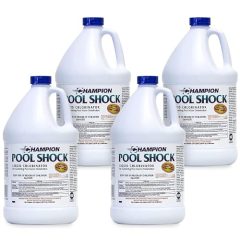 Liquid Chlorine / Sodium Hypochlorite (12.5%)
Everyday sanitizer — the B in BBB View on Amazon →
Liquid Chlorine / Sodium Hypochlorite (12.5%)
Everyday sanitizer — the B in BBB View on Amazon →
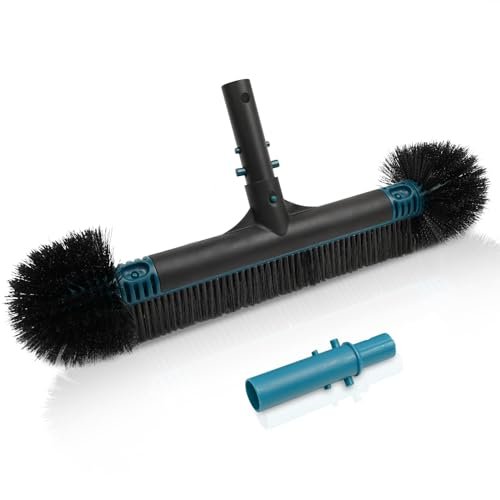 Poolvio 20" 2-in-1 Pool Brush Head (Walls & Floor)
Sturdy 20-inch brush head that clips onto any standard telescopic pole. View on Amazon →
Poolvio 20" 2-in-1 Pool Brush Head (Walls & Floor)
Sturdy 20-inch brush head that clips onto any standard telescopic pole. View on Amazon →
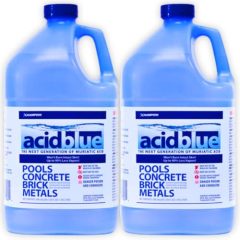 Acid Blue - Low Fume Muriatic Acid for Swimming Pools & Spas - Lower's pH, Reduces Alkalinity - 2 Gallon
View on Amazon →
Acid Blue - Low Fume Muriatic Acid for Swimming Pools & Spas - Lower's pH, Reduces Alkalinity - 2 Gallon
View on Amazon →
Still need help? Ask a Pool & Spa Expert AD
Get a personalized answer from PoolGuy810 — 30 years owning a pool and spa repair company. Describe your issue and get step-by-step help.
Related Pool Guides
Need More Help?
Try our free pool calculators and tools to help diagnose and fix your pool problems.
Browse Pool ToolsSLAM calculator, pH calculator, salt dosing & more