
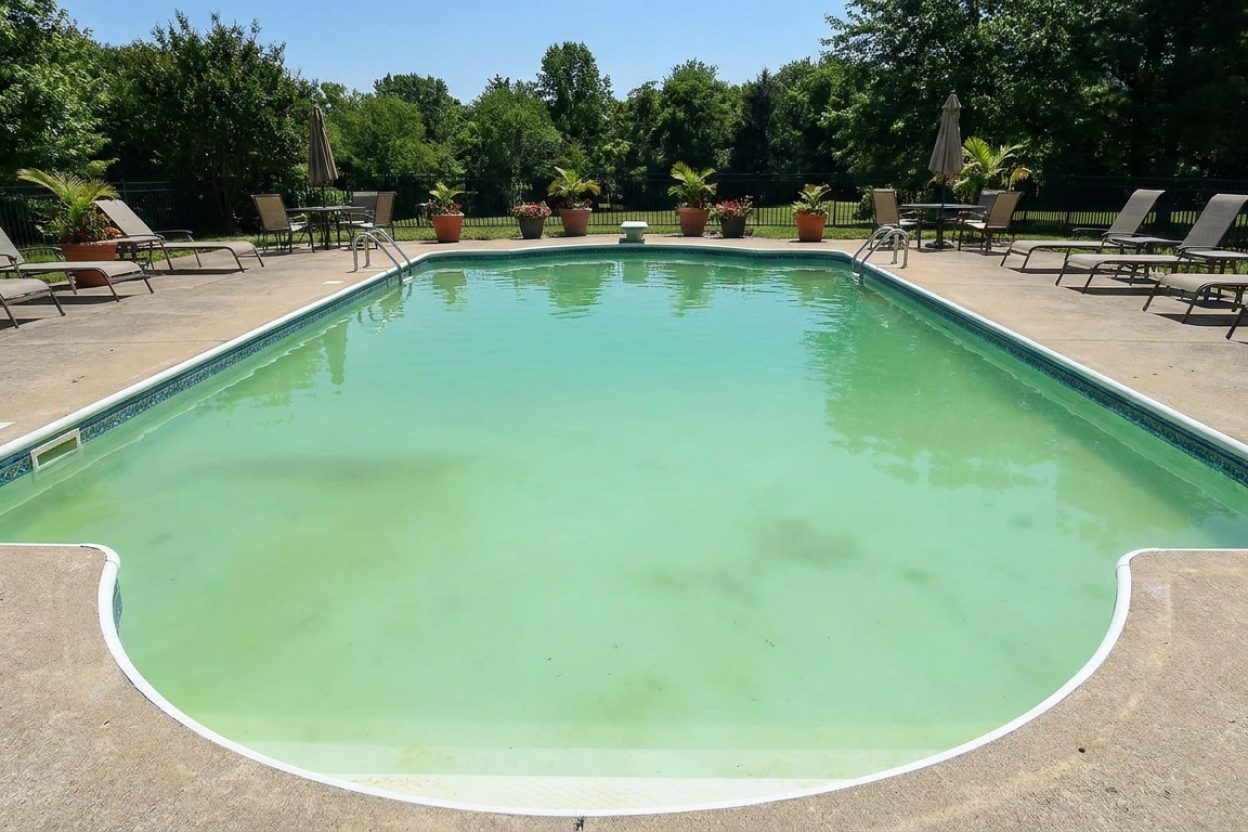
Can Pool Algae Cause a Rash? Health Risks & Prevention

Can algae in my pool actually give me a rash?
Read full question
Around noon yesterday I finished scrubbing down my pool walls but this morning there's green stuff growing back — could this algae be what's causing the rash on my arms? I've been swimming in it a few times and now I'm wondering if that could be causing the skin irritation I've been experiencing. The pool store told me it's algae and that I need to treat it, but I'm curious about the health risks.
Can pool algae actually cause rashes or other skin problems? I'm worried about my family swimming in it, and I want to understand what I'm dealing with before I start dumping chemicals in. Any guidance on how serious this is and what I should do to fix it would be really appreciated!
Quick Answer
Algae itself rarely causes rashes directly; the real risk is that algae signals failed sanitation and harbors bacteria (like Pseudomonas) that cause skin, ear, and other infections. Fix it by eliminating the algae with a proper SLAM and maintaining balanced water chemistry. The key is eliminating algae through proper SLAM treatment and maintaining balanced water chemistry.
Step-by-Step Guide to Understanding Algae-Related Skin Issues
- Identify the connection between algae and skin problems: Algae doesn't directly cause rashes in most cases, but it creates perfect conditions for bacteria like Pseudomonas and E. coli to multiply. These bacteria are the primary culprits behind swimmer's rash, hot tub folliculitis, and other skin irritations. Additionally, algae growth indicates poor water balance, meaning sanitizer levels are inadequate and pH may be off, both of which can irritate sensitive skin.
- Recognize the symptoms of algae-related skin reactions: Look for red, itchy bumps that appear 12-48 hours after swimming, particularly in areas covered by swimwear where bacteria-laden water stays in contact with skin longer. You might also notice general skin dryness, burning sensations during swimming, or small pustules that resemble acne around hair follicles.
- Test your water chemistry immediately: Use a reliable test kit like the Taylor K-2006 to check Free Chlorine (FCFree Chlorine — The chlorine actively sanitizing your water right now. This is the number you keep an eye on. how much you need →), Combined Chlorine (CCCombined Chlorine — "Used-up" chlorine left over from doing its job. Above about 0.5 ppm is the classic sign water needs a shock. learn more →), pH, Total Alkalinity (TATotal Alkalinity — The buffer that keeps your pH from bouncing around. Get this in range and pH gets a lot easier to manage. learn more →), and Cyanuric Acid (CYACyanuric Acid (stabilizer) — Sunscreen for your chlorine — it keeps sunlight from burning it off. The catch: the more you have, the more chlorine you need to keep. learn more →). Algae growth typically occurs when FC drops below the minimum level for your CYA reading according to the FC/CYAFC/CYA chart — The chart that sets your chlorine target from your stabilizer (CYA) level — the two go together. see the chart → chart. For example, with 50 ppm CYA, you need at least 4 ppm FC (the minimum for CYA 50) to prevent algae.
- Stop swimming until the problem is resolved: Never swim in algae-contaminated water. The health risks extend beyond skin rashes to include ear infections, gastrointestinal issues, and respiratory problems. Close the pool to all swimmers immediately upon discovering algae growth.
- Begin SLAMShock Level And Maintain — raise free chlorine to a target based on your CYA and hold it there until the algae is gone. It's a process, not a one-time dose. the SLAM walkthrough → (Shock Level And Maintain) treatment: Use our all-in-one pool calculator for a handy reference to calculate your shock level based on your CYA reading. Typically, you'll need to maintain FC at the shock level for your CYA. For 50 ppm CYA, maintain FC at 20 ppm throughout the treatment. Add liquid chlorine (sodium hypochlorite) rather than calcium hypochlorite to avoid adding calcium hardness. Our all-in-one pool calculator estimates how much you'll need to reach shock level for your CYA.
- Maintain shock level continuously: Test FC levels every few hours and add more liquid chlorine as needed to maintain shock level. The algae and bacteria consume chlorine rapidly, so you'll need to add chlorine multiple times daily initially. Continue this process until you can maintain shock level overnight without significant chlorine loss.
- Brush and vacuum aggressively: Brush all pool surfaces twice daily with a nylon brush for vinyl/fiberglass pools or stainless steel brush for plaster pools. Vacuum to waste (not through the filter) to remove dead algae and bacteria. (This needs a sand or DE filter with a multiport "waste" valve — cartridge filters have no waste setting, so with a cartridge you vacuum through the filter and then clean or replace it, or run a separate utility/manual pump that sends the water out of the pool.) This physical removal is crucial because dead algae can harbor bacteria even after chemical treatment.
- Clean and backwash your filtration system: Backwash sand or DE filters daily during SLAM treatment. Clean cartridge filters every 1-2 days or have spare sets to rotate. Consider a dedicated filter cleaner or a diluted muriatic acid soak to remove algae buildup that regular rinsing won't eliminate.
- Balance remaining water chemistry: Once algae is eliminated, adjust pH to 7.4-7.6 using muriatic acid or sodium carbonate. Maintain TA between 60-80 ppm for salt water pools or 80-120 ppm for traditional chlorine pools. Ensure calcium hardness stays between 250-350 ppm for plaster pools or 175-225 ppm for vinyl/fiberglass.
- Verify complete elimination before reopening: The pool is safe to swim when you can maintain shock level overnight with less than 1 ppm chlorine loss, you can clearly see the bottom and main drain, and CC reads 0.5 ppm or lower. This process typically takes 3-7 days depending on algae severity.
Preventing Future Algae and Skin Problems
Consistent water maintenance prevents both algae growth and associated skin issues. Test water 2-3 times weekly using a quality test kit, maintaining FC levels according to the FC/CYA chart. Keep CYA between 30-50 ppm for traditional pools or 70-80 ppm for salt water generators. Run your pump long enough to turn over the entire pool volume daily - typically 8-12 hours depending on bather load and weather conditions.
When to Seek Medical Attention
See a healthcare provider if skin reactions persist beyond a week, show signs of infection (increased redness, warmth, pus), or if you develop fever or systemic symptoms. Some individuals are more sensitive to pool chemicals and bacteria, requiring prescription treatments for severe reactions.
Remember that preventing algae growth is always easier and safer than treating an established bloom. Regular testing, proper chemical balance, and adequate circulation eliminate the conditions that cause both algae problems and the skin irritations that follow.
For the full breakdown of safe chlorine levels by CYA level, see our pool water chemistry guide.
 Taylor K-2006C Complete FAS-DPD Pool & Spa Test Kit
The FAS-DPD kit pool pros trust — reads chlorine accurately even at shock/SLAM levels, plus pH, alkalinity, calcium hardness and CYA. View on Amazon →
Taylor K-2006C Complete FAS-DPD Pool & Spa Test Kit
The FAS-DPD kit pool pros trust — reads chlorine accurately even at shock/SLAM levels, plus pH, alkalinity, calcium hardness and CYA. View on Amazon →
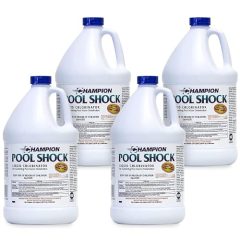 Liquid Chlorine / Sodium Hypochlorite (12.5%)
Everyday sanitizer — the B in BBB View on Amazon →
Liquid Chlorine / Sodium Hypochlorite (12.5%)
Everyday sanitizer — the B in BBB View on Amazon →
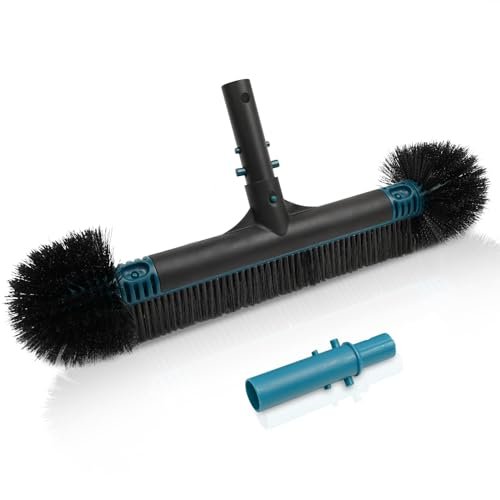 Poolvio 20" 2-in-1 Pool Brush Head (Walls & Floor)
Sturdy 20-inch brush head that clips onto any standard telescopic pole. View on Amazon →
Poolvio 20" 2-in-1 Pool Brush Head (Walls & Floor)
Sturdy 20-inch brush head that clips onto any standard telescopic pole. View on Amazon →
 Acid Blue - Low Fume Muriatic Acid for Swimming Pools & Spas - Lower's pH, Reduces Alkalinity - 2 Gallon
View on Amazon →
Acid Blue - Low Fume Muriatic Acid for Swimming Pools & Spas - Lower's pH, Reduces Alkalinity - 2 Gallon
View on Amazon →
Still need help? Ask a Pool & Spa Expert AD
Get a personalized answer from PoolGuy810 — 30 years owning a pool and spa repair company. Describe your issue and get step-by-step help.
Related Pool Guides
Need More Help?
Try our free pool calculators and tools to help diagnose and fix your pool problems.
Browse Pool ToolsSLAM calculator, pH calculator, salt dosing & more