
How Long After Shocking Pool to Add Algaecide? Complete Guide

Safe to add algaecide after shocking? When can kids swim again?
Read full question
The pool service guy insists I wait a full 24 hours after shocking before adding algaecide, but that seems excessive when algae keeps spreading. I have two young kids who are eager to get back in the water, and I want to make sure I'm doing this chemical treatment properly.
Should I wait a certain amount of time between the shock treatment and adding the algaecide? I'm also concerned about when the water will be safe for swimming again. What chlorine levels should I be looking for before adding more chemicals, and how do I know when everything is balanced enough for the kids to swim safely?
Quick Answer
Wait at least 24-48 hours (longer with heavy algae) after shocking before adding algaecide, letting free chlorine come back down to your normal range first (high chlorine breaks down algaecide; follow the product label). The kids can swim once free chlorine is under 10 ppm, the water is clear to the bottom, and pH and alkalinity are balanced.
First, Let's Diagnose Your Situation
Before determining the exact timing for algaecide addition, we need to assess your pool's current condition and understand why timing matters so much.
Why Timing Between Shock and Algaecide Matters
High chlorine levels from shocking can reduce the effectiveness of some algaecides. Quaternary ammonium (quat) algaecides in particular get oxidized and tend to foam at shock-level chlorine (the 10-30 ppm typical right after shocking). Polyquat (polyquaternium) products are more chlorine-tolerant — many labels say they're compatible with superchlorination — but it's still wasteful to add any algaecide during an active SLAMShock Level And Maintain — raise free chlorine to a target based on your CYA and hold it there until the algae is gone. It's a process, not a one-time dose. the SLAM walkthrough →, so add it once FCFree Chlorine — The chlorine actively sanitizing your water right now. This is the number you keep an eye on. how much you need → settles back to the normal range for your CYACyanuric Acid (stabilizer) — Sunscreen for your chlorine — it keeps sunlight from burning it off. The catch: the more you have, the more chlorine you need to keep. learn more → rather than at shock level. (Chelated copper algaecides are more chlorine-stable and aren't simply burned off by shock; their real downsides are staining and metal buildup if overused — and you still shouldn't add copper at shock-level chlorine, which can promote staining.) Product labels vary, so follow your manufacturer's instructions. Per the CDC pool code (Model Aquatic Health Code), free chlorine should not exceed 10 ppm while anyone is in the water, so wait until it is below 10 ppm to swim. The same code also calls for the water to be clear enough to see the bottom and pH held at 7.2-7.8.
Current Pool Condition Assessment
Test your water using a reliable test kit like the Taylor K-2006C to determine:
- Free Chlorine (FC): back in your normal range for your CYA (not shock level) before adding algaecide
- Combined Chlorine (CCCombined Chlorine — "Used-up" chlorine left over from doing its job. Above about 0.5 ppm is the classic sign water needs a shock. learn more →): Should be less than 0.5 ppm
- pH Level: Keep it in the normal 7.2-7.8 range (there is no special pH that algaecide specifically needs)
- Cyanuric Acid (CYA): Affects how long chlorine remains active
Step-by-Step Timing Solutions
Scenario 1: Light Algae Problem (Green Tint, Still See Bottom)
- Day 1: Shock to the proper shock level for your CYA (about 40% of your CYA) using liquid chlorine — not a flat number, since the right level depends on your stabilizer
- Day 2: Test water - once FC is back in your normal range for your CYA, add algaecide (per its label)
- Timing: Usually 24-36 hours after shocking
- Algaecide dose: Follow the product label — for a light algae case the dose is on the low end (for polyquat, roughly a few oz up to about 16 oz per 10,000 gallons depending on the product)
Scenario 2: Moderate to Heavy Algae (Can't See Bottom)
- Day 1: Begin the SLAM process - raise FC to the shock level for your CYA (about 40% of CYA); our all-in-one pool calculator estimates the level
- Day 2-3: Maintain shock level, brush vigorously, run pump 24/7
- Day 3-4: Once FC holds overnight (overnight loss under 1 ppm) and the water clears, let FC come back down to your normal range for your CYA
- Day 4-5: If you use algaecide, add it once FC is back in your normal range for your CYA (shock-level chlorine wastes it). Follow the product label — if the manufacturer's guidance differs from this, go with the manufacturer. Note: per Trouble Free Pool, algaecide is optional if you keep FC proper for your CYA
- Timing: Usually 48-72 hours after initial shock
Scenario 3: Preventative Treatment
- Maintain proper FC for your CYA
- If you choose to use algaecide, add it per the label (often weekly); it is optional if FC is kept proper for your CYA
- If you've recently shocked for maintenance, wait 24 hours minimum
Factors Affecting Timing
Water Temperature Impact
Higher water temperatures (above 85°F) cause chlorine to dissipate faster, potentially reducing your wait time to 18-24 hours. In cooler water (below 70°F), chlorine remains active longer, extending wait time to 48-72 hours.
Cyanuric Acid Levels
Pools with CYA levels of 30-50 ppm will maintain chlorine longer, requiring extended wait times. Pools with low or no CYA will see rapid chlorine dissipation, allowing earlier algaecide application.
Pool Size and Circulation
Larger pools with good circulation will achieve more even chemical distribution. Ensure your pump runs continuously during this period to prevent chemical stratification.
Testing and Monitoring Protocol
Essential Testing Schedule
- Immediately after shocking: Confirm FC levels reached target
- 12 hours later: Check FC reduction rate
- 24 hours later: Test FC, pH, and CC levels
- Before algaecide addition: confirm FC is back in your normal range for your CYA
Warning Signs to Wait Longer
- FC still well above your normal range after 48 hours
- Strong chlorine odor indicating high CC levels
- pH above 7.8 or below 7.2
- Water still cloudy from shock treatment
Safety Warnings and Best Practices
When handling liquid chlorine for shocking: Wear protective eyewear, gloves, and ensure adequate ventilation. Never mix chemicals directly. Always add chemicals to water, not water to chemicals.
Most algaecides are pre-diluted liquids you pour straight into the pool — broadcast it around the perimeter with the pump running rather than mixing it in a bucket (the "add chemical to water" rule is for concentrated dry/acidic products like shock and acid, not liquid algaecide). Apply algaecide in the evening so it distributes evenly overnight without competing with the daytime chlorine demand.
Avoid swimming for at least 4-6 hours after algaecide addition, or follow manufacturer's specific guidelines. Some algaecides may cause temporary foaming - this is normal and will dissipate.
Common Timing Mistakes
The biggest mistake pool owners make is rushing the process. Adding algaecide too soon wastes money and reduces effectiveness. Conversely, waiting too long after clearing algae may allow regrowth before the algaecide establishes protection.
Another common error is not accounting for pool-specific factors like CYA levels, temperature, and circulation. A one-size-fits-all approach doesn't work - always test and adjust timing based on your actual water chemistry readings.
For the full breakdown of safe chlorine levels by CYA level, see our pool water chemistry guide or use the all-in-one pool calculator for an estimate of the free chlorine for your CYA.
 Taylor K-2006C Complete FAS-DPD Pool & Spa Test Kit
The FAS-DPD kit pool pros trust — reads chlorine accurately even at shock/SLAM levels, plus pH, alkalinity, calcium hardness and CYA. View on Amazon →
Taylor K-2006C Complete FAS-DPD Pool & Spa Test Kit
The FAS-DPD kit pool pros trust — reads chlorine accurately even at shock/SLAM levels, plus pH, alkalinity, calcium hardness and CYA. View on Amazon →
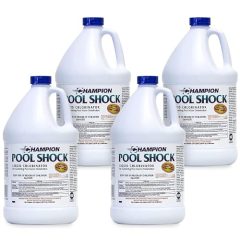 Liquid Chlorine / Sodium Hypochlorite (12.5%)
Everyday sanitizer — the B in BBB View on Amazon →
Liquid Chlorine / Sodium Hypochlorite (12.5%)
Everyday sanitizer — the B in BBB View on Amazon →
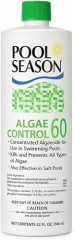 PolyQuat 60 Algaecide (Non-Foaming)
Non-foaming, copper-free backup View on Amazon →
PolyQuat 60 Algaecide (Non-Foaming)
Non-foaming, copper-free backup View on Amazon →
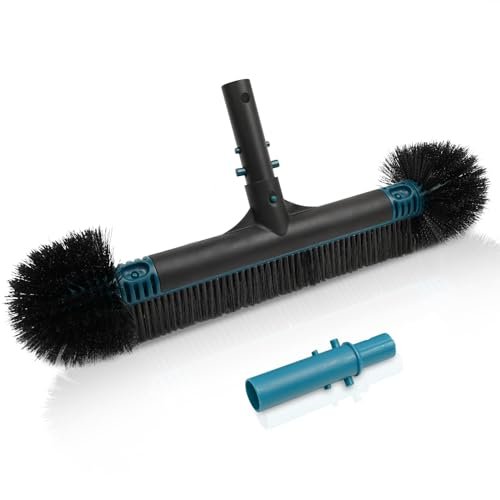 Poolvio 20" 2-in-1 Pool Brush Head (Walls & Floor)
Sturdy 20-inch brush head that clips onto any standard telescopic pole. View on Amazon →
Poolvio 20" 2-in-1 Pool Brush Head (Walls & Floor)
Sturdy 20-inch brush head that clips onto any standard telescopic pole. View on Amazon →
Still need help? Ask a Pool & Spa Expert AD
Get a personalized answer from PoolGuy810 — 30 years owning a pool and spa repair company. Describe your issue and get step-by-step help.
Related Pool Guides
Need More Help?
Try our free pool calculators and tools to help diagnose and fix your pool problems.
Browse Pool ToolsSLAM calculator, pH calculator, salt dosing & more