
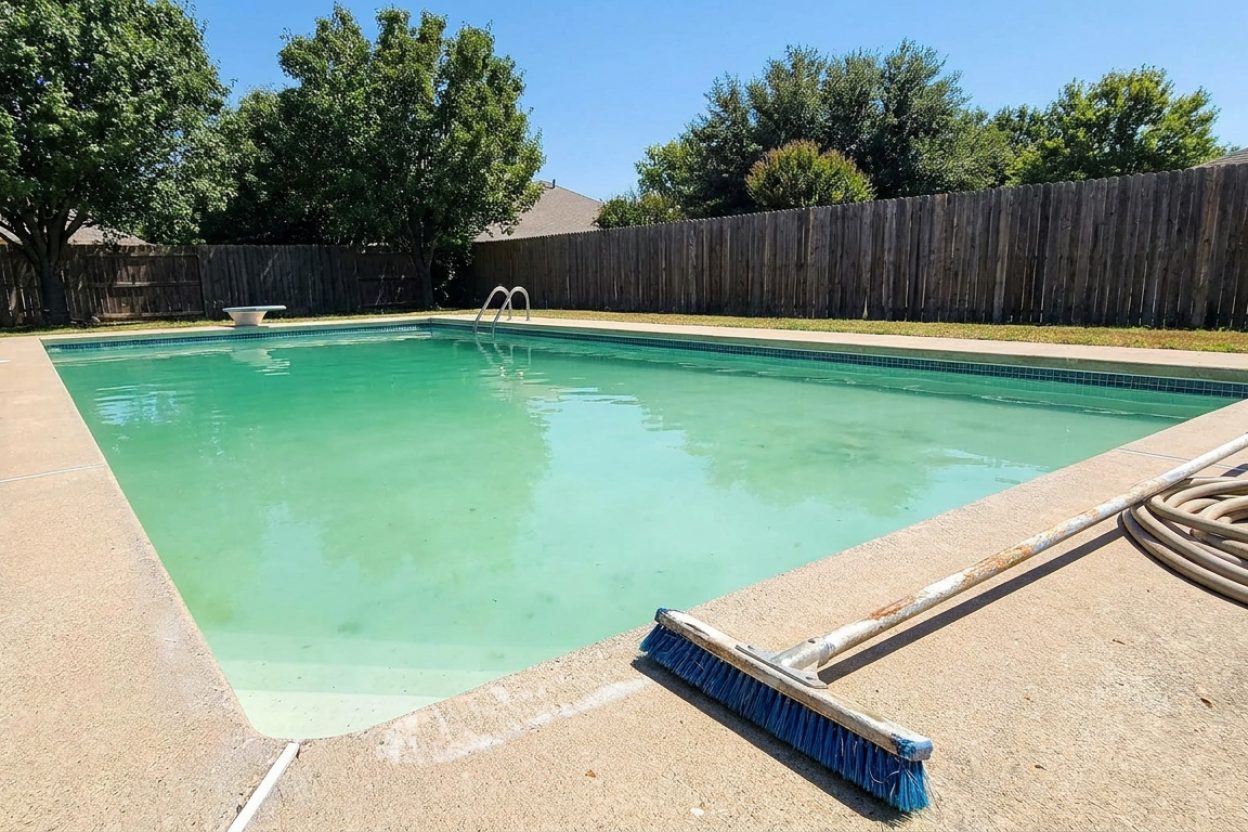
Can I Shock Pool After Adding Algaecide? Complete Guide

What's the right order - algaecide first or shock first?
Read full question
Spent all morning watching my pool turn green with algae patches and now I'm holding bottles of algaecide and shock with no clue which to use first. But I'm not sure about the timing - can I add both in the same day? Should I put the algaecide in first, or does it matter?
Also, if I can use both, how long should I wait between adding them? Don't want to mess up my water chemistry or waste expensive chemicals by doing this wrong!
Quick Answer
Yes, but usually not in that order: shock-level chlorine breaks down algaecide, so adding algaecide first and shocking soon after wastes it. For active algae, chlorine alone at shock level (the SLAM process) clears the bloom with no algaecide needed; if you want algaecide, add it afterward once free chlorine returns to normal. Balance water first, use the all-in-one calculator for the chlorine dose, and hold shock level until the pool passes the overnight chlorine loss test.
Understanding Chemical Compatibility
Algaecides and shock treatments work through different mechanisms. Most algaecides are quaternary ammonium compounds (quats/polyquat) or copper-based formulations that disrupt algae cell walls or metabolic processes. Shock treatments — calcium hypochlorite, sodium hypochlorite, or potassium monopersulfate — work through oxidation.
The issue isn’t a dangerous reaction; it’s wasted product. High oxidizer (chlorine) levels break down quat and polyquat algaecides before they can do anything (copper algaecides aren't oxidized away, but adding them at shock level risks staining), so adding algaecide right before you shock throws money away. That’s why the order matters: clear the algae with chlorine first, then use algaecide later only if you want ongoing prevention.
Proper Application Sequence
Step 1: Test and Balance Water Chemistry
Before adding any chemicals, test your water using a quality test kit like the Taylor K-2006C. Your pH should be between 7.4-7.6. If pH is above 7.6, lower it with muriatic acid before proceeding. Total alkalinity should be 80-120 ppm; on salt-water-generator pools, aim for the lower end (around 70-80 ppm) to reduce pH rise.
Step 2: Calculate Your Shock Dosage
For a quick estimate, our all-in-one pool calculator works out how much chlorine to add based on your pool size and current vs. target levels — always re-test afterward and follow the product label.
Shock level depends on your cyanuric acid (CYACyanuric Acid (stabilizer) — Sunscreen for your chlorine — it keeps sunlight from burning it off. The catch: the more you have, the more chlorine you need to keep. learn more →) level. With 30 ppm CYA, shock level is 12 ppm FCFree Chlorine — The chlorine actively sanitizing your water right now. This is the number you keep an eye on. how much you need →; with 50 ppm CYA, it’s 20 ppm FC. Use liquid chlorine (sodium hypochlorite) — it adds only chlorine, which keeps things simple when calcium and CYA are already in range (cal-hypo and dichlor are fine when those are low).
Step 3: Shock First and Maintain (SLAM)
Add liquid chlorine around the pool perimeter with the pump running. For severe algae you may need 2-4 gallons initially. Add it in the evening to prevent UV degradation. Hold FC at shock level — re-dosing as it drops — until the water clears and the pool passes the overnight chlorine loss test. Chlorine alone clears the bloom; no algaecide is needed for this part.
Step 4: Add Algaecide Afterward (Optional)
Once the bloom is gone and your free chlorine has dropped back to its normal range (roughly 7.5% of your CYA), you can add an algaecide as a preventative if you like — at the manufacturer's recommended maintenance dose, poured around the perimeter with the pump running. Adding it while chlorine is still elevated just degrades it, so wait for FC to come down first. Many well-maintained pools skip algaecide entirely.
Special Considerations for Different Pool Types
Vinyl and Fiberglass Pools
These surfaces are more sensitive to chemical staining. With copper-based algaecides, be especially careful not to overdose, as copper can cause staining. Consider quat-based algaecides instead, and always brush thoroughly after application to prevent localized chemical concentration.
Plaster and Concrete Pools
These surfaces handle stronger treatments but are more prone to scaling if pH gets too high. Keep calcium hardness between 250-350 ppm. High chlorine combined with high pH can cause calcium scaling.
Monitoring and Maintenance
During a SLAMShock Level And Maintain — raise free chlorine to a target based on your CYA and hold it there until the algae is gone. It's a process, not a one-time dose. the SLAM walkthrough →, test your water every few hours and re-dose to hold shock level; check progress at least daily. Maintain shock level until your pool passes the overnight chlorine loss test (OCLT) — FC drops no more than 1 ppm overnight and combined chlorine (CCCombined Chlorine — "Used-up" chlorine left over from doing its job. Above about 0.5 ppm is the classic sign water needs a shock. learn more →) falls to 0.5 ppm or less — and the water is clear. This typically takes 1-3 days for moderate algae or up to a week for severe infestations.
Run your pump 24/7 during treatment and brush the pool daily to break up algae colonies. Dead algae turn white or gray and should be vacuumed to waste, not through your filter, to prevent clogging. (This needs a sand or DE filter with a multiport "waste" valve — cartridge filters have no waste setting, so with a cartridge you vacuum through the filter and then clean or replace it, or run a separate utility/manual pump that sends the water out of the pool.)
Safety Precautions
Never mix chemicals directly together or add them simultaneously to the same area of the pool. Always add chemicals to different areas with adequate spacing and time between applications. Store chemicals in a cool, dry place away from direct sunlight and moisture. Wear goggles and gloves when handling pool chemicals.
Per the CDC, avoid swimming until free chlorine drops below 10 ppm and the water is clear. High chlorine can cause skin and eye irritation.
Why Chlorine-First Works Best
For green pools, yellow/mustard algae, and recurring algae problems, maintaining chlorine at shock level (SLAM) is what reliably clears the water — algaecide is a preventative, not a cure. For stubborn black algae you may need to brush hard, hold shock level, and repeat the cycle; a specialized product can help, but chlorine still does the heavy lifting.
For the full breakdown of safe chlorine levels by CYA level, see our pool water chemistry guide.
 Taylor K-2006C Complete FAS-DPD Pool & Spa Test Kit
The FAS-DPD kit pool pros trust — reads chlorine accurately even at shock/SLAM levels, plus pH, alkalinity, calcium hardness and CYA. View on Amazon →
Taylor K-2006C Complete FAS-DPD Pool & Spa Test Kit
The FAS-DPD kit pool pros trust — reads chlorine accurately even at shock/SLAM levels, plus pH, alkalinity, calcium hardness and CYA. View on Amazon →
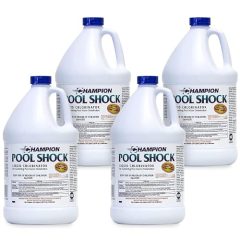 Liquid Chlorine / Sodium Hypochlorite (12.5%)
Everyday sanitizer — the B in BBB View on Amazon →
Liquid Chlorine / Sodium Hypochlorite (12.5%)
Everyday sanitizer — the B in BBB View on Amazon →
 PolyQuat 60 Algaecide (Non-Foaming)
Non-foaming, copper-free backup View on Amazon →
PolyQuat 60 Algaecide (Non-Foaming)
Non-foaming, copper-free backup View on Amazon →
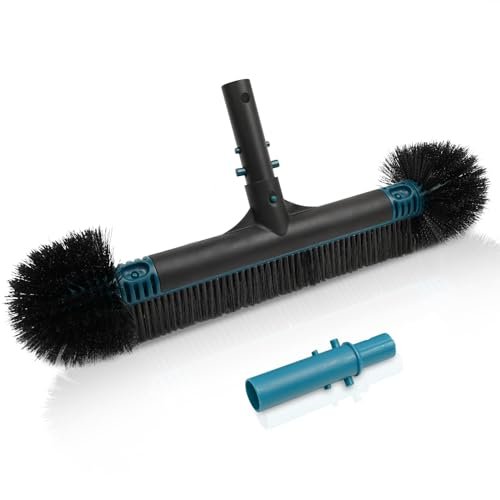 Poolvio 20" 2-in-1 Pool Brush Head (Walls & Floor)
Sturdy 20-inch brush head that clips onto any standard telescopic pole. View on Amazon →
Poolvio 20" 2-in-1 Pool Brush Head (Walls & Floor)
Sturdy 20-inch brush head that clips onto any standard telescopic pole. View on Amazon →
Still need help? Ask a Pool & Spa Expert AD
Get a personalized answer from PoolGuy810 — 30 years owning a pool and spa repair company. Describe your issue and get step-by-step help.
Related Pool Guides
- Should You Vacuum Pool After Adding Algaecide? Step-by-Step
- How Long After Shocking Pool to Add Algaecide? Complete Guide
- SLAM Method: Complete Guide to Clear Green Pool Water Fast
- Does Pool Algae Consume Chlorine? Understanding Chlorine Loss
- Can You Use Pool Algaecide in Pond? Safety & Alternatives
Need More Help?
Try our free pool calculators and tools to help diagnose and fix your pool problems.
Browse Pool ToolsSLAM calculator, pH calculator, salt dosing & more