
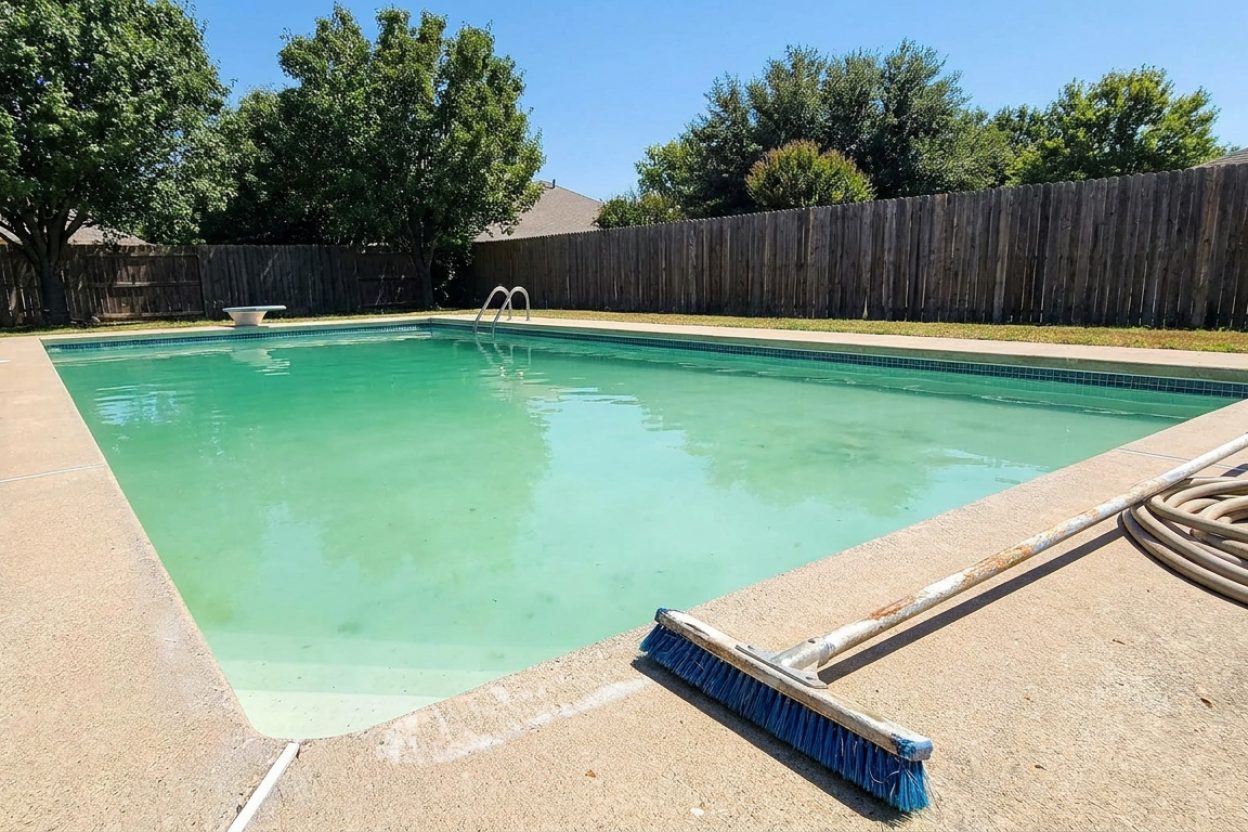
Does Pool Algae Consume Chlorine? Understanding Chlorine Loss

Is my pool's chlorine being consumed by algae growth?
Read full question
About every time the temperature hits 85°F outside, my pool's chlorine levels nosedive to almost nothing, but stay rock solid during cooler days. I'm adding the same amount of chlorine I normally do, but it seems like it's disappearing quickly. A friend mentioned that algae might actually be 'eating' or consuming the chlorine somehow. Is this actually what's happening? I'm trying to understand the science behind it so I can tackle this problem more effectively. Should I be adding more chlorine, or is there a different approach I should take?
Quick Answer
Algae doesn't technically 'eat' chlorine, but it rapidly consumes available chlorine as the sanitizer works to kill algae cells. But first rule out the common look-alike: chlorine that drops mainly on hot, sunny days is usually sun/heat demand (often from low CYA), not algae — confirm with an overnight chlorine loss test (OCLT) before starting a SLAM. The SLAM method involves raising chlorine to shock level and maintaining it there until the algae is completely eliminated.
Understanding Chlorine and Algae Interaction
If your chlorine craters on hot, sunny days but holds steady when it's cooler, that pattern is actually the classic signature of heat- and UV-driven chlorine demand — not necessarily algae. Chlorine works, and burns off, roughly twice as fast for every 10°F above 80°F, and direct sun destroys unprotected chlorine even faster, so a temperature-correlated drop often means the sun and heat are eating your chlorine, frequently because CYACyanuric Acid (stabilizer) — Sunscreen for your chlorine — it keeps sunlight from burning it off. The catch: the more you have, the more chlorine you need to keep. learn more → is too low to shield it. An established algae bloom behaves differently: it consumes chlorine continuously, day and night, regardless of air temperature. Algae certainly can cause rapid chlorine loss too — chlorine is consumed as it oxidizes algae cells and the organic matter a bloom attracts — but the only way to tell the two apart is to test.
When algae takes hold in your pool, it creates what's called a high chlorine demand situation. The free chlorine you're adding immediately gets to work attacking algae cells, but if there's more algae than available chlorine, you'll see that familiar pattern of adding chlorine only to have it disappear within hours.
First, Confirm It's Actually Algae
Before committing to a multi-day SLAMShock Level And Maintain — raise free chlorine to a target based on your CYA and hold it there until the algae is gone. It's a process, not a one-time dose. the SLAM walkthrough →, run an overnight chlorine loss test (OCLT) and check your CYA. Test your free chlorine after sunset, then again before sunrise. If you lose less than 1 ppm overnight, the daytime drop is coming from sun and heat — the fix is to bring CYA up to an appropriate level for your pool (about 30-50 ppm for a manually chlorinated pool, 70-80 ppm for a saltwater pool) so your chlorine lasts, not to SLAM. If you lose more than 1 ppm overnight, that points to algae or other organic contamination, and the SLAM process below is warranted.
The Science Behind Rapid Chlorine Loss
This chlorine disappearing act happens because algae creates a perfect storm of oxidant demand. Each algae cell that dies releases organic compounds that also require chlorine to break down. Meanwhile, living algae continues to multiply, creating an ever-increasing demand for sanitizer. It's like trying to fill a bucket with a massive hole in the bottom.
Many pool owners report that during moderate to severe algae blooms, they can add several pounds of shock and see zero measurable free chlorine just hours later. This isn't a testing error - it's the reality of fighting an established algae colony that's consuming chlorine faster than you're adding it.
Breaking the Algae-Chlorine Cycle
The most effective approach I'd recommend is the SLAM method (Shock Level And Maintain), which involves raising chlorine to shock level and maintaining it there until the algae is completely eliminated. You'll want to use our chlorine dosing calculator to determine the proper shock level based on your current Cyanuric Acid levels.
The key is to reach the point where you're adding chlorine faster than it's being consumed, so your free chlorine finally holds. Once you hit this point, you'll start seeing measurable free chlorine levels that hold steady overnight. This typically requires shocking to the shock level for your CYA, though you should verify the appropriate shock level for your specific situation, depending on the severity of your algae problem.
Monitoring Your Progress
You'll know you're winning the battle when your overnight chlorine loss becomes minimal. Test your free chlorine before bed, then again first thing in the morning. If you're losing less than 1 ppm overnight, you're typically close to victory. The complete SLAM method guide walks through this entire process with detailed testing schedules.
Supporting Your Chlorine Treatment
While you're maintaining shock levels, your filtration system becomes crucial. Run your pump continuously and clean or backwash your filter frequently - daily if necessary. Dead algae particles need to be physically removed from the water, and a clogged filter will slow this process significantly.
Brushing is equally important. Algae forms protective layers and clings to surfaces, so aggressive brushing helps expose algae cells to the chlorine you're adding. Focus on areas where algae tends to hide: steps, behind ladders, and any textured surfaces.
Preventing Future Chlorine Demand Spikes
Once you've eliminated the current algae bloom, maintaining proper water chemistry prevents future episodes of rapid chlorine consumption. Keep your free chlorine at appropriate levels for your stabilizer level, maintain proper pH and alkalinity, and ensure adequate circulation.
Regular testing and consistent maintenance are your best defense against algae establishing itself again. It's much easier to prevent algae than to fight an established bloom that's consuming chlorine as fast as you can add it.
For the full breakdown of safe chlorine levels by CYA level, see our pool water chemistry guide or use our all-in-one pool calculator to get the right free chlorine for your CYA.
 Taylor K-2006C Complete FAS-DPD Pool & Spa Test Kit
The FAS-DPD kit pool pros trust — reads chlorine accurately even at shock/SLAM levels, plus pH, alkalinity, calcium hardness and CYA. View on Amazon →
Taylor K-2006C Complete FAS-DPD Pool & Spa Test Kit
The FAS-DPD kit pool pros trust — reads chlorine accurately even at shock/SLAM levels, plus pH, alkalinity, calcium hardness and CYA. View on Amazon →
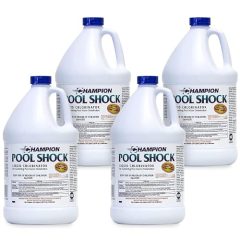 Liquid Chlorine / Sodium Hypochlorite (12.5%)
Everyday sanitizer — the B in BBB View on Amazon →
Liquid Chlorine / Sodium Hypochlorite (12.5%)
Everyday sanitizer — the B in BBB View on Amazon →
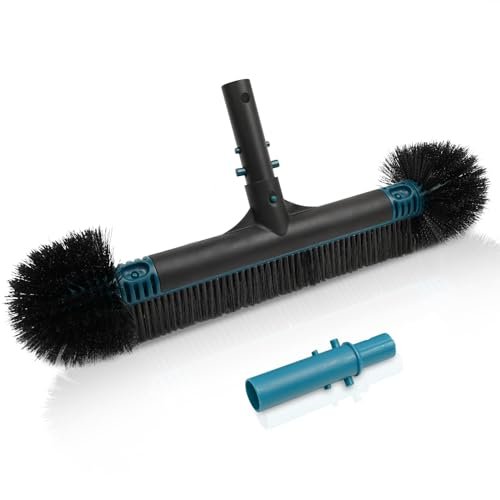 Poolvio 20" 2-in-1 Pool Brush Head (Walls & Floor)
Sturdy 20-inch brush head that clips onto any standard telescopic pole. View on Amazon →
Poolvio 20" 2-in-1 Pool Brush Head (Walls & Floor)
Sturdy 20-inch brush head that clips onto any standard telescopic pole. View on Amazon →
Still need help? Ask a Pool & Spa Expert AD
Get a personalized answer from PoolGuy810 — 30 years owning a pool and spa repair company. Describe your issue and get step-by-step help.
Related Pool Guides
Need More Help?
Try our free pool calculators and tools to help diagnose and fix your pool problems.
Browse Pool ToolsSLAM calculator, pH calculator, salt dosing & more