
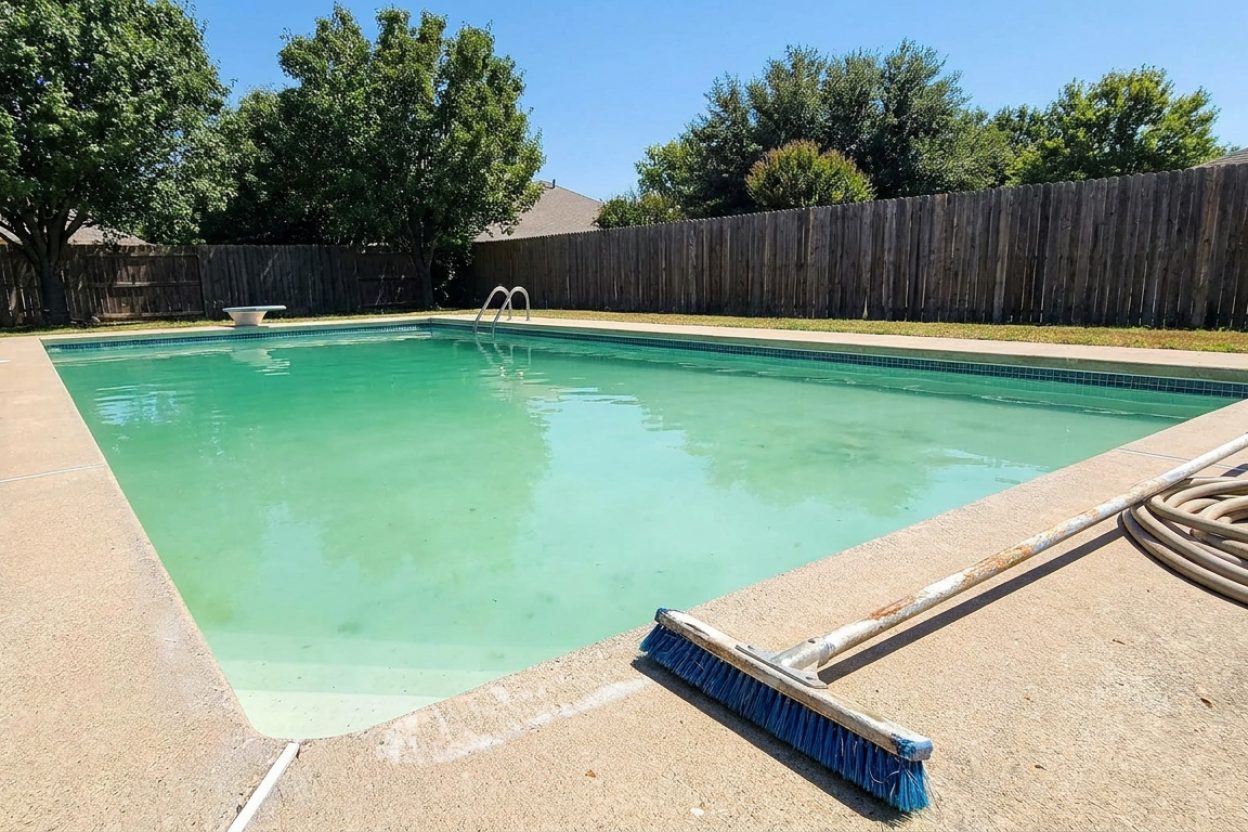
How Does Pool Algae Form? Understanding the Science Behind It

Why does algae keep growing in my pool despite chemicals?
Read full question
Since my neighbor's pool sparkles like a resort while mine transforms into a green lagoon every month, what's their secret to preventing algae takeover? The staff always tries to sell me multiple expensive bottles of shock, algaecide, and clarifiers, claiming I need their whole treatment system. But I want to understand what's actually causing this algae to form in the first place so I can prevent it myself.
What are the root causes that allow algae to take hold and multiply in pool water? I'd rather tackle the problem at its source than keep throwing money at treatments that only seem to work temporarily.
Quick Answer
Pool algae forms when microscopic spores enter your water and find ideal conditions: sunlight, nutrients (like phosphates), warm temperatures, and unbalanced water chemistry with insufficient chlorine levels.
The Science Behind Algae Formation
Don't panic — that green, slimy mess taking over your pool isn't a sign of permanent damage, and understanding exactly how algae forms is the first step to eliminating it for good. Understanding how algae forms is crucial for prevention and treatment. Algae are microscopic organisms that use photosynthesis — sunlight, carbon dioxide, and nutrients — to produce energy, then multiply rapidly by cell division, using sunlight, carbon dioxide, and nutrients to create energy and multiply exponentially.
The formation process begins when algae spores, which are constantly present in the environment, enter your pool water through wind, rain, swimmers, or contaminated equipment. These spores are dormant until they encounter favorable conditions for growth.
Essential Conditions for Algae Growth
Sunlight and Photosynthesis
Algae require sunlight to perform photosynthesis, which is their primary method of energy production. This is why algae growth accelerates during sunny weather and in pools with significant sun exposure. The chloroplasts within algae cells capture light energy and convert it into chemical energy, fueling rapid reproduction. Even partially shaded pools can develop algae, as these organisms are remarkably efficient at utilizing available light.
Nutrient Availability
Algae use nutrients like phosphates and nitrates, but the dominant control on algae is sanitizer—keeping free chlorine at the right level for your CYACyanuric Acid (stabilizer) — Sunscreen for your chlorine — it keeps sunlight from burning it off. The catch: the more you have, the more chlorine you need to keep. learn more → prevents blooms regardless of phosphate level. Phosphates enter pools through multiple pathways including rainwater, leaf debris, fertilizer runoff, and even some pool chemicals. Other nutrients that fuel algae growth include nitrates from decomposing organic matter and carbon dioxide dissolved in water. When phosphate levels exceed 500 ppb (parts per billion), algae growth becomes increasingly likely.
Temperature Factors
Warm water temperatures between 70-85°F create optimal conditions for algae reproduction. During hot summer months, algae can double their population every few hours under ideal conditions. Higher temperatures also reduce chlorine effectiveness, creating a double threat that explains why green pools are more common during heat waves.
Water Chemistry Imbalances That Trigger Algae
Insufficient Free Chlorine
The most critical factor in algae formation is inadequate free chlorine (FCFree Chlorine — The chlorine actively sanitizing your water right now. This is the number you keep an eye on. how much you need →) levels. When FC drops below the minimum threshold for your cyanuric acid (CYA) level, algae spores can establish themselves and begin reproducing. Using the FC/CYAFC/CYA chart — The chart that sets your chlorine target from your stabilizer (CYA) level — the two go together. see the chart → relationship, pools with 30-50 ppm CYA should hold at least about 3-4 ppm FC (with ~4-6 ppm a good target), while salt-water (SWGSalt Water Generator — The "salt cell" that makes chlorine from the salt in a saltwater pool. Same chlorine — it just makes its own. pool terms →) pools at 70-80 ppm CYA run a slightly lower FC-to-CYA ratio — a minimum around 5 ppm (never below it) and a target of roughly 5-10 ppm per the SWG chart.
pH and Alkalinity Issues
High pH slightly reduces active chlorine, but with CYA in the water this effect is small; persistent algae almost always traces back to FC being too low for your CYA, not to pH. When CYA is present — as it is in nearly every outdoor pool — pH has only a modest effect on chlorine: going from pH 7.5 to 8.0 reduces active chlorine by roughly 15%, not the dramatic loss often claimed. Keep pH in the 7.2-7.8 range for comfort and scale control, but high pH alone won't cause an algae bloom if your FC/CYA ratio is maintained. Similarly, unbalanced total alkalinity (TATotal Alkalinity — The buffer that keeps your pH from bouncing around. Get this in range and pH gets a lot easier to manage. learn more →) outside the 60-120 ppm range can cause pH instability, creating windows of opportunity for algae establishment.
Stabilizer Problems
Both too little and too much cyanuric acid create algae-friendly conditions. Without adequate CYA (below 30 ppm), chlorine dissipates rapidly in sunlight, leaving periods of insufficient sanitization. Conversely, excessive CYA above 100 ppm over-stabilizes the water, where measured chlorine looks adequate but is far less effectively sanitizing the water.
Environmental Factors Accelerating Formation
Poor Water Circulation
Stagnant water areas behind ladders, in corners, or around pool fixtures become algae breeding grounds. These dead zones lack proper chemical distribution and allow algae to establish colonies without disruption. Inadequate pump runtime (less than 8-10 hours daily) or malfunctioning circulation equipment creates these problematic conditions.
Filtration Deficiencies
Dirty or inadequate filtration allows algae spores and nutrients to accumulate rather than being removed. Cartridge filters that haven't been cleaned in weeks, sand filters requiring backwashing, or DE filters with torn grids cannot effectively remove the microscopic particles that feed algae growth.
Organic Contamination
Heavy bather loads, pet contamination, and organic debris introduce nutrients and overwhelm available chlorine. Each swimmer can introduce millions of bacteria and consume chlorine through organic compounds, creating opportunities for algae establishment when sanitizer reserves are depleted.
The Multiplication Process
Once established, algae reproduce through cell division approximately every 3-6 hours under optimal conditions. This exponential growth explains how pools can transform from clear to green seemingly overnight. A single algae cell can theoretically produce dozens to hundreds of descendants within 24 hours, which is why early intervention is crucial.
Different algae types form through similar processes but prefer specific conditions. Green algae thrives in well-lit areas, yellow algae prefers shaded regions with poor circulation, and black algae forms protective layers that resist chemical treatment.
Prevention Through Understanding
Recognizing how algae forms empowers pool owners to break the formation cycle. Maintaining proper FC levels according to your CYA, ensuring adequate circulation, regular brushing to disrupt potential colonies, and and — only if algae keeps returning despite a correct FC/CYA ratio — checking phosphate levels create an environment hostile to algae formation. Weekly testing with a quality kit like the Taylor K-2006 helps identify conditions before algae can establish themselves.
For the full breakdown of safe chlorine levels by CYA level, see our pool water chemistry guide.
 Taylor K-2006C Complete FAS-DPD Pool & Spa Test Kit
The FAS-DPD kit pool pros trust — reads chlorine accurately even at shock/SLAM levels, plus pH, alkalinity, calcium hardness and CYA. View on Amazon →
Taylor K-2006C Complete FAS-DPD Pool & Spa Test Kit
The FAS-DPD kit pool pros trust — reads chlorine accurately even at shock/SLAM levels, plus pH, alkalinity, calcium hardness and CYA. View on Amazon →
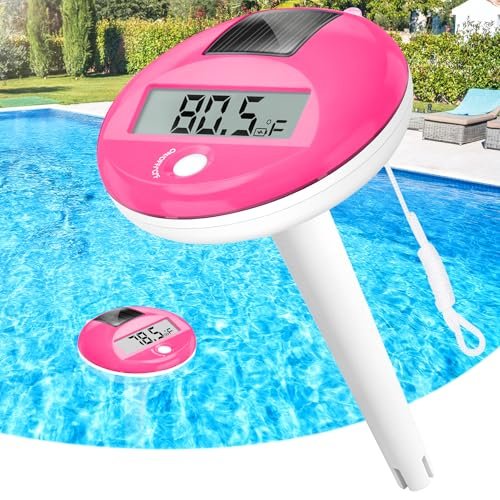 LuxBlue Floating Pool Thermometer, Solar, Large LCD
Easy-read floating thermometer for pool water temperature. View on Amazon →
LuxBlue Floating Pool Thermometer, Solar, Large LCD
Easy-read floating thermometer for pool water temperature. View on Amazon →
Still need help? Ask a Pool & Spa Expert AD
Get a personalized answer from PoolGuy810 — 30 years owning a pool and spa repair company. Describe your issue and get step-by-step help.
Related Pool Guides
Need More Help?
Try our free pool calculators and tools to help diagnose and fix your pool problems.
Browse Pool ToolsSLAM calculator, pH calculator, salt dosing & more