
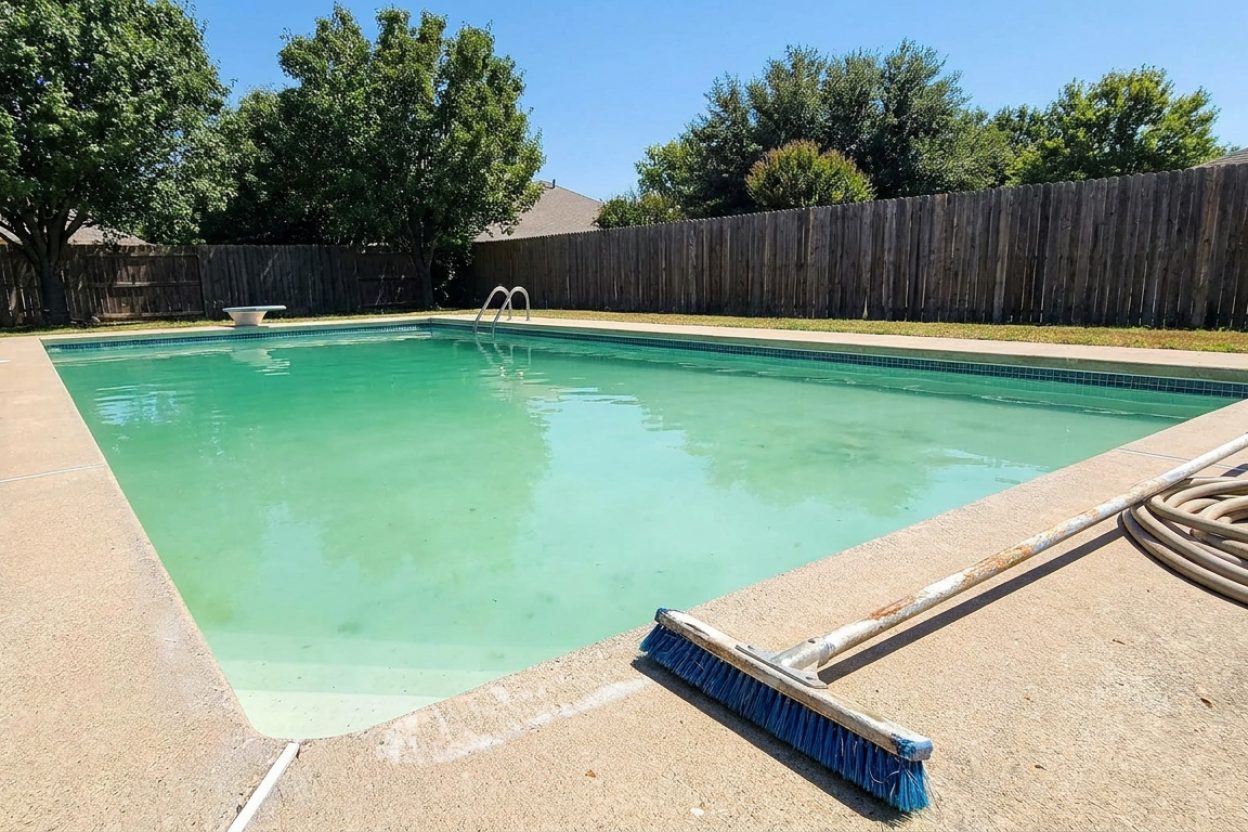
Can You Use Pool Algaecide in Pond? Safety & Alternatives

Pool algaecide safe for pond? Fish inside.
Read full question
Every time I look at this green algae mess in my pond, I wonder — can I use pool algaecide without killing my fish? Have koi and goldfish. Pool algaecide sitting in garage - can I use it or will it kill my fish? Need quick solution.
Quick Answer
Pool algaecides should not be used in ponds as they contain chemicals toxic to fish, plants, and beneficial bacteria. Use pond-specific treatments or natural methods instead.
Diagnosing the Problem
First, let's diagnose why you're considering pool algaecide for your pond. Pool algaecides are designed for chemically-treated water systems that don't support aquatic life. Your pond, however, is a living ecosystem that requires completely different treatment approaches.
The main issues with using pool algaecides in ponds include:
- Copper toxicity: Many pool algaecides contain copper sulfate, which is highly toxic to fish even in small concentrations
- Quaternary ammonium poisoning: These compounds can cause gill damage and death in fish
- Beneficial bacteria destruction: Pool chemicals kill the good bacteria that naturally process fish waste and organic matter
- Plant damage: Aquatic plants that help maintain water quality can be severely damaged or killed
- Bioaccumulation: Toxic chemicals can build up in the pond sediment and continue causing problems
Safe Pond Algae Control Solutions
Biological Controls
The safest approach is working with nature rather than against it:
- Add beneficial bacteria: Use pond-specific bacterial additives like Microbe-Lift PL or API Pond-Zyme to establish healthy biological filtration
- Introduce algae-eating fish: Certain goldfish varieties graze on algae (note: common plecos are tropical, generally can't survive cold-climate outdoor ponds, and may rasp at koi slime coats — use only seasonally or in warm climates) (note: grass carp mainly eat aquatic plants, not filamentous algae, and are permit-regulated or banned in many states — check local rules)
- Plant aquatic vegetation: Submerged and floating plants compete with algae for nutrients (note: water hyacinth and water lettuce are fast-spreading invasives that are restricted or banned in many states — e.g., FL, TX, AL, WI — so check your local rules before buying)
- Install UV sterilizers: These kill free-floating algae without chemicals
Physical and Mechanical Methods
- Manual removal: Use a pond rake or net to physically remove string algae weekly
- Improve filtration: Upgrade to a larger biological filter system to handle nutrient loads
- Add aeration: Install pond aerators or fountains to increase oxygen levels and circulation
- Reduce sunlight: Add shade structures or floating plants to limit algae photosynthesis
Pond-Safe Chemical Treatments
If you must use chemical treatments, choose products specifically designed for ponds with fish:
- Pond algaecides: API Algaefix or Tetra Pond AlgaeControl are formulated to be fish-safe when used as directed
- Barley straw extract: Natural compounds that inhibit algae growth without harming fish
- Beneficial enzyme products: These break down organic matter that feeds algae
Addressing Root Causes
Nutrient Management
Algae blooms typically result from excess nutrients in the water:
- Reduce fish feeding: Only feed what fish can consume in 2-3 minutes, once or twice daily
- Remove organic debris: Clean out fallen leaves, dead plants, and uneaten food weekly
- Test water parameters: Use a pond test kit to monitor ammonia, nitrite, nitrate, and pH levels
- Perform water changes: Replace 10-15% of pond water weekly with dechlorinated fresh water
System Balance
- Stock appropriate fish levels: Follow appropriate pond stocking guidelines (consult pond specialist for your specific setup as density varies greatly with pond size, filtration, and fish species)
- Maintain proper plant coverage: Aim for 30-50% surface coverage with aquatic plants
- Ensure adequate filtration: Your filter should process the entire pond volume at least once every 1-2 hours, with slower rates often acceptable for lightly stocked ponds
Emergency Pond Algae Treatment
If you're dealing with a severe algae bloom that's threatening fish health:
- Increase aeration immediately: Algae die-offs consume oxygen and can suffocate fish
- Perform large water changes: Replace 25-50% of water daily until conditions improve
- Remove dead algae manually: Don't let it decompose in the pond
- Monitor fish behavior: Watch for gasping at surface or lethargic behavior indicating oxygen depletion
- Test water parameters daily: Monitor ammonia, nitrite, and pH as the system rebalances
Long-term Prevention Strategy
Preventing future algae problems is more effective than treating them:
- Establish and maintain strong biological filtration
- Keep nutrient inputs low through proper feeding and debris removal
- Maintain 30-50% aquatic plant coverage
- Ensure adequate water circulation and aeration
- Perform regular water testing and maintenance
- Clean filters monthly during growing season
Safety Warning: Never use pool chemicals, household bleach, or other non-pond products in water containing fish or plants. These can cause immediate fish kills and long-term ecosystem damage. Always choose products specifically labeled as pond-safe and fish-safe, and follow dosing instructions exactly.
Remember that pond ecosystems take time to establish balance. Be patient with biological treatments, as they typically take 2-4 weeks to show significant results, but provide longer-lasting and safer algae control than chemical quick fixes.
 Taylor K-2006C Complete FAS-DPD Pool & Spa Test Kit
The FAS-DPD kit pool pros trust — reads chlorine accurately even at shock/SLAM levels, plus pH, alkalinity, calcium hardness and CYA. View on Amazon →
Taylor K-2006C Complete FAS-DPD Pool & Spa Test Kit
The FAS-DPD kit pool pros trust — reads chlorine accurately even at shock/SLAM levels, plus pH, alkalinity, calcium hardness and CYA. View on Amazon →
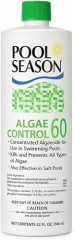 PolyQuat 60 Algaecide (Non-Foaming)
Non-foaming, copper-free backup View on Amazon →
PolyQuat 60 Algaecide (Non-Foaming)
Non-foaming, copper-free backup View on Amazon →
Still need help? Ask a Pool & Spa Expert AD
Get a personalized answer from PoolGuy810 — 30 years owning a pool and spa repair company. Describe your issue and get step-by-step help.
Related Pool Guides
Need More Help?
Try our free pool calculators and tools to help diagnose and fix your pool problems.
Browse Pool ToolsSLAM calculator, pH calculator, salt dosing & more