
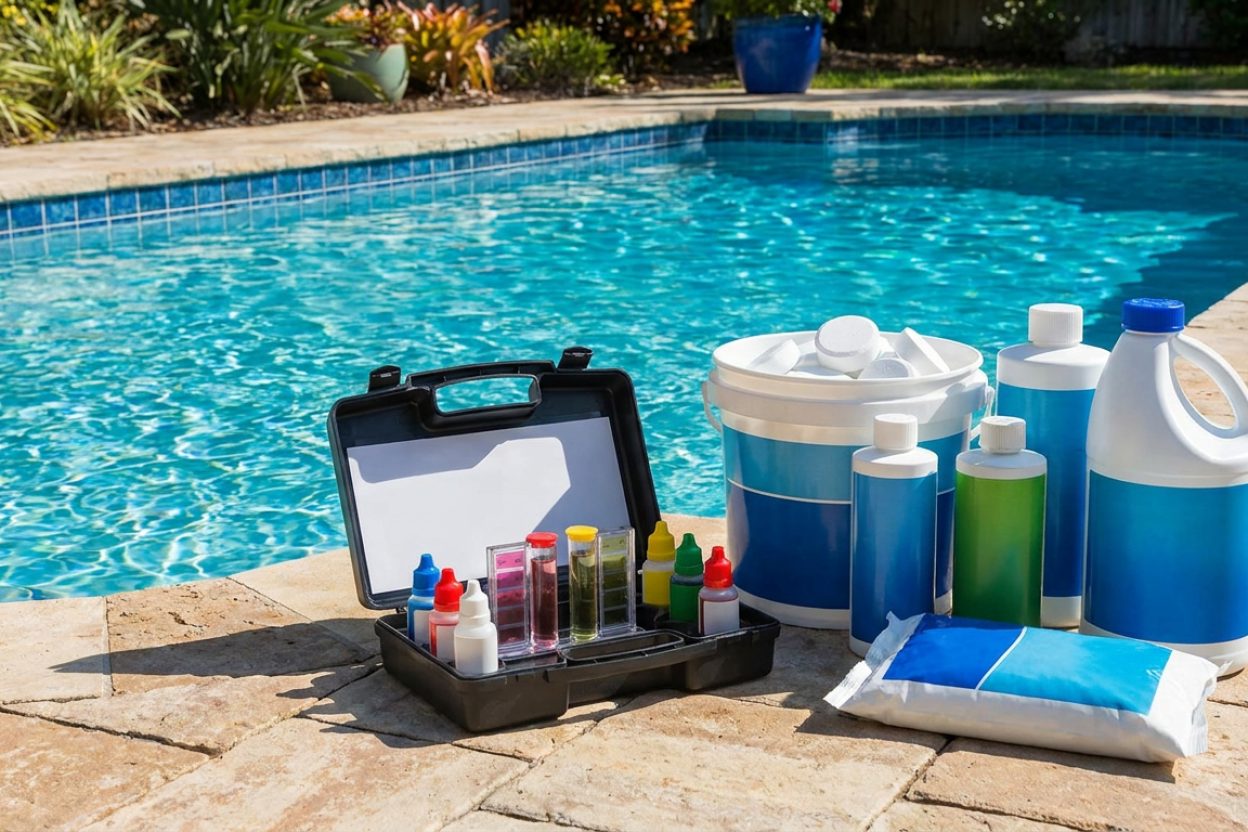
Can You Vacuum Pool After Adding Chemicals? Safety Guide

Safe to vacuum right after adding pool chemicals?
Read full question
Despite adding chlorine shock and algaecide yesterday, is it dangerous to vacuum my pool with my kids swimming here regularly? Can I start vacuuming immediately or do I need to wait? Don't want to mess up the chemical distribution or damage my equipment.
Quick Answer
You can vacuum your pool after adding most chemicals, but timing matters. Wait 15-30 minutes for liquid chemicals to circulate, and 2-4 hours for granular chemicals to fully dissolve before vacuuming. Ensure chlorine levels are at or below 10 ppm before anyone swims (CDC swimmer-safety cap). For the full breakdown of safe chlorine levels by CYA level, see our pool water chemistry guide or use our all-in-one pool calculator.
Understanding Chemical Distribution Before Vacuuming
When you add chemicals to your pool, they need time to properly mix and distribute throughout the water. Vacuuming too soon can create several problems: you might stir up undissolved granules that could damage your equipment, create uneven chemical distribution, or expose yourself to concentrated chemical pockets.
The key factor is your pool's turnover rate - how long it takes for all the water to circulate through your filtration system once. Most residential pools have a turnover rate of 6-8 hours, but you don't need to wait for a complete cycle before vacuuming in most cases.
Timing Guidelines by Chemical Type
Liquid Chemicals (Safe to Vacuum Sooner)
- Liquid chlorine (sodium hypochlorite): Wait 15-30 minutes with pump running
- Muriatic acid: Wait 30-60 minutes, ensure pump runs continuously
- Liquid algaecide: Wait 30 minutes for initial distribution
Granular Chemicals (Longer Wait Times)
- Calcium hypochlorite (cal-hypo): Wait 2-4 hours, brush pool first
- Sodium dichlor: Wait 1-2 hours for complete dissolution
- Sodium bicarbonate (baking soda): Wait 2-4 hours
- Calcium chloride: Wait 1-2 hours, dissolve in bucket first
Special Considerations
- Cyanuric acid (stabilizer): Wait 24-48 hours, requires extensive circulation
- Shock treatments: chlorine can stay elevated for days during a SLAMShock Level And Maintain — raise free chlorine to a target based on your CYA and hold it there until the algae is gone. It's a process, not a one-time dose. the SLAM walkthrough →; brush and vacuum as needed throughout, and wait for FCFree Chlorine — The chlorine actively sanitizing your water right now. This is the number you keep an eye on. how much you need → to fall to/below ~10 ppm before letting swimmers back in
- Flocculant: Wait 8-16 hours for particles to settle, then vacuum to waste (flocculant needs a sand or DE filter with a waste setting; cartridge filters have no waste port)
Safe Vacuuming Procedures After Chemical Addition
Pre-Vacuuming Checklist
- Test water chemistry to confirm chemicals have distributed evenly
- Check chlorine before swimmers return (at/below ~10 ppm); vacuuming itself is safe at higher levels
- Ensure all granular chemicals have completely dissolved
- Verify pump has been running for the minimum recommended time
- Put on safety equipment: gloves, eye protection if chlorine is elevated
Vacuuming Technique
- Start vacuuming from the deep end, working toward shallow areas
- Move slowly to avoid stirring up settled particles
- If you encounter undissolved chemical granules, stop and wait longer
- Monitor your vacuum system for any unusual resistance or clogging
- Clean your vacuum equipment thoroughly after use
When to Delay Vacuuming
Never vacuum immediately after adding chemicals if:
- You can see undissolved granules on the pool bottom
- You've added cyanuric acid that hasn't fully dissolved
- The water appears cloudy from recent chemical addition
- Your pool circulation system hasn't been running
Chemical-Specific Vacuuming Considerations
After SLAM Treatment
During a SLAM (Shock Level And Maintain) process, you'll maintain elevated chlorine levels of 10-20+ ppm. Brushing and vacuuming during a SLAM is actually recommended — it removes dead algae so it stops consuming chlorine. Vacuum and brush throughout the process; the elevated chlorine won't harm your equipment. The high chlorine will kill algae and bacteria, creating debris that needs removal, but timing is critical.
After Algaecide Treatment
Algaecides can create foam and may affect vacuum performance. Wait the full recommended time (usually 30-60 minutes) and expect to clean your vacuum more frequently as dead algae particles are removed.
After pH Adjusters
Muriatic acid and soda ash can create temporary high/low-pH pockets right after dosing, so let the pump circulate about 30 minutes before vacuuming for even distribution.
Safety Precautions
Important safety reminders:
- Never vacuum if you can smell strong chemical odors
- Wear protective equipment when vacuuming after chemical treatment
- Keep children and pets away from the pool area during chemical treatment
- Have fresh water available to rinse skin or eyes if needed
- Store vacuum equipment properly to prevent chemical residue buildup
Maximizing Chemical Effectiveness
Proper timing of vacuuming after chemical addition actually helps your treatment work better. By allowing chemicals to circulate first, you ensure even distribution and maximum effectiveness. Then, vacuuming removes dead algae, bacteria, and other debris that the chemicals have neutralized, preventing them from consuming additional sanitizer.
Remember that your test kit should show stable, evenly distributed chemical levels before you begin vacuuming. This confirms that the chemicals have had adequate time to mix throughout the pool volume.
For the full breakdown of safe chlorine levels by CYACyanuric Acid (stabilizer) — Sunscreen for your chlorine — it keeps sunlight from burning it off. The catch: the more you have, the more chlorine you need to keep. learn more → level, see our pool water chemistry guide or use our all-in-one pool calculator.

Still need help? Ask a Pool & Spa Expert AD
Get a personalized answer from PoolGuy810 — 30 years owning a pool and spa repair company. Describe your issue and get step-by-step help.
Related Pool Guides
Need More Help?
Try our free pool calculators and tools to help diagnose and fix your pool problems.
Browse Pool ToolsSLAM calculator, pH calculator, salt dosing & more