
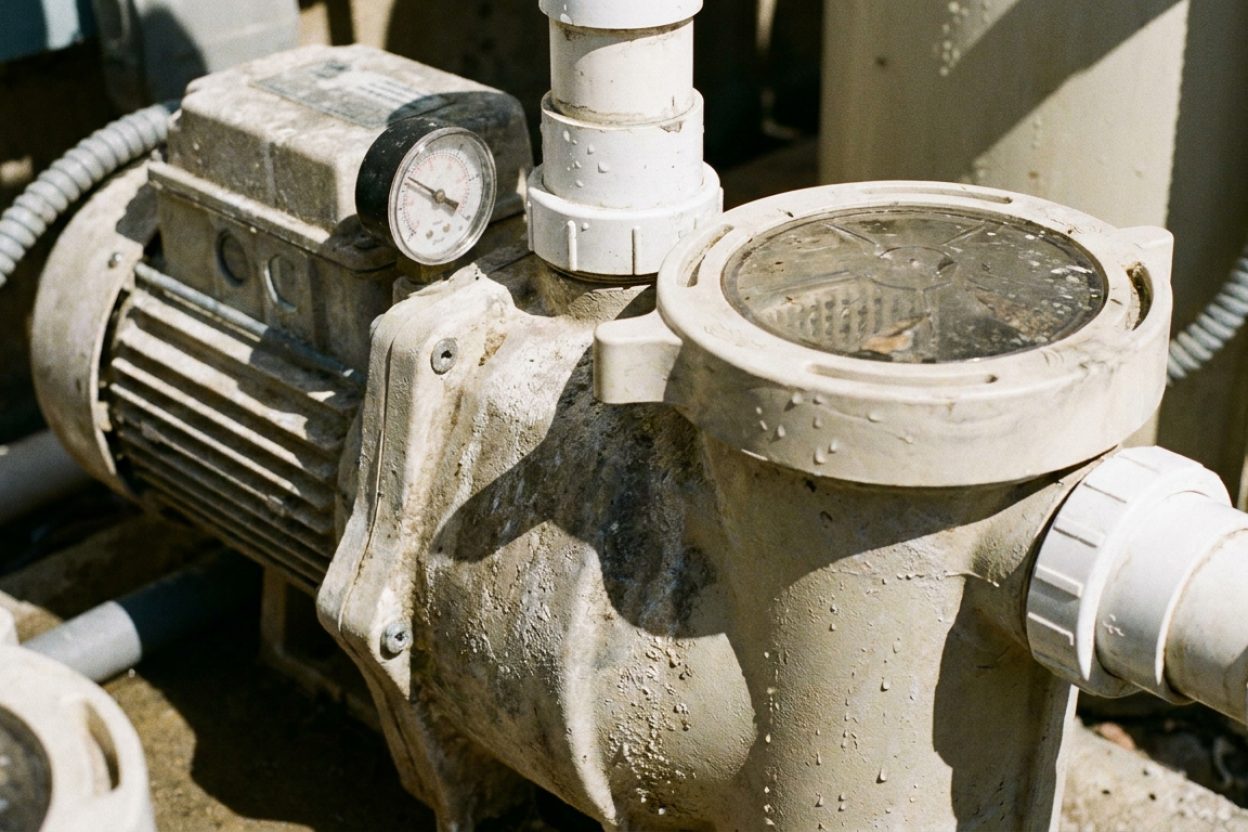
Do I Need a New Pool Pump? Signs & Replacement Guide

When should I replace my pool pump vs trying to repair it?
Read full question
Spent three hours getting completely different advice about my 9-year-old pool pump—neighbor says it just needs cleaning, pool store wants to sell me a replacement, and YouTube's giving me five conflicting solutions. It's making some grinding noises when it starts up, and I noticed a small puddle of water forming near the motor housing after it runs. The pump still seems to be circulating water and maintaining decent flow, but I'm worried these issues might get worse.
I got a quote from a local pool service company and they said repairs would cost around $350, while a new comparable pump would run about $600-700 installed. The pump has been reliable overall, but I'm wondering if I should just bite the bullet and replace it now, or if these are minor issues that are worth fixing. What are the key signs that indicate it's time for a full replacement rather than trying to repair an aging pump?
Quick Answer
You need a new pool pump if it's over 8-10 years old, making loud grinding noises, leaking water from the motor housing, or if repair costs exceed 75% of replacement cost.
Key Signs Your Pool Pump Needs Replacement
Age and Performance Issues
Pool pumps typically last 8-12 years with proper maintenance. If your pump is approaching or exceeding this age range and experiencing problems, replacement often makes more financial sense than repairs. Older pumps also consume significantly more electricity than modern variable-speed models, which can save $300-800 annually in energy costs.
Mechanical Warning Signs
- Loud grinding, screeching, or rattling noises - Usually indicates worn bearings or motor problems
- Water leaking from motor housing - Suggests seal failure that's often not cost-effective to repair
- Pump won't start or runs intermittently - Could indicate capacitor, winding, or control issues
- Significantly reduced flow rate - May indicate internal wear or impeller damage
- Frequent circuit breaker trips - Often means the motor is drawing excessive current due to internal problems
Economic Indicators
Apply the 75% rule: if repair estimates exceed 75% of a new pump's cost, replacement is typically the better investment. For example, if a new pump costs $600 and repairs are quoted at $450 or more, choose replacement. Factor in that repairs on old pumps often lead to additional failures within 1-2 years.
Diagnostic Steps Before Deciding
Basic Troubleshooting
- Check power supply - Verify the pump is receiving proper voltage (usually 115V or 230V)
- Inspect the impeller - Turn off power at the breaker, then remove pump basket and look for debris or damage in the impeller housing
- Examine seals and gaskets - Small leaks from removable components might just need O-ring replacement
- Test the capacitor - A simple multimeter test can determine if the start/run capacitor has failed
- Listen to motor operation - Smooth, quiet operation is normal; grinding or loud humming indicates problems
Professional Assessment
For pumps 5-8 years old, consider having a pool technician perform a comprehensive diagnosis. They can test motor windings, measure amp draw, and assess whether specific component replacement makes sense. Professional diagnosis typically costs $75-150 but can save hundreds if the problem is minor.
Repair vs. Replacement Decision Matrix
Repair Makes Sense When:
- Pump is less than 5 years old
- Only the capacitor, impeller, or shaft seal needs replacement
- Motor runs smoothly without unusual noises
- Repair cost is under $200-250
- You're planning to replace the entire system within 2-3 years
Replacement is Better When:
- Pump is over 8 years old
- Motor bearings are failing (grinding noises)
- Motor housing is cracked or severely corroded
- You're still using a single-speed pump (variable-speed saves significant energy)
- Multiple components need repair simultaneously
Modern Pump Upgrade Benefits
Variable-Speed Technology
If you're replacing a single-speed pump, variable-speed models offer substantial advantages. Pentair SuperFlo VS, Hayward Super Pump VS, and Jandy ProSeries VS pumps can reduce energy consumption by up to 80% while providing better water circulation. The initial higher cost (typically $800-1,500) pays for itself through energy savings within 2-3 years.
Smart Controls and Automation
Modern pumps integrate with automation systems like Pentair IntelliCenter or Hayward OmniLogic, allowing remote monitoring and control. This prevents damage from running dry and optimizes energy usage based on your pool's specific needs.
Installation Considerations
Pump replacement involves electrical work that typically requires a licensed electrician, especially for 230V installations. Budget $200-400 for professional installation beyond the pump cost. DIY installation is possible for experienced homeowners but verify local code requirements first.
Safety Warning: Always turn off power at the circuit breaker before inspecting or working on pool pumps. Water and electricity combinations can be fatal.
Preventive Maintenance Tips
To maximize your new pump's lifespan, maintain proper water chemistry (pH 7.2-7.6, total alkalinity 80-120 ppm), clean skimmer and pump baskets weekly, and ensure adequate ventilation around the motor. Regular maintenance can extend pump life to 12-15 years and maintain warranty coverage.

Still need help? Ask a Pool & Spa Expert AD
Get a personalized answer from PoolGuy810 — 30 years owning a pool and spa repair company. Describe your issue and get step-by-step help.
Related Pool Guides
Need More Help?
Try our free pool calculators and tools to help diagnose and fix your pool problems.
Browse Pool ToolsSLAM calculator, pH calculator, salt dosing & more