
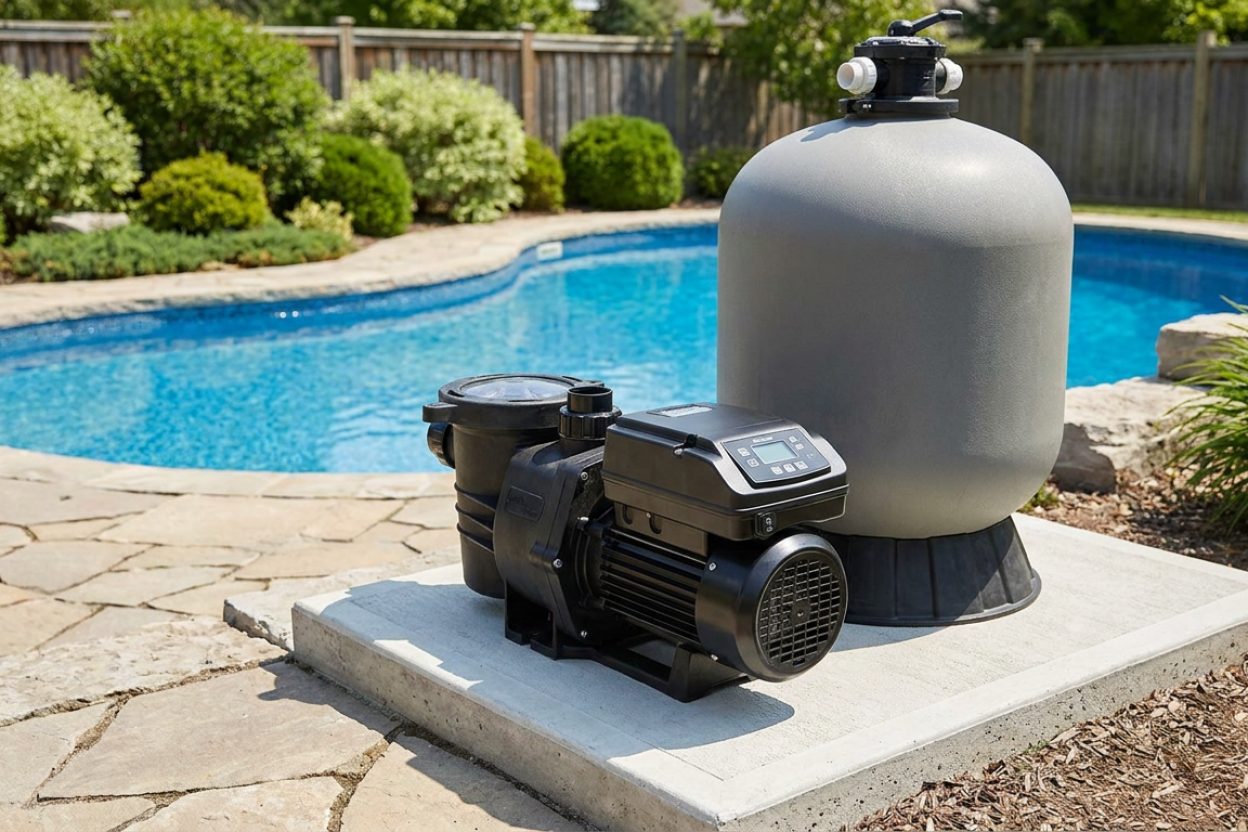
Can You Run a Pool Pump on Extension Cord? Safety Guide

Extension cord for pool pump to save on electrician costs?
Read full question
After planning our pool party for this Saturday, I discovered my pump outlet is nowhere near the pool equipment pad and I'm scrambling for solutions. The pool store wants me to hire an electrician to install a dedicated circuit for my new pump, but they're quoting me over $800 just for the electrical work. That's on top of what I already spent on the pump itself!
Can I just run a heavy-duty extension cord from my garage outlet to save some money? I've got a 12-gauge outdoor cord that should handle the load. I'm trying to avoid another expensive "professional installation" if I can help it - seems like everything pool-related has to be done by a specialist these days.
Quick Answer
Do not run a pool pump on an extension cord. Pool pumps need a properly sized permanent circuit with GFCI protection, a disconnect, and the required grounding and bonding; a 3-prong cord is not a substitute for that pool-equipment installation.
First, Let's Diagnose Why This Is Dangerous
Before exploring alternatives, it's crucial to understand why extension cords and pool pumps don't mix safely:
Electrical Load Issues
Pool pumps often draw 10-20 amps and may run for many hours at a time. Household extension cords are temporary wiring, and many are undersized for that kind of continuous outdoor load. Even a heavy-duty cord can be the wrong gauge, too long, poorly protected from water, or connected in a way that overheats under sustained pump load.
Voltage Drop Problems
Long or undersized cords create voltage drop, meaning the pump receives less voltage than it needs. That can make the motor run hotter, draw more current, start poorly, or fail early. The amount of voltage drop depends on cord length, wire gauge, and pump amperage, which is why pool pumps should be fed by properly sized fixed wiring instead of a cord stretched across the yard.
Fire and Safety Hazards
The combination of high amperage, continuous operation, foot traffic, sun, rain, and splash exposure creates multiple fire and shock risks. Cord ends can arc, overheat, loosen, or sit in wet areas. Even if the receptacle is GFCI-protected, the cord still does not turn the pump into a proper pool-equipment installation.
Troubleshooting Your Power Supply Options
Immediate Short-Term Solution
If your pump has stopped working and you're considering an extension cord as a temporary fix, don't do it. Instead, contact a licensed electrician immediately. Running a pool without proper circulation can lead to water quality issues, but the electrical safety risks far outweigh any pool maintenance concerns.
Proper Long-Term Solutions
Here are the safe, code-compliant options for powering your pool pump:
- Install a Dedicated Circuit: Have a licensed electrician run a new circuit (115V or 240V depending on your pump requirements) from your main panel to the pump location. This should include a disconnect switch within sight of the pump and GFCI protection as required by NEC Article 680.
- Upgrade Existing Wiring: If you have old wiring that's not GFCI protected or inadequately sized, upgrade it to meet current electrical codes. Modern pool installations require wire sizing based on pump amperage and circuit length per current NEC ampacity tables - consult an electrician for proper calculations.
- Install a Pool Sub-Panel: For comprehensive pool electrical needs (pump, heater, lights), consider installing a sub-panel near the pool area with multiple dedicated circuits and GFCI protection.
Understanding Pool Electrical Requirements
GFCI Protection
Ground Fault Circuit Interrupter (GFCI) protection is a core requirement for pool pump circuits and much other pool-area equipment. A GFCI trips when it detects a small current leak to ground, cutting power quickly enough to reduce shock risk. Plugging a pump into a non-GFCI receptacle removes that protection; plugging it into a GFCI receptacle still does not solve the fixed-wiring, disconnect, grounding, and bonding requirements.
Bonding and Grounding
Pool pumps need both grounding and bonding, and they are not the same thing. Grounding connects the equipment to the electrical system so a fault can trip the breaker or GFCI. Bonding ties the pump motor, other metal equipment, and the pool's equipotential bonding grid together so a swimmer is not exposed to a dangerous voltage difference between metal parts. A 3-prong extension cord may include an equipment grounding conductor, but it does not create or verify the required pool bonding grid, and it is not a substitute for a permanent grounded pool circuit.
Code Compliance
The National Electrical Code (NEC) Article 680 specifically addresses pool electrical installations. Using extension cords for permanent pool equipment violates these codes and could void insurance coverage if an incident occurs.
Alternative Solutions While Awaiting Proper Installation
If you need to maintain water circulation while arranging proper electrical work:
- Battery-Powered Pool Pumps: Some manufacturers make DC pumps that run on large battery systems, though these are typically lower flow rates
- Temporary Professional Setup: Some pool service companies can provide temporary pumping services during electrical work
- Chemical Maintenance: Increase your testing frequency and use liquid chlorine to maintain water quality during short pump outages
Cost Considerations
While hiring an electrician costs $500-2000 depending on factors like circuit distance from panel, required permits, panel capacity, and local labor rates, consider these factors:
- Pump replacement costs $300-3,000+ depending on pump type (above-ground vs in-ground, single- vs variable-speed)
- Insurance may not cover fires caused by improper electrical connections
- Proper installation adds value to your home and ensures safety
- Energy efficiency improves with proper voltage supply
Warning Signs You Need Electrical Work
Contact an electrician immediately if you notice:
- Pump tripping breakers frequently
- Flickering lights when pump starts
- Warm electrical connections or panels
- Pump running louder or slower than normal
- Any electrical equipment near the pool without GFCI protection
Prevention and Best Practices
To avoid future electrical issues:
- Schedule annual electrical inspections for pool equipment
- Keep electrical connections clean and dry
- Test GFCI devices monthly using the test/reset buttons
- Leave new circuits, bonding, and sub-panel work to a licensed electrician; minor tasks like swapping a GFCI outlet can be DIY for a competent homeowner, but when in doubt hire a pro — pool electrical errors can be fatal
- Maintain proper clearances around electrical equipment
Remember: new pool electrical work is not a shortcut project. The combination of water and electricity requires a code-compliant installation by a qualified electrician. The cost of proper electrical work is minimal compared to the potential consequences of temporary wiring around a pool.
Still need help? Ask a Pool & Spa Expert AD
Get a personalized answer from PoolGuy810 — 30 years owning a pool and spa repair company. Describe your issue and get step-by-step help.
Related Pool Guides
Need More Help?
Try our free pool calculators and tools to help diagnose and fix your pool problems.
Browse Pool ToolsSLAM calculator, pH calculator, salt dosing & more