
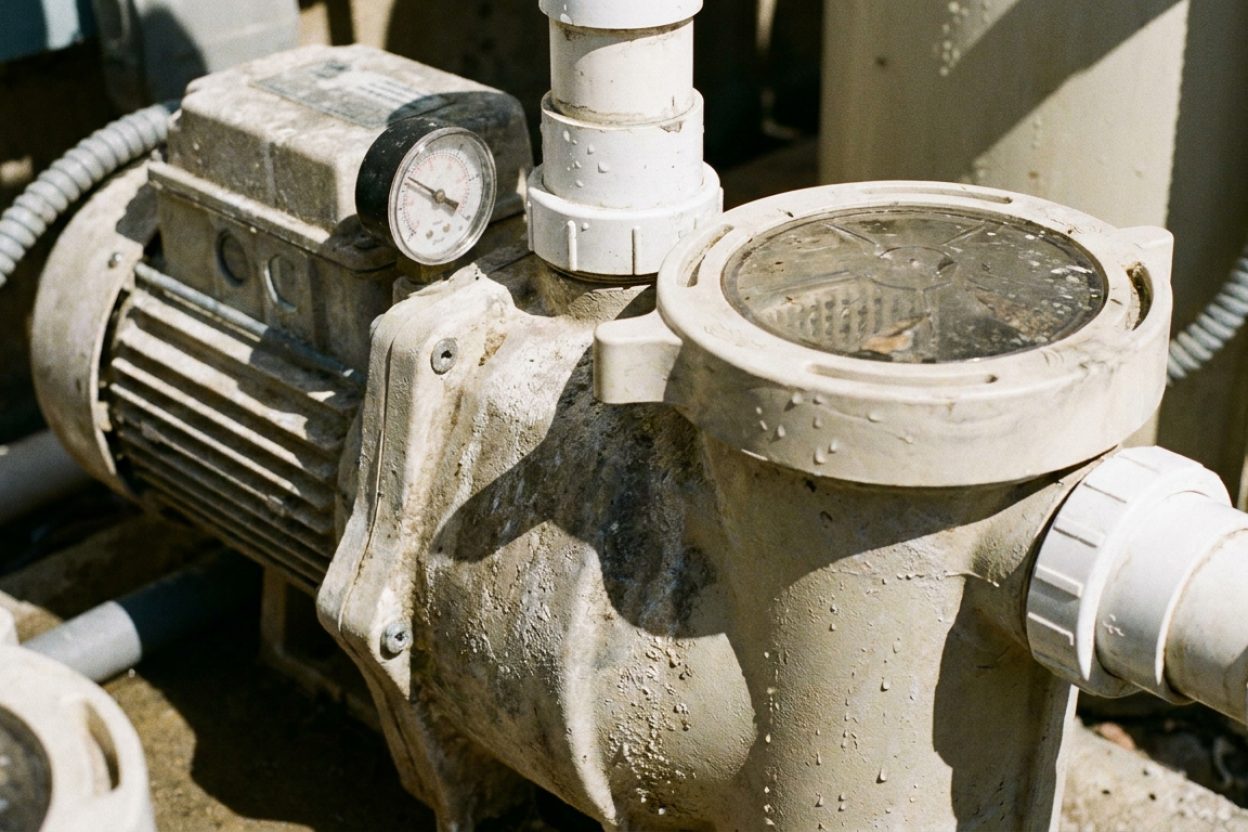
How Variable Speed Pool Pumps Work - Complete Guide

Understanding Variable Speed Pool Pump Technology and Energy Savings
Read full question
Woke up to another $400 electric bill after replacing my pool filter, cleaning the skimmer baskets, checking all the connections — my single-speed pump is still draining my wallet on this 20,000-gallon inground pool. My utility bills have been astronomical running the pump 8-10 hours daily, and I'm trying to understand exactly how these newer pumps achieve such significant energy savings.
Specifically, I'd like to know what type of motor technology variable speed pumps use and how they're able to adjust their speed so precisely. My current pump seems to be either on full blast or off completely. What's the RPM range these variable speed units can operate in, and how does that translate to better flow control and lower energy costs? I want to make sure I understand the technology before investing in what seems like a more expensive upfront purchase.
Quick Answer
Variable speed pool pumps use electronically-commutated permanent magnet motors and a built-in Variable Frequency Drive (VFD) to adjust RPM across a wide range, providing precise flow control and up to 90% energy savings in manufacturer testing (typically 50-70% in real-world use) compared to single-speed pumps.
Core Components and Technology
Variable speed pumps contain three essential components that work together to provide precise speed control:
Permanent Magnet Motor
The heart of a variable speed pump is its permanent magnet motor, which is fundamentally different from the induction motors used in single-speed pumps. These electronically-commutated motors use rare earth permanent magnets in the rotor instead of the wound rotor or squirrel cage of an induction motor (the stator still uses copper windings), creating a more efficient magnetic field. A built-in microcontroller directs the variable frequency drive (VFD), which converts incoming AC power into a variable-frequency three-phase waveform to set precise motor speeds. This design allows the motor to maintain high efficiency across a wide range of speeds, whereas traditional induction motors only operate efficiently at their designed speed.
Variable Frequency Drive (VFD)
The electronic control system, called a Variable Frequency Drive, converts standard 60Hz AC power into variable frequency power. By changing the frequency of the electrical current supplied to the motor, the VFD precisely controls the motor's speed. Most residential variable speed pumps can modulate frequency to achieve speeds typically between 600-3,450 RPM with incredible precision, though ranges vary by model.
Digital Control Interface
Modern variable speed pumps feature digital control panels that allow you to program multiple speed settings, create schedules, and monitor performance. Popular models like the Pentair IntelliFlo VS+ and Hayward TriStar VS series offer digital interfaces where you can set specific RPM levels for different pool functions, and many newer models also support smartphone app control.
How Speed Control Works
The pump's operation follows these principles:
- Speed Programming: You set desired RPM levels through the digital interface for different functions (circulation, heating, cleaning, water features)
- Electronic Conversion: The VFD converts incoming 240V power to the precise frequency needed to achieve your programmed speed
- Motor Response: The permanent magnet motor responds instantly to frequency changes, smoothly transitioning between speeds
- Flow Adjustment: Water flow rate changes with pump speed - reducing RPM decreases flow rate proportionally according to pump affinity laws
Energy Efficiency Mechanics
Variable speed pumps achieve dramatic energy savings through the physics of pump operation, governed by the Affinity Laws:
Cubic Relationship
Energy consumption follows a cubic relationship to speed changes. This means when you reduce pump speed by 50%, energy consumption drops by approximately 85-90%. For example, if your pool requires 100 GPM for circulation, you might run at 3,450 RPM for 4 hours daily on a single-speed pump. With a variable speed pump, you could run at 1,725 RPM for 8 hours, achieving the same total water circulation while using only a fraction of the energy per hour, for a total of around 25% of the original energy consumption.
Optimal Flow Matching
Most pool functions don't require maximum flow rates. Circulation typically needs only 1-2 complete pool volume turnovers per day, which can be achieved at lower speeds over longer periods. Water features, heating, and chemical distribution often work better at moderate flow rates, allowing the variable speed pump to operate in its most efficient range.
Programming and Operation Modes
Variable speed pumps offer multiple programming options:
Manual Speed Control
You can set specific RPM levels for immediate operation. Common settings include:
- 600-1,200 RPM: Spa circulation, water features
- 1,500-2,200 RPM: Standard pool circulation
- 2,400-2,800 RPM: Pool cleaning, heating
- 3,000-3,450 RPM: Maximum flow for backwashing, initial circulation
Programmable Schedules
Most variable speed pumps allow you to create daily schedules with different speeds for different times. A typical program might run at a low speed for 8 hours or more during off-peak electricity hours (for overnight circulation), then at a higher speed for 1-2 hours during peak swimming time or cleaning cycles.
External Control Integration
Variable speed pumps can integrate with automation systems like Pentair IntelliCenter or Hayward OmniLogic, allowing coordination with other pool equipment. The pump can automatically increase speed when the heater operates or when the automatic cleaner activates.
Maintenance and Longevity Benefits
Variable speed operation provides several maintenance advantages:
Reduced Mechanical Stress
Running at lower speeds reduces wear on pump components, pool plumbing, and filtration equipment. The gentler water flow creates less turbulence and reduces the likelihood of air entrainment or cavitation damage. Lower velocities through the filter also improve filtration efficiency, catching more debris than at high speeds.
Extended Equipment Life
Permanent magnet motors typically last longer than induction motors because they generate less heat and operate more smoothly. The electronic controls also provide protection against voltage fluctuations and power surges that can damage traditional pumps.
Installation and Compatibility Considerations
When upgrading to a variable speed pump, consider these factors:
Electrical Requirements
Variable speed pumps typically require 240V power (some smaller models also support 115V) and may need different electrical connections than your existing single-speed pump. Some models require communication wires for remote control or automation integration.
Plumbing Compatibility
Most variable speed pumps have the same plumbing connections as standard pumps, but verify inlet/outlet sizes match your existing setup. The pump should be sized appropriately for your pool volume and equipment requirements, and its maximum flow should be matched to your filter's capacity.
Common Mistakes to Avoid
Oversizing: Don't assume bigger is better. An oversized variable speed pump may not operate efficiently at the low speeds needed for daily circulation.
Inadequate Programming: Simply installing a variable speed pump without proper programming won't deliver maximum savings. Take time to calculate your pool's circulation needs and program appropriate schedules.
Ignoring Filter Pressure: Monitor filter pressure when operating at different speeds. Very low speeds may not provide adequate flow for effective filtration and turnover, while sustained high speeds can stress filter media.

Still need help? Ask a Pool & Spa Expert AD
Get a personalized answer from PoolGuy810 — 30 years owning a pool and spa repair company. Describe your issue and get step-by-step help.
Related Pool Guides
Need More Help?
Try our free pool calculators and tools to help diagnose and fix your pool problems.
Browse Pool ToolsSLAM calculator, pH calculator, salt dosing & more