
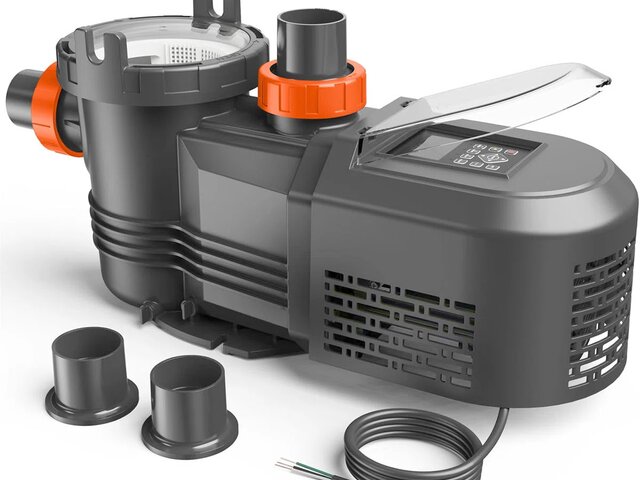
Can You Run Pool Pump With Cover On? Safety & Efficiency

Pool pump operation with cover installed - safety protocols?
Read full question
Between my morning coffee run and checking the backyard, I spotted my pool pump still humming away with yesterday's cover locked on tight. My primary concerns are maintaining adequate ventilation around the pump housing and ensuring optimal energy efficiency during covered operation periods.
Are there specific operational guidelines I should follow for different cover types (solar, safety, winter covers)? I want to verify that continuous pump operation won't create any mechanical stress or ventilation issues that could compromise system performance or safety parameters.
Quick Answer
Yes — you can run your pool pump with a solar or safety pool cover on; circulation continues normally underneath, and with a solar cover it's recommended for heat retention. The exception is closing for a hard freeze, when you shut the pump down and drain the lines instead.
Solar Covers
Running the pump with a solar (bubble) cover on is fine and usually a good idea. The cover sits on the surface and doesn't block the skimmer or returns, so water still circulates and filters underneath. Solar covers cut evaporation and heat loss, so leaving it on while the pump runs helps hold daytime warmth into the evening. Just make sure the cover doesn't completely seal over the skimmer mouth — you want surface water to keep reaching it. Many owners peel the cover back partway during heavy daytime swimming so the surface skims well, then re-cover in the evening.
Safety Covers (Mesh and Solid)
A latched safety cover doesn't interfere with the pump either. The water level sits below the cover, and the pump circulates the water beneath it exactly as it would with no cover. Mesh safety covers let rain and snowmelt through, so the water level stays topped up; solid safety covers shed water, so use a cover pump to clear standing water off the top. Running the pump occasionally under a safety cover during the off-season is a common way to keep water from going stagnant in mild climates.
Winter Covers and Closing for a Freeze
This is the case where the answer flips. If you're truly closing the pool for a hard-freeze winter, you don't keep the pump running under the cover — you winterize: shut the pump off, drain the pump, filter, and heater, blow out and plug the plumbing lines, and lower the water below the skimmer (follow your equipment's winterization instructions). Water left sitting in pipes or a stopped pump can freeze and crack expensive components, and freeze damage isn't covered by most warranties.
In milder climates where it only occasionally dips near freezing, many owners instead leave everything running and rely on freeze protection — a controller (or the pump's built-in freeze mode) that automatically runs the pump when the air temperature drops near freezing. Moving water is far harder to freeze than still water, so circulation, not the cover, is what protects the plumbing on a cold night.
Why Circulation Under a Cover Matters
Keeping water moving under any cover does two useful things: it distributes sanitizer so the water doesn't go stagnant and algae-prone in the dark under the cover, and (in cold weather) it provides freeze protection. A covered, circulating pool is generally much easier to reopen than one that sat covered and still for months.
Whatever cover you use, keep the water at the proper level so the skimmer can still draw water — if the level drops below the skimmer mouth, the pump can suck air and lose prime. Check the level after heavy rain (solid covers) or a stretch of evaporation (solar covers).
A Few Practical Tips
- Solar cover: safe to run the pump with it on; pull it back during heavy daytime swimming if your skimmer needs better surface access.
- Safety cover: the pump runs normally underneath; watch the water level (top up under mesh, pump off standing water under solid).
- Closing for a hard freeze: don't run the pump under the cover — winterize and drain instead.
- Mild-winter freeze nights: let the pump run on freeze protection rather than shutting it off.
- Always turn off power at the breaker before any pump or cover service, and make sure the pump is on GFCI-protected power.
Still need help? Ask a Pool & Spa Expert AD
Get a personalized answer from PoolGuy810 — 30 years owning a pool and spa repair company. Describe your issue and get step-by-step help.
Related Pool Guides
Need More Help?
Try our free pool calculators and tools to help diagnose and fix your pool problems.
Browse Pool ToolsSLAM calculator, pH calculator, salt dosing & more