
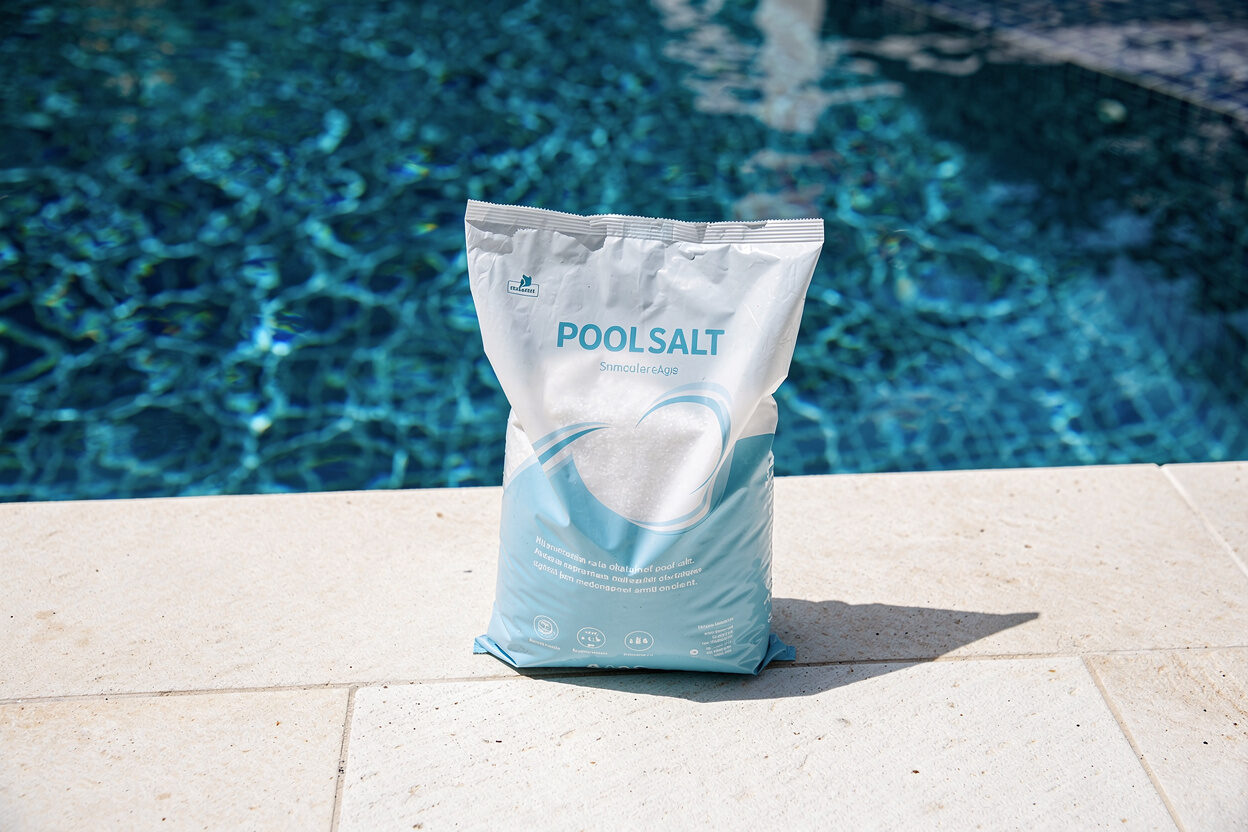
How Pool Salt Cells Work: Electrolysis Process Explained

What actually happens inside a salt water chlorinator cell?
Read full question
I tried figuring out how my neighbor's salt cell creates perfect chlorinated water while mine struggles, but I'm completely lost on how salt actually becomes chlorine.
Like, I get that I add salt to the pool and somehow it becomes chlorine, but what's the actual process happening in there?
Is it some kind of chemical reaction or what? And why does my pH always seem to creep up when the salt cell is running - is that related to whatever's going on inside the cell too?
Quick Answer
Pool salt cells use electrolysis to convert dissolved salt (sodium chloride) into chlorine, which sanitizes your pool, plus some sodium hydroxide and hydrogen gas. Salt pools tend to drift toward higher pH over time, so they need regular pH monitoring and adjustment.
The Electrolysis Process Explained
The magic happens inside your salt cell's titanium plates coated with precious metals like ruthenium or iridium. Here's the exact chemical process:
When your pool pump circulates salt water through the cell, the control unit sends low-voltage DC current (typically in the range of about 5 to 30 volts DC at the cell depending on the system, with many common US units running around 24-28 V) through the electrolytic plates. This electrical current breaks apart the salt molecules (NaCl) in a process called electrolysis:
At the anode (positive plate):
2Cl⁻ → Cl₂ + 2e⁻
This creates chlorine gas that immediately dissolves into the water as hypochlorous acid - the same sanitizing agent you get from liquid chlorine.
At the cathode (negative plate):
2H₂O + 2e⁻ → H₂ + 2OH⁻
This produces hydrogen gas (which escapes) and hydroxide ions. On their own these are alkaline, but the acidic chlorine generated at the anode neutralizes them downstream in the plumbing, so the cell's net effect on pH is close to neutral.
How Salt Concentration Affects Performance
Your salt cell requires a specific salt concentration to function properly - typically 2700-3400 ppm (parts per million). This is about 1/10th the salinity of ocean water. Too little salt and the cell can't generate enough chlorine. Too much salt can damage the cell and create excessive chlorine production.
To achieve proper salt levels, add pool salt to reach your generator's target (around 3,200 ppm); our all-in-one pool calculator works out how much for your pool. Use salt that is at least 99% pure sodium chloride. Pool salt is the easy default, and plain water softener salt (solar/evaporated crystals, no additives) works just as well and is usually cheaper. Avoid table salt (anti-caking agents and iodine), rock salt (impurities that cloud the water and leave residue), and any softener salt with rust-remover additives.
Self-Cleaning Cycle Operation
Modern salt cells include a crucial self-cleaning feature called reverse polarity. Every few hours, the control unit reverses the electrical current, making the anode become the cathode and vice versa. This process removes calcium scale buildup that naturally occurs during electrolysis.
Without this self-cleaning cycle, calcium carbonate would coat the plates and reduce chlorine production. The white flaky deposits you might see in your pool after cleaning cycles are normal calcium scale being shed from the plates.
Chlorine Output Control
Your salt cell doesn't run at full capacity 24/7. The control unit regulates chlorine production by adjusting the electrical current and cycling the cell on/off. Most systems allow you to set output from 20-100% based on your pool's chlorine demand.
During peak swimming season, you might run at 80-100% output. In cooler months, 30-50% may be sufficient. The key is maintaining proper free chlorine levels of 5-7 ppm for CYACyanuric Acid (stabilizer) — Sunscreen for your chlorine — it keeps sunlight from burning it off. The catch: the more you have, the more chlorine you need to keep. learn more → 50 - if you have 50 ppm CYA, target 5-7 ppm FCFree Chlorine — The chlorine actively sanitizing your water right now. This is the number you keep an eye on. how much you need →. To find the free chlorine for your CYA, use the FC/CYAFC/CYA chart — The chart that sets your chlorine target from your stabilizer (CYA) level — the two go together. see the chart → relationship — our all-in-one pool calculator estimates a free chlorine target for your CYA level.
Temperature and Flow Requirements
Salt cells work most efficiently when water temperature exceeds 60°F. Below this temperature, chlorine production drops significantly. Most systems automatically shut off below 50-55°F to prevent damage.
Proper water flow is critical - typically 20-60 gallons per minute depending on cell size. This is a safety minimum enforced by a flow switch: if too little water passes through, hydrogen gas can accumulate in the cell and build dangerous pressure (and low flow also causes hot spots that damage the plates). Chlorine output is set by current and runtime, not by how long water sits in the cell, so there's a minimum flow to meet—not a narrow window, so 'too much flow' isn't a problem.
Why pH Rises Continuously
Salt cells do tend to drive pH up, but not because they dose your pool with lye. The alkaline hydroxide made at the cathode is neutralized by the acidic chlorine made at the anode, so the chlorination cycle itself is roughly pH-neutral. The real cause is physical: the cell's hydrogen bubbles aerate the water, driving off dissolved CO2, and losing CO2 raises pH. That's why salt water pools still need regular pH adjustment with muriatic acid.
Acid demand varies widely with alkalinity, aeration, and bather load, so add muriatic acid based on your pH/TA test results rather than a fixed weekly amount. Keep total alkalinity lower than traditional pools - 60-80 ppm - to help control pH rise and prevent excessive scaling on the cell plates.
Cell Lifespan and Replacement
Salt cells have finite lifespans measured in operating hours, typically 8,000-10,000 hours or 3-7 years depending on usage. The precious metal coating gradually erodes with each electrolysis cycle.
Signs your cell needs replacement include inability to maintain chlorine levels even at 100% output, visible plate erosion, or error codes indicating low cell voltage. Regular cleaning and proper water chemistry extend cell life significantly.
For the full breakdown of safe chlorine levels by CYA level, see our pool water chemistry guide.
 Taylor K-2006C Complete FAS-DPD Pool & Spa Test Kit
The FAS-DPD kit pool pros trust — reads chlorine accurately even at shock/SLAM levels, plus pH, alkalinity, calcium hardness and CYA. View on Amazon →
Taylor K-2006C Complete FAS-DPD Pool & Spa Test Kit
The FAS-DPD kit pool pros trust — reads chlorine accurately even at shock/SLAM levels, plus pH, alkalinity, calcium hardness and CYA. View on Amazon →
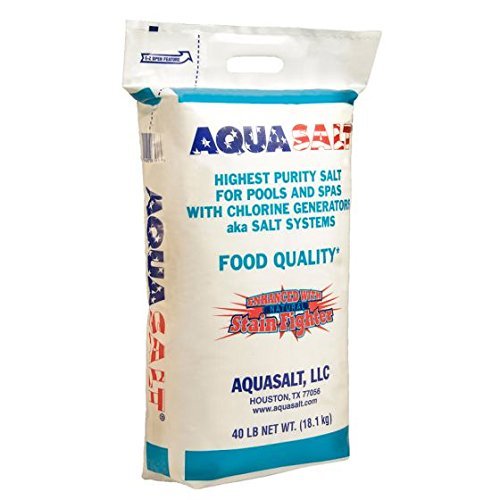 AquaSalt Pool & Spa Salt for Chlorine Generators (2 × 40 lb)
High-purity salt for saltwater chlorine generators. View on Amazon →
AquaSalt Pool & Spa Salt for Chlorine Generators (2 × 40 lb)
High-purity salt for saltwater chlorine generators. View on Amazon →
 Acid Blue - Low Fume Muriatic Acid for Swimming Pools & Spas - Lower's pH, Reduces Alkalinity - 2 Gallon
View on Amazon →
Acid Blue - Low Fume Muriatic Acid for Swimming Pools & Spas - Lower's pH, Reduces Alkalinity - 2 Gallon
View on Amazon →
Still need help? Ask a Pool & Spa Expert AD
Get a personalized answer from PoolGuy810 — 30 years owning a pool and spa repair company. Describe your issue and get step-by-step help.
Related Pool Guides
Need More Help?
Try our free pool calculators and tools to help diagnose and fix your pool problems.
Browse Pool ToolsSLAM calculator, pH calculator, salt dosing & more