
Can I Leave My Pool Filter On All The Time? Complete Guide

Should I run my pool filter 24/7 or just part of the day?
Read full question
About to run my pool filter 24/7 this summer. Currently I'm running my filter system about 6 hours per day, but I've been dealing with some water clarity issues despite maintaining proper chlorine levels (2.5 ppm) and balanced pH (7.4). My pool gets heavy use from my family and I've noticed the water looks a bit cloudy by evening even after shocking. I'm wondering if I should just leave the filter running continuously to help with circulation and keep the water crystal clear, or if there's a sweet spot for daily runtime that balances effectiveness with energy costs. The pool is in full sun most of the day and we're in a fairly warm climate, so I want to make sure I'm getting adequate turnover without unnecessarily driving up my electric bill.
Quick Answer
Yes, you can leave your pool filter running continuously, and it's actually beneficial for water clarity and chemical distribution. However, running it 8-12 hours daily is usually sufficient for most pools while saving energy costs. Continuous filtration is crucial during heavy use, algae treatment, and weather challenges. Modern variable-speed pumps make 24/7 operation more efficient and practical. Ensure proper maintenance and chemical management for optimal results.
Benefits of Continuous Pool Filter Operation
Running your pool filter continuously provides several significant advantages that many pool owners don't fully appreciate. Constant water circulation prevents stagnation, which is where algae and bacteria thrive. When circulation is poor you can get debris settling and warmer surface zones, but it's your sanitizer — not the pump — that prevents algae and bacteria. A properly chlorinated pool will not grow algae during normal pump-off periods.
Continuous filtration also ensures optimal chemical distribution throughout your entire pool. Your sanitizer (chlorine or other chemicals) needs constant circulation to reach every corner of your pool effectively. Without good circulation, chemicals distribute unevenly, which can contribute to cloudy water or localized algae if sanitizer is already low. Note that cloudy water despite running the pump usually points to chemistry, not runtime — if your free chlorine is 2.5 ppm in full sun, test your CYACyanuric Acid (stabilizer) — Sunscreen for your chlorine — it keeps sunlight from burning it off. The catch: the more you have, the more chlorine you need to keep. learn more →, because that FCFree Chlorine — The chlorine actively sanitizing your water right now. This is the number you keep an eye on. how much you need → may be too low for your stabilizer level. More filtration won't fix an FC/CYAFC/CYA chart — The chart that sets your chlorine target from your stabilizer (CYA) level — the two go together. see the chart → imbalance.
From a water clarity perspective, 24/7 operation means your filter media is constantly trapping debris, oils, and microscopic particles. This results in consistently crystal-clear water rather than the gradual decline in clarity that occurs during off periods.
When Continuous Operation Is Recommended
Heavy Bather Loads and Pool Parties
During periods of heavy use, continuous filtration becomes essential. Each swimmer introduces oils, lotions, sweat, and organic matter that must be filtered out quickly. Running your filter 24/7 during these times prevents organic buildup that could overwhelm your sanitizer system.
Algae Prevention and Treatment
If you're dealing with early algae formation or implementing a SLAMShock Level And Maintain — raise free chlorine to a target based on your CYA and hold it there until the algae is gone. It's a process, not a one-time dose. the SLAM walkthrough → (Shock Level And Maintain) treatment, continuous filtration is crucial. The filter helps remove dead algae particles while maintaining proper chemical circulation. During SLAM treatments, you should run your filter continuously until you can maintain shock level chlorine (about 40% of your CYA) overnight with clear water. Use the all-in-one pool calculator to determine the appropriate shock level based on your CYA reading.
Weather Challenges
Hot weather, storms, and high winds introduce additional contaminants and increase chemical consumption. Continuous filtration helps your pool recover more quickly from weather-related stress. In temperatures above 85°F, biological activity increases significantly, making constant circulation even more important.
Optimal Filtration Schedules for Different Situations
Standard Residential Pools
For most residential pools with normal usage, running your filter 8-12 hours daily is sufficient. The general rule is to filter your entire pool volume at least once per day. Calculate your required runtime by dividing your pool volume by your pump's flow rate (accounting for head loss).
For a 20,000-gallon pool with a pump flowing 50 GPM under operating conditions, you'd need 400 minutes (6.7 hours) minimum. However, 8-10 hours provides a safety margin for varying conditions.
High-Use Commercial or Community Pools
Pools with constant bather loads often require 18-24 hours of daily filtration. The high organic load and chemical demand necessitate continuous water treatment and circulation.
Equipment Considerations and Longevity
Modern pool pumps, especially variable-speed models, are engineered for continuous operation. In fact, frequent starting and stopping can create more wear on motor components than steady operation. The initial power surge when starting a motor is typically 3-7 times the running amperage.
However, older single-speed pumps may benefit from some rest periods to prevent overheating, especially in extreme climates. Check your pump's specifications and ensure adequate ventilation around the motor.
Filter Media Maintenance
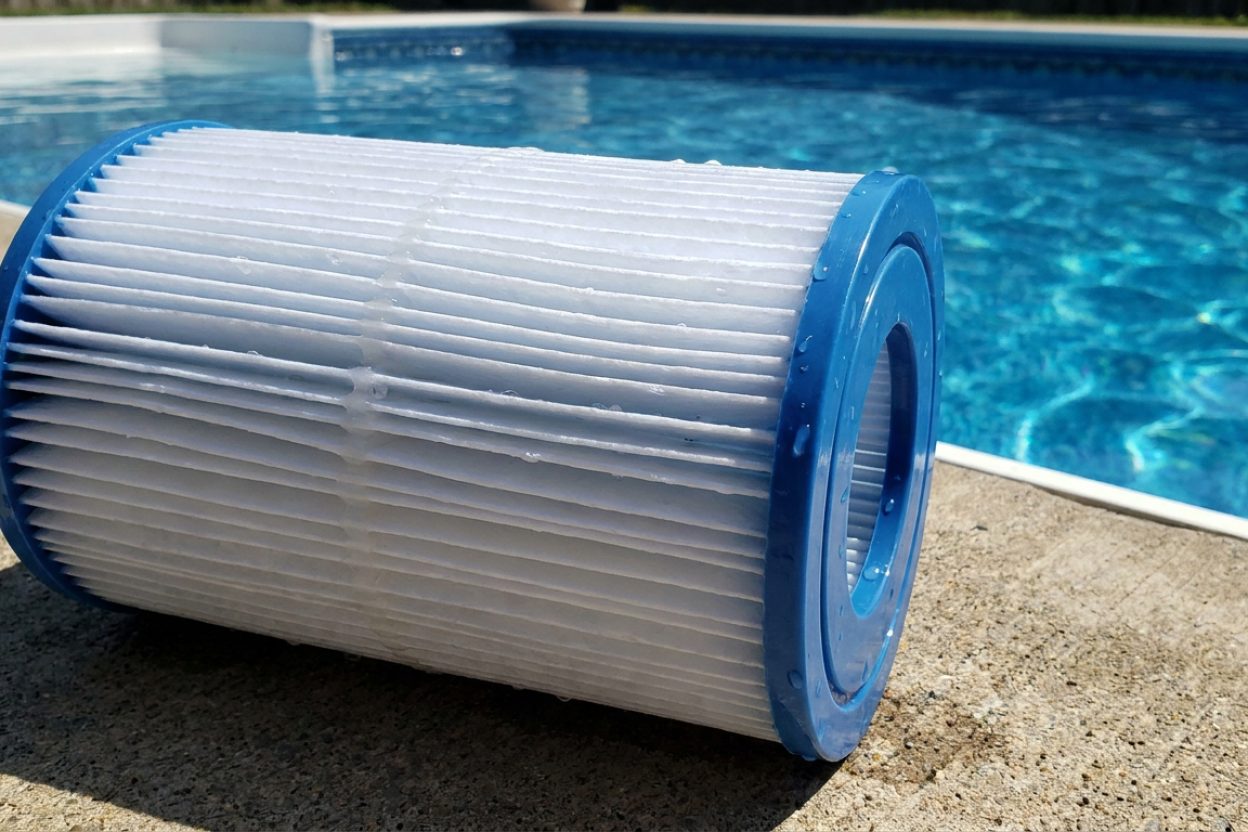
Continuous operation doesn't change your regular maintenance schedule. Sand filters still need backwashing based on pressure differential (typically when pressure rises 8-15 PSI above clean levels, though this varies significantly by filter size and manufacturer - consult your filter's specifications for exact requirements). Cartridge filters require cleaning every 2-4 weeks regardless of runtime. DE filters need regular backwashing and periodic media replacement.
Energy Costs and Efficiency Strategies
The main drawback of 24/7 operation is energy consumption. A typical single-speed 1.5 HP pump uses about 1,800-2,200 watts, costing $3-6 daily in most areas. Over a swimming season, this can add $500-1,000 to your electric bill.
Variable Speed Pump Solutions
Variable-speed pumps offer the perfect compromise for continuous operation. You can run low speeds (around 1,000-1,500 RPM) for 18-20 hours daily, then boost to higher speeds for 4-6 hours. This maintains circulation while using 70-80% less energy than single-speed pumps.
A variable-speed pump running at low speed might use only 200-400 watts, making 24/7 operation economically feasible while providing superior water quality.
Balancing Filtration with Chemical Management
Continuous filtration affects your chemical balance routine. With constant circulation, chemicals distribute more evenly, potentially reducing the frequency of testing and adjustment. However, you should still test your water 2-3 times weekly minimum, focusing on free chlorine, pH, and total alkalinity.
During SLAM treatments or algae remediation, continuous operation helps maintain proper FC/CYA ratios by ensuring even distribution of liquid chlorine additions. Use the all-in-one pool calculator to determine appropriate shock levels based on your CYA reading.
System Integration and Automation
Modern pool automation systems make 24/7 operation more practical by adjusting pump speeds based on pool conditions, scheduling chemical feeders, and monitoring system performance. These systems can run low-speed filtration during off-peak energy hours and boost circulation during peak swimming times.
Safety consideration: Ensure your electrical system can handle continuous operation, especially in older installations. Have a qualified electrician verify your wiring and GFCI protection if you're switching to 24/7 operation from a limited schedule.

Still need help? Ask a Pool & Spa Expert AD
Get a personalized answer from PoolGuy810 — 30 years owning a pool and spa repair company. Describe your issue and get step-by-step help.
Related Pool Guides
Need More Help?
Try our free pool calculators and tools to help diagnose and fix your pool problems.
Browse Pool ToolsSLAM calculator, pH calculator, salt dosing & more