
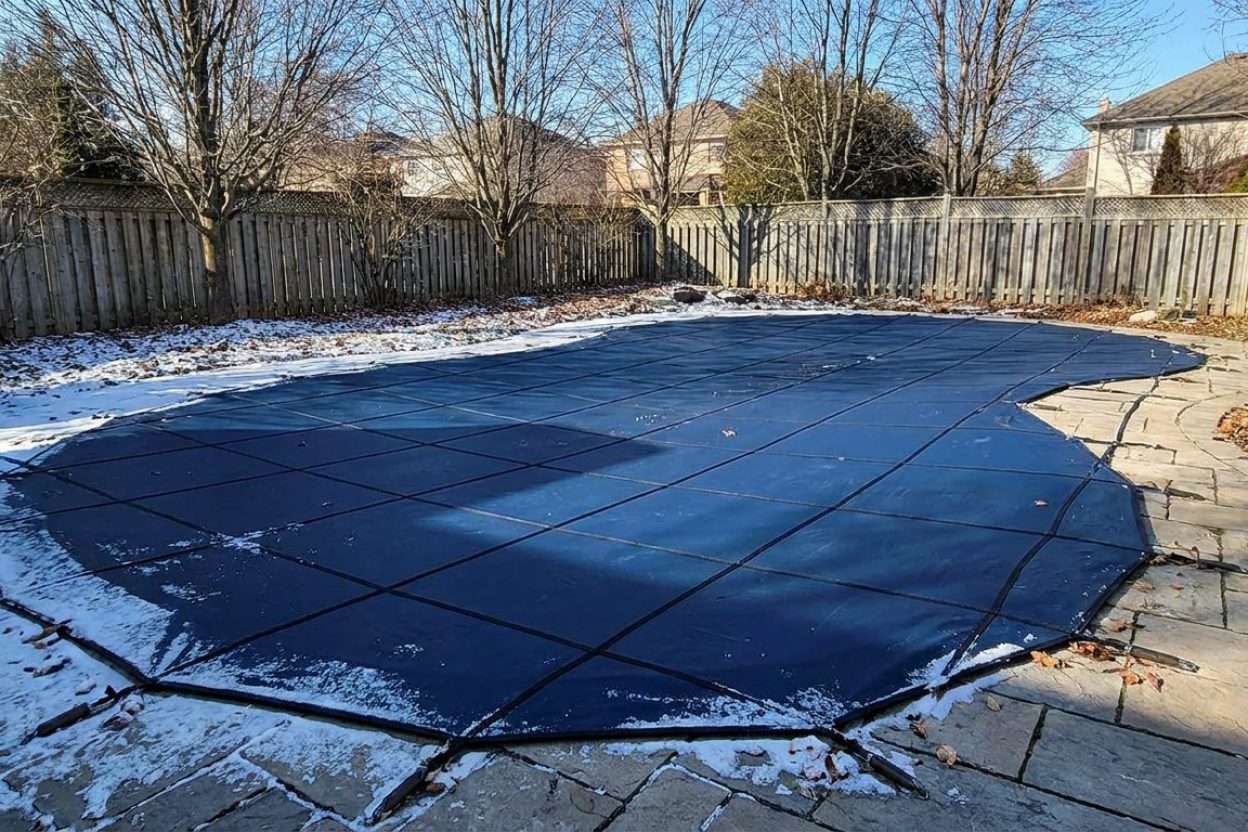
Where to Drain Pool Water When Winterizing

Pool water is draining somewhere weird when I winterize — help?
Read full question
Nobody told me this part would be confusing. When I started dropping the water level to close the pool for winter, I realized I had absolutely no idea where that water is actually supposed to go. My pool is an inground, and right now I've got a submersible pump running — but I keep stopping because I'm genuinely not sure if I'm about to flood my neighbor's yard or create a problem with the municipality.
The water has to go somewhere, obviously, but there seem to be a few options and I can't figure out which one is actually correct. Is it okay to run it out to the street drain? Can I just let it soak into the yard? Or is there a hookup to the sewer I should be using instead?
I want to do this right and not get a fine or cause a drainage mess. Any guidance would be really helpful before I crank the pump back on.
Quick Answer
When winterizing, you typically only need to lower the water level a few inches below the skimmer — not drain the pool completely. Treated pool water can often go to a sanitary sewer cleanout, a yard area with good drainage, or sometimes a storm drain, but local rules vary and chlorine levels matter. Always check your municipality's guidelines before discharging.
You Are Lowering the Water, Not Emptying the Pool
Winterizing typically doesn't mean draining your pool dry. For most in-ground pools, you only need to lower the water level 4–6 inches below the skimmer opening. This prevents water inside the skimmer from freezing and cracking the housing. You'll be removing just a few hundred to a couple thousand gallons, not the entire volume—this amount influences where you can send the water.
The Chlorine Question, Answered Honestly
While many online sources treat pool water as hazardous waste, it usually isn't. The EPA's maximum chlorine level allowed in drinking water is 4.0 ppm; many municipal water systems operate near this level. If you test your tap water and your pool on the same day, your tap might read higher.
Chlorine also degrades quickly outdoors. Sunlight breaks down free chlorine with a half-life of roughly 20–45 minutes in an unstabilized pool; without cyanuric acid (CYACyanuric Acid (stabilizer) — Sunscreen for your chlorine — it keeps sunlight from burning it off. The catch: the more you have, the more chlorine you need to keep. learn more →), most of it disappears within about three hours. Stabilized pools retain chlorine much longer—CYA is designed to slow this process—so a stabilized pool takes days rather than hours to dechlorinate. In both cases, the trend is downward: if left alone, the chlorine diminishes on its own. Chlorine levels always depend on your CYA level, which our pool water chemistry guide explains in detail.
Where this actually matters is the destination, not the number. Chlorine is highly reactive. Water that lands on soil, grass, or leaf litter has its chlorine consumed almost instantly by organic matter—this is precisely why no one dechlorinates garden hose water before watering a vegetable patch. However, water sent into a storm drain bypasses soil entirely. It reaches a stream undiluted, and fish are far more sensitive to chlorine than humans: the EPA's freshwater aquatic-life criterion is approximately 0.011 ppm. The same tap water you drink safely can kill aquarium fish, which is why pet stores sell dechlorinator.
So, discharging water with normal chlorine levels onto your own property is typically fine. Shock-level water is the exception worth waiting for—and the concern is your lawn, not the broader ecosystem. High concentrations of chlorine can burn grass like any strong oxidizer, so letting a shocked pool sit until chlorine is near zero is simple, cost-free lawn protection. Just test before you pump.
Cyanuric acid, the stabilizer, is not a major concern here—it doesn't bioaccumulate significantly, it biodegrades, and at pool concentrations it acts more like a weak nitrogen source than a pollutant. Borates are the exception worth knowing. If you maintain borates in your pool, boron becomes toxic to landscape plants above roughly 0.5 ppm in irrigation water, and a borated pool typically contains 30–50 ppm. Like salt, boron does not break down. Handle borated water as you would salt water: disperse it widely, or direct it to the sewer where permitted. Copper-based algaecide is another additive that persists instead of fading.
If you've recently added algaecide, clarifier, or flocculant, check the product label—each has unique breakdown times and disposal instructions.
Salt Is the Real Constraint
If you have a saltwater pool, this is the crucial issue, and it differs from chlorine.
A salt pool contains roughly 3,000–4,000 ppm of salt—about 1,800–2,400 mg/L of chloride, compared to the EPA freshwater criteria of 230 mg/L chronic and 860 mg/L acute. Critically, chloride does not break down. Sunlight doesn't affect it, soil doesn't absorb it, and waiting doesn't help. Salt water dumped repeatedly in the same area accumulates in the root zone over seasons, which can kill trees.
Salt water belongs in your household sanitary sewer line—an indoor floor drain, utility sink, or cleanout on your property line—never into a street gutter, curb inlet, yard drain, or ditch. Those feed the stormwater system, which discharges untreated into creeks and wetlands. Some municipalities even restrict salt discharge into sanitary sewers, so verify local rules first. The full procedure, equipment, and soil recovery details are in where to drain a saltwater pool safely.
Where the Water Can Go
Your Own Yard
For a conventional chlorine pool, this is often the simplest option and works like using a sprinkler. Move the hose around instead of leaving it in one spot, avoid discharging near your foundation, and don't let water flow onto a neighbor's property or into a ditch connected to a storm drain. Dry, porous soil absorbs it; saturated ground or an approaching storm creates runoff, which leads back to the storm-drain issue you want to avoid.
For a salt pool, you must disperse it carefully—see above.
Sanitary Sewer Cleanout
This refers to your household sewer line—an indoor floor drain, utility sink, or cleanout on your property—which carries water to a treatment facility. It does not mean anything at the curb. You'll need a submersible pump, enough hose to reach it, and a moderate flow rate, since a sewer lateral has limited capacity and a high-volume discharge can cause backups.
This is the right default for salt and borated pools. The treatment plant doesn't remove chloride or boron, but sending it here dilutes the load across the system instead of concentrating it in your landscaping. Some municipalities restrict salt-pool discharge for this very reason, so confirm before proceeding.
Street Storm Drains
This is usually prohibited, and for good reason. Storm drains release water untreated into streams and lakes, so anything you put in reaches aquatic life directly. This is where chlorine and chloride levels become critical. A few jurisdictions may allow it under specific conditions, but most do not, and fines are real.
Check Your Local Rules — Including the Ones That Seem Arbitrary
Local regulations vary more than the chemistry, and some may not align with the reasoning above. A rule might require dechlorination for a discharge path where chemically it's unnecessary, or ban a destination your neighboring town allows. It's important to know these rules, not argue with them—they are enforceable regardless of their scientific basis, and "it seemed excessive" won't protect you from a fine.
Check your municipal or water authority website for "pool water discharge," call the public works department, and review your HOA rules if applicable.
Lowering the Water
- Test the water. If chlorine is at shock level, wait; normal levels require no special treatment for ground discharge.
- Place a submersible pump in the pool, or use your filter's waste/backwash setting if it can reach your chosen outlet.
- Secure the discharge hose to prevent it from whipping loose and redirecting flow.
- Monitor the water level and stop when it is 4–6 inches below the skimmer opening.
Do not overshoot. An inground pool that is emptied or nearly emptied can pop out of the ground due to hydrostatic pressure when the water table is high—a real risk especially for fiberglass shells, and a concern for any pool type. You are winterizing, not draining. Stop at the 4–6 inch mark.
Our pool winterizing guide covers the rest of the closing process, from chemistry to plugging return lines.
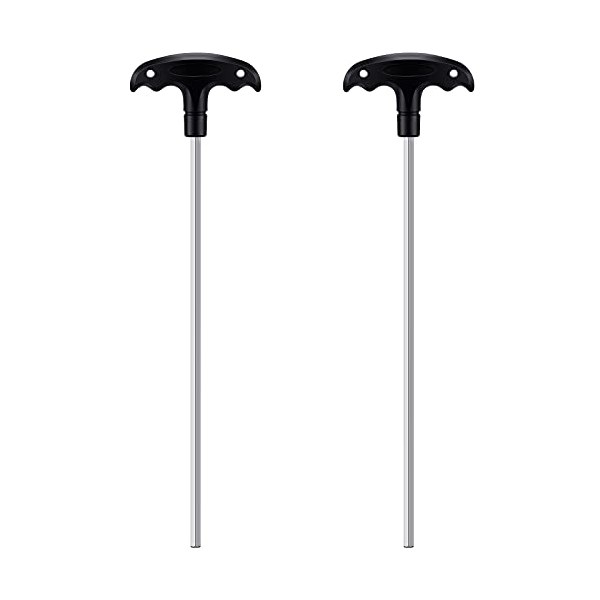 Pool Safety Cover Hex Key Tool (2-Pack)
Hex keys to install or remove a pool safety cover. View on Amazon →
Pool Safety Cover Hex Key Tool (2-Pack)
Hex keys to install or remove a pool safety cover. View on Amazon →
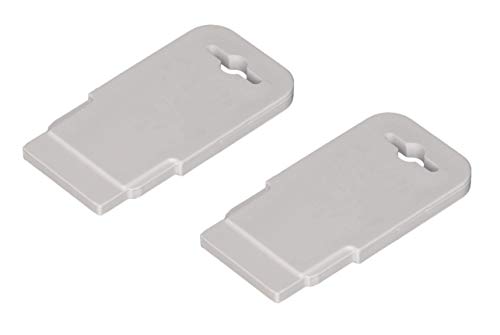 Pool Eyeball / Return Jet Fitting Removal Tool (ATIE)
Pops out & reseats Hayward SP1419 return-jet eyeballs — handy for closing. View on Amazon →
Pool Eyeball / Return Jet Fitting Removal Tool (ATIE)
Pops out & reseats Hayward SP1419 return-jet eyeballs — handy for closing. View on Amazon →
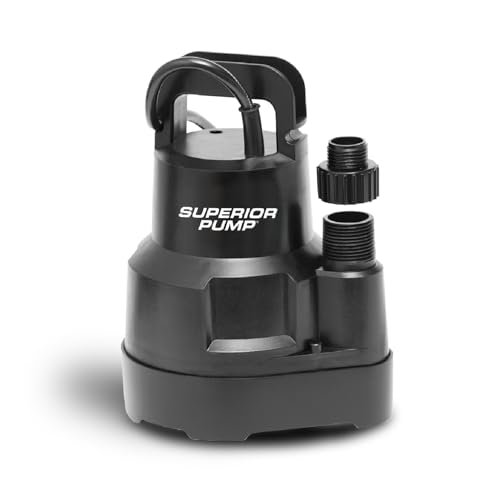 Superior Pump 91014 1/4 HP Submersible Utility Pump
Drains a pool, cover, or equipment pit when you need to lower the water. View on Amazon →
Superior Pump 91014 1/4 HP Submersible Utility Pump
Drains a pool, cover, or equipment pit when you need to lower the water. View on Amazon →
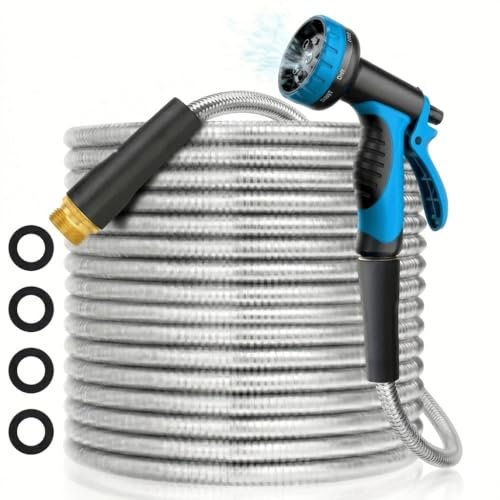 50 ft Flexible Metal Garden Hose (Kink-Free)
Durable hose for filling, priming, and rinsing equipment. View on Amazon →
50 ft Flexible Metal Garden Hose (Kink-Free)
Durable hose for filling, priming, and rinsing equipment. View on Amazon →
Still need help? Ask a Pool & Spa Expert AD
Get a personalized answer from PoolGuy810 — 30 years owning a pool and spa repair company. Describe your issue and get step-by-step help.
Related Pool Guides
Need More Help?
Try our free pool calculators and tools to help diagnose and fix your pool problems.
Browse Pool ToolsSLAM calculator, pH calculator, salt dosing & more