
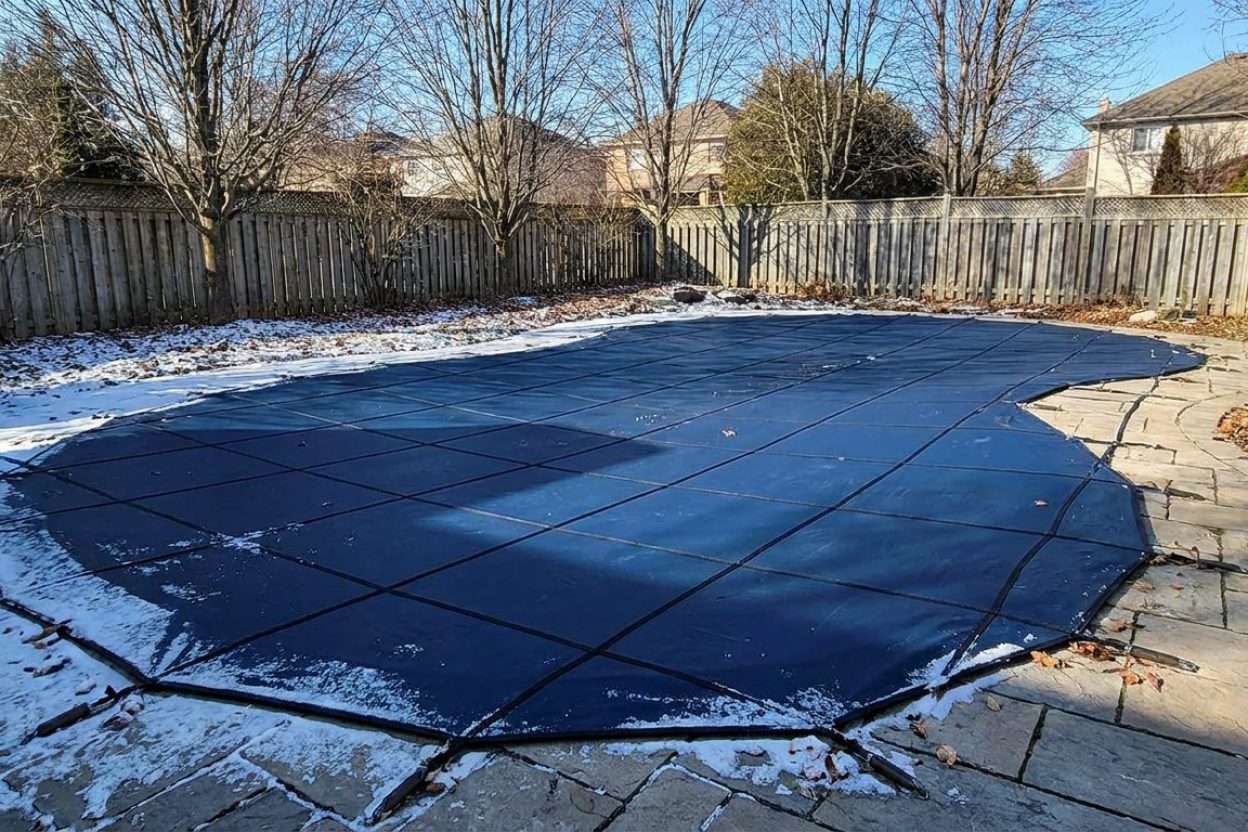
Stain Preventer vs Metal Sequestrant at Pool Closing

Does the stain preventer in my closing kit actually stop brown well water stains?
Read full question
Found a stain and scale preventer bottle sitting in my pool closing kit and I'm second-guessing whether it's even doing what I think it is. My test strips show iron levels that seem higher than anything my neighbors deal with — we're on a private well — and last spring when I pulled the cover off, the walls had this ugly brownish tint that took forever to address. Everything I've read says sequestrants handle metal staining, but my closing kit just says 'stain and scale preventer' on the label, which is confusing me about whether they're the same thing or two totally different products.
The numbers that are throwing me off: my alkalinity is reading around 100 ppm and pH is at 7.4, so those seem fine going into winter. But I have no idea how to measure whether the stain preventer is even working or at what concentration it should be in the water. Is this the right product to stop the brown metal staining from my well water, and does it go in before or after the other closing chemicals? I don't want to waste the bottle if it's not actually helping.
Quick Answer
Yes, the stain and scale preventer in your closing kit is essentially a sequestrant — it binds dissolved metals like iron from well water so they can't oxidize and stain your surfaces over winter. It should go in toward the end of your closing process, after balancing chemistry but before adding the algaecide or shock. For well water pools with known iron issues, it's one of the most important things you can add at closing.
Stain Preventer vs. Metal Sequestrant — Are They the Same Thing?
In practical terms, they are very similar. The labels 'stain and scale preventer' and 'metal sequestrant' often describe identical products in pool care, particularly in winterizing kits. Their common ingredient is typically a phosphonic acid compound, which works to chemically bind metals and minerals dissolved in your pool water. This action prevents them from oxidizing and forming stains or scale on your pool's surfaces during the off-season.
For a pool filled with well water that developed brown stains last season, dissolved iron is the likely culprit. Over the winter, as chlorine levels diminish and oxidation occurs, this iron can fall out of solution and adhere to the liner or plaster. Using a sequestrant at closing is a direct and effective method to prevent this staining from recurring.
What You Can Handle Yourself
Applying a stain preventer is a straightforward task any pool owner can manage. It fits into your closing routine as follows:
Step 1 — Balance Your Water Chemistry First
Begin by balancing your pool water. Target a pH between 7.2 and 7.6 and total alkalinity of 80 to 120 ppm. Verify your calcium hardness is in the 200–400 ppm range. Ensure your stabilizer (CYACyanuric Acid (stabilizer) — Sunscreen for your chlorine — it keeps sunlight from burning it off. The catch: the more you have, the more chlorine you need to keep. learn more →) and free chlorine levels are also correct. Crucially, your free chlorine target is not a fixed value — it depends entirely on your CYA level. For a full explanation of this relationship, refer to our pool water chemistry guide. Properly balanced water creates the ideal conditions for the sequestrant to perform.
Step 2 — Add the Sequestrant After Balancing, Before Shock
Timing is important here. If you plan to shock your pool, do so 2–3 days before closing and allow the chlorine level to decrease. More details are in our shock-before-closing guide. On the day you close, add the sequestrant only after water balancing is complete and before adding the winterizing kit's non-chlorine oxidizer. High levels of oxidizer can break down the sequestrant, so it's generally advised to add it beforehand, but you should always check your specific product's label for its recommended sequence.
Circulate the water by running your pump for at least one full turnover cycle, which for many pools translates to 6–8 hours of runtime. Consult your product instructions for any specific circulation requirements.
Step 3 — Follow Kit Order for Remaining Products
Your closing kit's instructions will list a specific order for adding its included chemicals—adhere to that order. A typical sequence is: balance water → add sequestrant → shock → add algaecide (after chlorine has dropped somewhat). Adding algaecide too soon after shocking can render it less effective. Use our closing checklist to ensure you don't overlook any steps.
When to Consider Going Beyond the Kit
There are scenarios where a basic kit might not be sufficient:
- Severe staining history: If you faced major staining that required intensive cleaning, the standard bottle in a kit may not provide enough protection. In cases of serious iron issues, some owners use a double dose or supplement with a dedicated, concentrated iron sequestrant.
- Unknown iron levels: Without knowing your water's actual metal content, you're guessing on dosage. Get a professional water test that includes metals before closing to determine the proper amount of sequestrant needed.
- Staining already present on surfaces: A sequestrant prevents new stains; it does not remove existing ones. Current metal stains usually require an ascorbic acid (vitamin C) treatment to lift them, followed by a sequestrant to hold the metals in solution. For severe cases, acid washing performed by a professional might be considered.
One Important Limitation to Know
Sequestrants offer temporary, not permanent, protection. Their effectiveness diminishes over the winter months, especially as chlorine and other oxidizers interact with them. Do not assume a single fall application will last until spring. It's standard practice to add another dose of sequestrant when you open your pool, before you shock or oxidize, to guard against staining during that critical period.
Also understand that sequestrants do not eliminate metals from the water; they merely keep them sequestered. If your well water is a continuous source of iron, a long-term solution might involve installing a pre-filter on your fill hose to remove metals before they enter the pool.
Bottom Line on Your Closing Kit Bottle
Do not omit this step, especially with your well water. It's a key component of your winterizing kit for preventing stains. Add it after balancing your water, circulate thoroughly, and then proceed with the rest of your closing chemicals. For a complete, step-by-step procedure, our pool winterization guide provides a full sequence to follow. Taking this preventative measure now will contribute to a much smoother pool opening next season.
Still need help? Ask a Pool & Spa Expert AD
Get a personalized answer from PoolGuy810 — 30 years owning a pool and spa repair company. Describe your issue and get step-by-step help.
Related Pool Guides
Need More Help?
Try our free pool calculators and tools to help diagnose and fix your pool problems.
Browse Pool ToolsSLAM calculator, pH calculator, salt dosing & more