
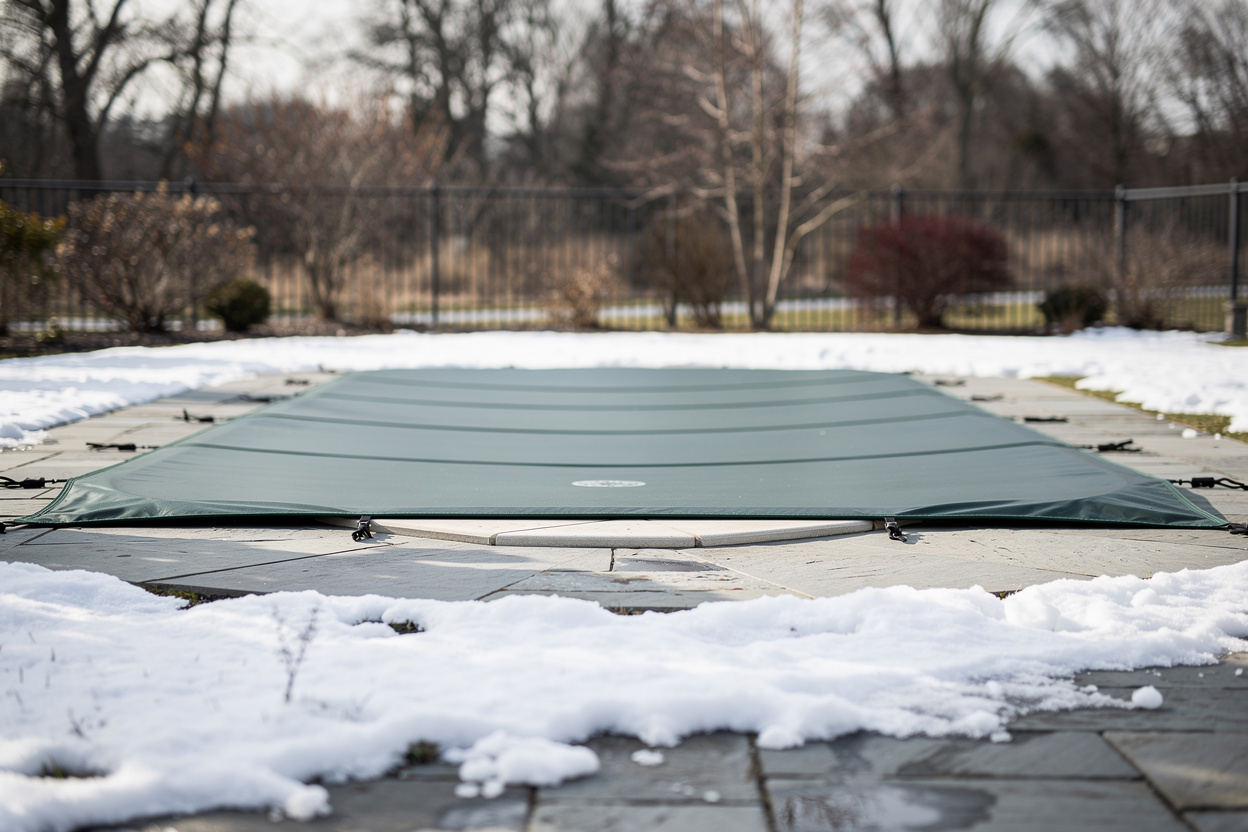
Stop Your Winter Pool Cover From Blowing Off

Why does my above-ground winter cover keep blowing off in wind?
Read full question
Looked out my back window after a big windstorm last December and half my winter cover was hanging off the pool, flapping against the side — the other half was somewhere across the yard. I've got a standard oval above-ground pool with a tarp-style winter cover and the cable-and-winch system that came with it, and apparently that wasn't enough to keep things secure.
Now I'm trying to figure out what actually works before next season hits. I keep seeing water bags, cover clips, and these cover seal products all mentioned online, but nobody really explains which one actually holds when the wind gets serious. Do I need all three, or is one method genuinely better than the others?
The pool itself is about 18 feet across, so there's a lot of cover surface area for wind to grab. I'd rather solve this properly now than lose another cover — or worse, come back in spring to find something in the pool that shouldn't be there.
Quick Answer
The cable-and-winch system alone is rarely sufficient to hold a winter cover in high winds — it's designed to keep the cover roughly in position, not to resist serious uplift. A layered approach using water bags on the cover perimeter combined with cover clips or a seal on the wall bond is what reliably holds covers through winter storms. Using just one method is the most common reason covers fail.
The Cable-and-Winch System Doesn't Do What Most Owners Think It Does
A major point of confusion for many pool owners involves the cable-and-winch system's true purpose. Many believe, often encouraged by manufacturer marketing, that this is the main method for securing a winter cover against wind. In truth, this cable circles the outer edge of the cover, pulling it taut like the string on a hoodie. Its crucial limitation is that it cannot stop the large, flat middle section from catching wind like a sail. When gusts get under the center of a tarp-style cover, they create a powerful upward force. Increasing the cable tension around the edges cannot counteract this lift. In fact, this tension can create a dangerous situation where the edges are held fast while the center balloons up, forming a wind-filled dome that can stretch and break. This failure mode is surprisingly common, though its cause isn't always clear until the cover fails.
This problem affects many above-ground pools with tarp-style covers, clarifying why so many covers are lost during early winter storms. The solution is straightforward, but it involves using multiple security methods together instead of depending on just one.
What Actually Holds in High Wind: A Layered Approach
Wall Bags, or Water Tubes if You Have a Deck
For securing above-ground winter covers, perimeter weight is essential. For a freestanding pool with a narrow top rail, wall bags are the main method. These are water-filled bags you clip or tie to the cover's edge so they hang over the outside of the pool wall. Their weight pulls the cover edge down tightly against the wall to resist wind lift. If your pool has a surrounding deck that the cover reaches, you can use water tubes laid directly on top of the cover edge on the deck.
Fill each bag or tube only about 75–80% full. This leaves necessary room for the water to expand if it freezes, preventing them from bursting and becoming useless. Ensure the entire perimeter is covered without gaps, as these openings allow wind to sneak underneath.
An Air Pillow Under the Cover
An air pillow, inflated and tied off in the centre of the pool under the cover, is a highly effective wind defense. It keeps the cover tented so rain and snow drain toward the edges instead of pooling in the middle, which adds weight and stress. A tented cover also presents a smaller, angled flat area for wind to catch, reducing lift force. It also gives expanding ice a place to push. For more details, see our air pillow guide.
Cover Clips on the Pool Wall
Cover clips fasten to the pool's top rail, clamping the cover's edge securely in place. They serve best as a supplementary attachment and are excellent for preventing the cover from sliding sideways. Distribute them evenly around the pool, spacing them more closely in especially windy spots. Adhere to the manufacturer's spacing guidelines for your rail type, or place them at intervals that stop the cover edge from lifting between clips.
Cover clips are not a replacement for perimeter weight, as they only secure the edge and do nothing for wind lift in the cover's center. However, when used in tandem, they significantly boost overall stability. Select clips designed for your specific rail dimensions; an ill-fitting clip will not withstand high winds.
Cover Seal Products
Cover seal products, which may be a tape or an inflatable gasket system, form a tighter barrier between the cover and the pool wall. Their primary function is to stop wind from infiltrating under the cover's edge at all, which drastically cuts down on lift force.
These are most effective when used alongside water bags, not instead of them. They are a smart addition for pools in open, unprotected areas or for owners who have experienced issues with bags and clips alone. Installation requires extra effort, but many in windy regions find the added protection valuable.
The Setup That Actually Survives Winter
For a pool that has previously lost its cover to wind, implementing this combined strategy the following season is advisable:
- Cable and winch, properly tensioned — Tighten to eliminate slack but avoid over-tightening, which can warp the cover edge.
- Wall bags around the perimeter (or water tubes on the deck if you have one), filled to 75–80% — Position them to pull the cover edge down against the wall.
- Air pillow under the cover, tied off so it stays centred — This tents the cover to shed water and reduce wind catch.
- Cover clips — Attach them evenly around the top rail, ensuring a firm fit.
- Optionally, add a cover seal along the wall edge for pools in highly exposed locations.
This layered approach tackles the problem from several angles: perimeter weight fights uplift, the air pillow reduces the sail effect, clips prevent side-to-side movement, and a seal blocks wind entry. Any single method will likely fail in severe wind, but together they create a much more durable defense.
Before You Get to Wind: A Properly Balanced Pool Helps Too
An important but often missed factor in cover security is the condition beneath the cover. If your pool's water level is too low when winter begins, a larger air gap exists between the water and the cover's underside, giving wind more space to exert force. Maintaining the correct winter water level for your climate and pool type provides support from below—check with your pool equipment manufacturer or a local professional for region-specific advice, as recommendations differ based on freezing potential.
Naturally, a proper pool closing before covering makes winter management simpler. Our pool winterization and closing guide details water balancing, chemical preparation, and equipment steps that lead to a smooth spring reopening.
What to Look for When Replacing a Damaged Cover
If a past windstorm ripped or severely damaged your cover, choose its replacement carefully. Seek out a cover with reinforced grommets (more grommets mean more potential clip attachment points), a heavier-gauge material, and robust seam stitching. Thinner covers with fewer grommets are inherently more difficult to secure, regardless of your hold-down techniques. A cover sized precisely for your pool will also fit more snugly and securely than an oversized one with loose material that can flap in the wind.
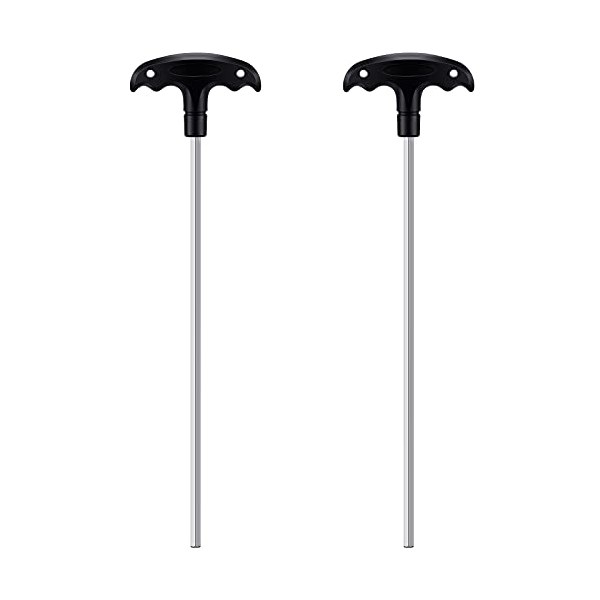 Pool Safety Cover Hex Key Tool (2-Pack)
Hex keys to install or remove a pool safety cover. View on Amazon →
 Pool Eyeball / Return Jet Fitting Removal Tool (ATIE)
Pops out & reseats Hayward SP1419 return-jet eyeballs — handy for closing. View on Amazon →
 50 ft Flexible Metal Garden Hose (Kink-Free)
Durable hose for filling, priming, and rinsing equipment. View on Amazon →
Still need help? Ask a Pool & Spa Expert AD
Get a personalized answer from PoolGuy810 — 30 years owning a pool and spa repair company. Describe your issue and get step-by-step help.
Related Pool Guides
Need More Help?
Try our free pool calculators and tools to help diagnose and fix your pool problems.
Browse Pool ToolsSLAM calculator, pH calculator, salt dosing & more