
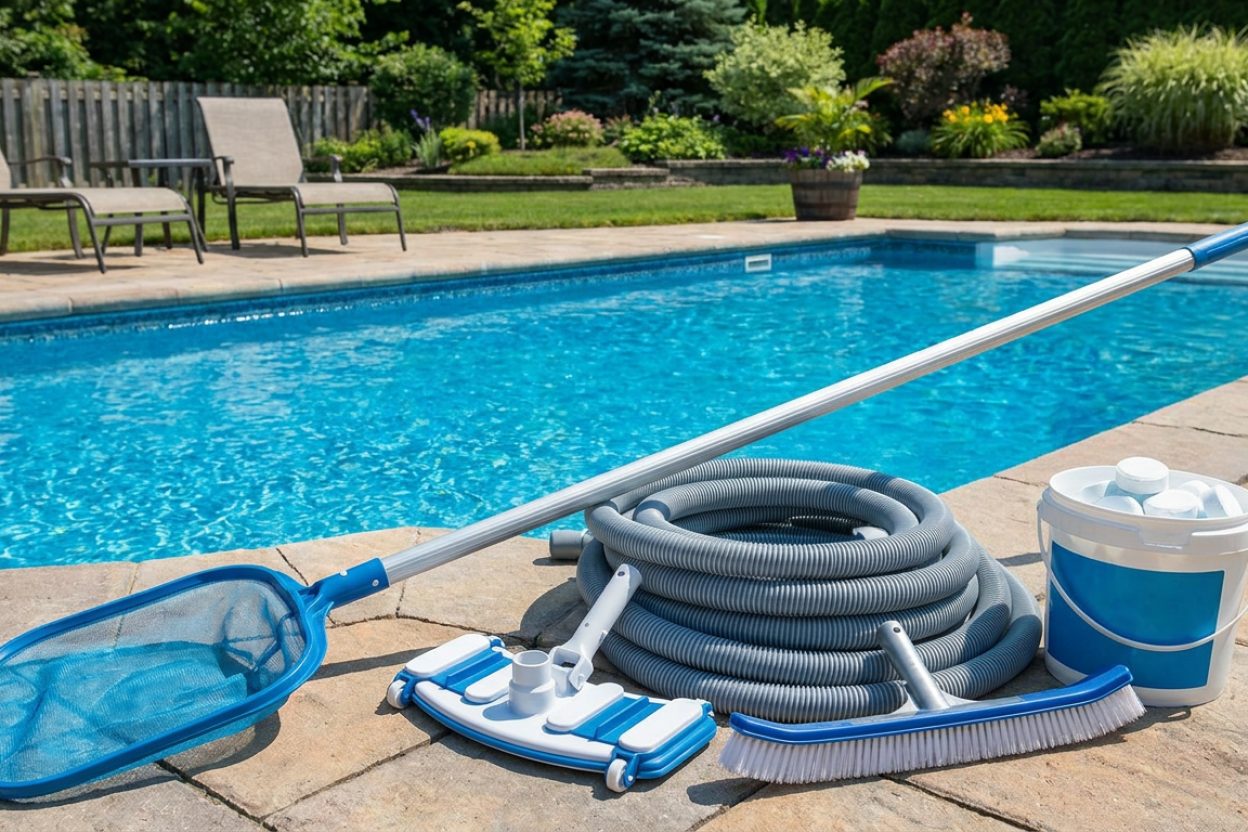
Pool Health & Safety: A Practical Guide for Swimmers
Quick Answer
For most healthy people, a clean, well-maintained pool is low-risk. The CDC's key precautions: stay out if you have diarrhea or an open wound, shower before you swim, and don't swallow the water. If you're pregnant, immunocompromised, or have a medical condition, swimming is generally fine — but check with your doctor. We maintain pools; we're not physicians, so this is general guidance, not medical advice.
For most healthy people, a clean, well-maintained pool is a low-risk place to spend a summer afternoon. The point of this guide isn't to make you nervous about the water — it's to cover the handful of habits that keep swimming safe, explain where the real (and small) risks actually are, and be honest about the line between general pool-care advice and your own medical situation. We maintain pools; we're not doctors. For anything specific to your health, your physician is the right person to ask.
Most of the health guidance below comes from the CDC's Healthy Swimming program, which is the best plain-language source on this topic.
Clean water does most of the work
A balanced pool is your first line of defense. With proper chlorine — scaled to your stabilizer (CYACyanuric Acid (stabilizer) — Sunscreen for your chlorine — it keeps sunlight from burning it off. The catch: the more you have, the more chlorine you need to keep. learn more →) level rather than a single flat number — and pH held in the 7.2–7.8 range, chlorine or bromine inactivate most germs in properly treated water within minutes. That's why water chemistry is a health issue and not just an aesthetic one. (If you want the specifics on matching chlorine to your CYA, see our pool water chemistry guide.)
The catch is that a few germs are tougher than the rest. The notable one is Cryptosporidium — "Crypto" — a parasite that can survive for more than 7 days even in properly chlorinated water. You can't chlorinate your way out of Crypto on a normal timescale, which is exactly why the human habits below matter as much as your chemistry.
When to stay out of the water
A few situations mean sitting this one out — both to protect yourself and to avoid passing something to everyone else in the pool.
- If you have diarrhea, stay out. This is the big one. Diarrhea is the most common cause of swimming-related outbreaks, because a single accident in the water can spread germs to everyone who swallows even a small amount. If you've been diagnosed with Crypto specifically, the CDC's guidance is to stay out of the water until two weeks after your diarrhea has completely stopped.
- Cover open cuts and wounds. The CDC advises staying out if you have an open cut or wound — particularly from a surgery or piercing — and, if you do go in, using waterproof bandages to completely cover it.
- Skip it with an active skin, ear, or eye infection. Same logic: protect your own healing and don't share it around.
Four habits that prevent almost everything
None of these are difficult, and together they do most of the work of keeping a pool healthy.
- Shower first. A quick rinse before you get in matters more than people think. Per the CDC, a one-minute shower removes most of the dirt, sweat, and oils on your body that use up the pool chemicals needed to kill germs. Less gunk going in means more chlorine available to do its job.
- Don't swallow the water. Easy to forget, especially with kids. As the CDC puts it, even if water looks clean, it can still have germs in it that could make you sick.
- Build in kid breaks. The CDC's rhythm is simple: every hour, take kids on bathroom breaks and check diapers — and change diapers away from the water so nothing gets in.
- Dry your ears and rinse off afterward. Drying your ears helps prevent swimmer's ear, and a post-swim rinse gets chlorine and any leftover germs off your skin.
If you have a health condition, ask your doctor
For most people these situations are fine — but they're worth a quick conversation with your own provider rather than taking a website's word for it.
- Pregnancy. Swimming is widely regarded as excellent low-impact exercise during pregnancy. Still, confirm with your OB or midwife, especially as your due date approaches.
- Your period. Swimming on your period is fine with a tampon or menstrual cup, and carries no added health risk.
- A weakened immune system. This is the one to take seriously. The CDC lists people with weakened immune systems — from illness, chemotherapy, or certain medications — among those most at risk, and recommends talking to your healthcare provider before swimming, since Crypto-contaminated water can cause life-threatening symptoms in this group. Don't guess here; ask.
- Young kids, ear-infection-prone swimmers, and sensitive skin. Generally fine, just worth a little extra attention.
Pool water itself is not known to cause UTIs or yeast infections as these aren't waterborne
Recreational water illnesses, in plain terms
"Recreational water illnesses" (RWIs) is just the umbrella term for infections — most commonly diarrhea — that come from swallowing or contacting contaminated water. They're uncommon in a well-run pool. The single most effective prevention is also the simplest: don't get in, and don't let your kids get in, with diarrhea. The CDC notes that children, pregnant women, and people with weakened immune systems are most at risk — the same short list worth the extra caution throughout this guide.
The bottom line
Keep your water balanced, stay out if you have diarrhea or an open wound, shower before you swim, and don't swallow the water. That handful of habits covers the vast majority of swimming-related risk. And for anything specific to your own health, ask your doctor — that's the one piece of advice no pool guide can give you.
Still need help? Ask a Pool & Spa Expert AD
Get a personalized answer from PoolGuy810 — 30 years owning a pool and spa repair company. Describe your issue and get step-by-step help.
Need More Help?
Try our free pool calculators and tools to help diagnose and fix your pool problems.
Browse Pool ToolsSLAM calculator, pH calculator, salt dosing & more