
Get the chlorine down first
Free chlorine is the main risk. Most garden plants start to show stress around 2 ppm, so you want it well below that — aim for 0.5 ppm or lower (essentially undetectable on a standard test) before the water touches your plants. Three easy ways to get there:
- Just wait. Chlorine is volatile and breaks down in sunlight. Stop adding chlorine and let the pool sit a day or two (longer if it was recently shocked), then test. Simplest method, costs nothing.
- Vitamin C (ascorbic acid). A garden-friendly neutralizer — about 1 teaspoon per 100 gallons (standard references put it near 1 gram per 100 gallons per 1 ppm of chlorine, so start low; vitamin C is harmless in excess but you need far less than you'd think), stir, wait ~30 minutes, then test. Leaves no harsh residue.
- Sodium thiosulfate. The standard dechlorinator for large volumes — follow the product label for your water volume and chlorine level, and don't overdose.
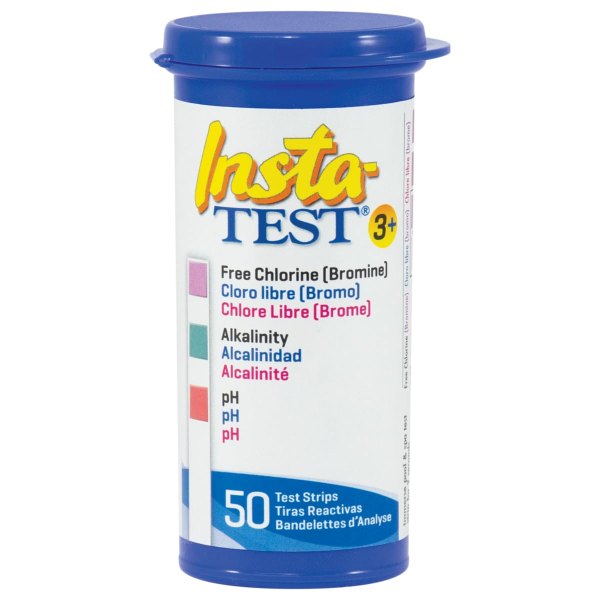
Always confirm with a test kit before irrigating — don't assume.
Salt water pools need extra caution
A salt water pool isn't chlorine-free: the salt cell makes chlorine from dissolved salt, so the water still carries roughly 3,000 ppm of sodium chloride — and dechlorinating does nothing to remove that salt. Sodium and chloride build up in soil with repeated watering, especially in dry climates or heavy clay that drains poorly. Occasional use after dechlorination is fine, but don't make salt water pool water your routine irrigation source, and keep it away from salt-sensitive plants. A big one-time drain-down deserves extra care: salt doesn't evaporate or break down the way chlorine does, so a concentrated amount pooled around a single tree or shrub can scorch the roots — even though the same water spread thin over a tolerant lawn would be harmless. Conifers and evergreens are the least forgiving. For a full salt-pool or salt-spa drain, spread it widely over ground that drains well, or send it to a sanitary sewer cleanout, rather than letting it sit at the base of a tree you'd miss.
Quick water check before you use it
- Free chlorine: 0.5 ppm or lower (near zero)
- pH: 6.5-7.5 is ideal for irrigation; pool water near 7.4 is usually fine
- Salt: lower is better — be cautious above ~200 ppm for salt-sensitive crops, and treat 3,000-ppm salt-pool water as occasional-only
- No recent algaecide, especially copper-based algaecides, which are toxic to plants and linger in soil
- Cyanuric acid (stabilizer): minimal — high-CYACyanuric Acid (stabilizer) — Sunscreen for your chlorine — it keeps sunlight from burning it off. The catch: the more you have, the more chlorine you need to keep. learn more → water is best diluted before regular use
How to apply it without harming plants
- Water the soil around plants, not the leaves — chlorine and salt do more damage on foliage than in the root zone.
- Apply in the early morning or evening to cut evaporation and leaf scorch.
- Dilute with fresh water when you can, and rotate water sources so nothing builds up in the soil.
- Spread a big drain-down across the yard rather than dumping it all in one spot. For a normal chlorine pool that can include the lawn and established trees; for salt water, keep it to tolerant lawn or unplanted ground and off the root zones of trees and shrubs.
Plants and situations to avoid
- Seedlings and young transplants (least tolerant of any chemistry swings)
- Salt-sensitive plants — conifers and evergreens (fir, pine, spruce, hemlock, arborvitae) and acid-loving shrubs like blueberries and azaleas. Evergreens are especially vulnerable, since their needles take up salt directly
- Routine watering of leafy greens and herbs eaten raw — use sparingly and rinse produce
- Already stressed or diseased plants
- Poorly drained spots where salt can't flush through
The bottom line
For a normal chlorine pool, let the chlorine dissipate, test to confirm it's near zero, and you can safely put that water to use on lawns, trees, and established ornamentals. For a salt water pool, do the same but treat it as an occasional source and keep it off salt-sensitive plants. When in doubt: dilute, aim at the soil, and watch your plants for any sign of stress.