
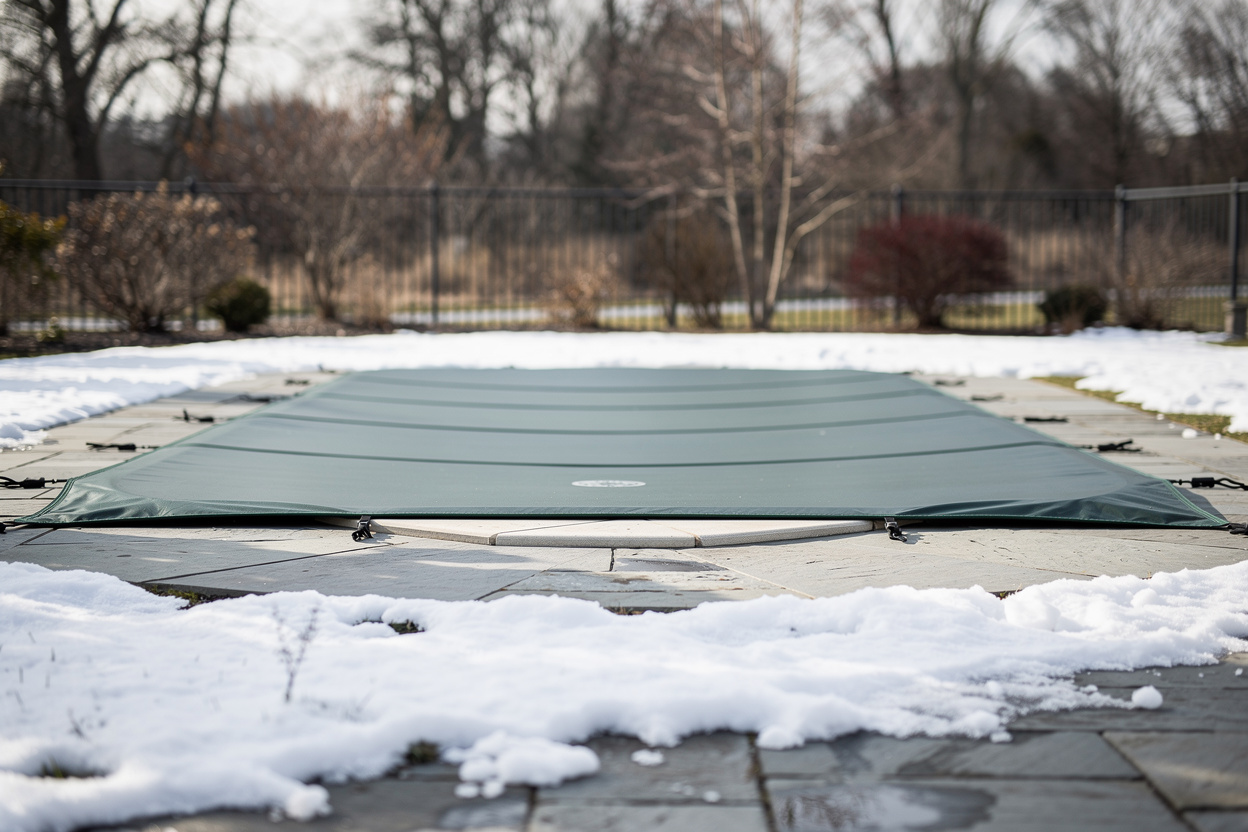
How Far to Lower Water When Closing Your Pool

How far down should I drain my inground pool for winter?
Read full question
Three weeks ago my husband and I bought our first house with an inground vinyl pool, and now everyone is telling us we need to close it for winter — but nobody can agree on exactly what that means. We have a mesh safety cover, and I've gotten completely opposite advice about how much water to drain out before we put it on. One neighbor says drop it below the skimmer, another says below the returns, and my pool store guy shrugged and said we might not even need to lower it at all with a mesh cover?
I honestly have no idea what any of those terms even mean yet, or where those parts are on my pool. I'm afraid of draining too much and damaging the liner, or not draining enough and having pipes freeze and crack over the winter. Is there a standard answer here, or does it really depend on what type of cover you're using?
Also — a few people have mentioned that the rules are different for above-ground pools and solid covers, and now I'm even more confused. Can someone break this down in plain language for a complete first-timer?
Quick Answer
For an inground vinyl pool with a mesh safety cover, lower the water level to just below the skimmer opening — typically 1 to 6 inches below the mouth of the skimmer. This prevents freeze damage to the skimmer while keeping enough water in the pool to hold the liner in place and weigh down your cover. The right depth can vary slightly depending on your cover type and whether you're blowing out your return lines.
Why Closing Water Levels Are So Misunderstood
If you've heard different advice on how much to drain your pool for winter, don't worry. The correct level truly isn't the same for everyone. It's determined by several key details: your winter cover style, how your pipes are set up, and the climate where you live. Understanding these factors will help you find the right method for your situation.
Before you do anything, find two important features on your pool wall. The skimmer is the rectangular opening that pulls water into the filter system. The return jets are the smaller, circular fittings that push filtered water back into the pool. Knowing where both are located is your first essential step.
A Cost-Effective Baseline: Determining Level by Cover Type
The most budget-friendly approach is to adjust your water level based on the winter cover you plan to use. Here are the general recommendations for the most common scenarios.
Inground Vinyl Pool with a Mesh Safety Cover
Since mesh allows precipitation to seep through, your pool's water level will increase over the off-season. Standard advice is to drain the water 12–18 inches below the skimmer opening to create space for this rise and protect against ice damage. However, dropping a vinyl liner pool that low can make the liner shrink or move. A safer compromise for vinyl pools is to lower the water just below the skimmer opening after installing a skimmer protection device and securing your plumbing. This method acknowledges the level will climb, requiring you to check it during warmer winter periods and drain some if it gets too high. For an inground vinyl pool with a mesh cover, this is the recommended approach.
Draining below the return jets isn't required if you've properly emptied and sealed those lines. Draining excessively—more than a foot below the liner-safe compromise—is not needed and removes the weight of water that holds a vinyl liner in place. In freezing conditions, this can lead to the liner pulling away from the wall or developing permanent wrinkles. Preventing this damage is much simpler than fixing it later.
Solid Winter Covers (Tarp-Style)
A solid cover prevents water from entering the pool, so the level underneath remains stable. You generally only need to lower the water 3 to 6 inches below the skimmer. This small drop provides clearance, as rain and snow will pool on top of the cover itself. If you use a solid cover, you'll need a cover pump to periodically remove this accumulated water from the surface. The aim is a slight adjustment, not a major drain.
Above-Ground Pools
Above-ground pools have different rules. Their walls depend on water pressure for structural integrity. For this reason, many manufacturer instructions specifically advise against draining them significantly for winter. The general guidance is to keep the water level nearly full, lowering it only just below the skimmer if necessary for plumbing safety. Your main tasks are clearing and plugging the plumbing lines and firmly attaching a suitable winter cover with its cable. Always check your pool's specific manual, as designs can vary.
The True Freeze Protection: Evacuating the Plumbing Lines
Here's a vital concept: simply draining pool water does not protect the pipes buried underground from freezing. Real protection comes from using a shop vac or air compressor to force water out of all skimmer, return, and main drain lines, then sealing them with winterizing plugs. Once these lines are empty and plugged, it doesn't matter if the water in the pool itself freezes, because that water is no longer inside the vulnerable piping.
If you skip this blow-out process and only drain the pool, water remains trapped in the underground lines. This water can freeze, expand, and crack pipes and fittings—a very expensive repair. Learning to blow out your lines is a useful skill, or you might hire a professional to show you the process one time. Our complete pool winterization guide walks through these steps in detail.
Protecting the Main Drain with an Air Lock
The main drain is at the pool's deepest point and remains submerged all winter regardless of how much you drain, so the water level does not protect its pipe. You should NOT drain a vinyl pool low enough to access it. It cannot be plugged from inside the pool like skimmers and returns. Instead, it is secured by creating an air lock.
At your equipment pad, close or plug the skimmer line so air is directed only to the main drain line, then blow air into that line. This pushes water out of the pipe and back into the pool, which you'll see as a steady stream of bubbles rising from the main drain. While the air is still blowing, close the main drain valve (or plug the main drain line at the pad), then shut off the air source. The trapped air pocket prevents pool water from flowing back into the pipe.
If you open that valve or remove that plug during the winter, the air will escape and water will refill the line, so leave it sealed until spring. Some pools don't have a main drain, and others have a shared line for the main drain and a skimmer. If you're unsure which pipe leads where, this is a step where getting a demonstration from a pool professional can be very helpful.
Closing the Skimmer
- Remove the skimmer basket and store it for the winter.
- Blow out the skimmer line from the equipment pad until only air comes out of the port at the bottom of the skimmer.
- As an optional backup, you may choose to pour pool-safe propylene-glycol (RV/marine) antifreeze into the port before plugging it. This is only needed if the line won't fully clear, and is not necessary when the line is properly blown out. See pool antifreeze.
- Screw a Gizzmo (or insert a rubber winter plug) into the port. A Gizzmo is a hollow device designed to compress under ice pressure, protecting the skimmer body. Tighten it snugly, but do not overtighten. See Gizzmo vs a rubber plug.
- A common DIY alternative or supplement is to place a half-filled plastic milk jug or capped bottle in the skimmer body. Ice squeezes the compressible jug instead of cracking the skimmer walls.
- If your skimmer has a second port at the bottom (sometimes connected to a main drain), plug that one as well.
- Place the skimmer cover plate on top at deck level to keep debris and water out of the skimmer.
Lowering the water just below the skimmer opening allows the skimmer body to empty. The Gizzmo or plug then protects it from any water that may re-enter over the winter, which is especially important with a mesh cover as the water level rises.
A Critical Warning for Vinyl Liners: Avoid Over-Draining
This is particularly crucial for vinyl pool owners. A vinyl liner relies on the weight of the water to keep it stretched smoothly against the pool structure. Draining too much water, especially when temperatures are freezing, can cause the liner to contract, pull away from the edge, or develop permanent creases. Replacing a vinyl liner is a major project and expense. For your pool, the conservative approach—draining just below the skimmer, not far below the returns—is the correct choice.
Quick Reference Summary
- Inground vinyl pool with mesh cover: Lower water to just below the skimmer opening with a skimmer plug installed (compromise method), or 12–18 inches below for maximum skimmer protection. Blow out and plug all plumbing lines. Monitor water level during thaws.
- Inground vinyl pool with solid cover: Lower water to approximately 3–6 inches below the skimmer. Blow out and plug all lines. Use a cover pump to manage water accumulation on the cover through winter.
- Above-ground pool: Maintain water near normal operating levels; consult manufacturer instructions. Prioritize blowing out and plugging lines and securing the cover properly.
- Main drain: Protected by creating an air lock at the equipment pad (valve closed or line plugged while air is blowing). It is not plugged from inside the pool.
- Skimmer: Basket removed, line blown, optional antifreeze added (not usually needed), Gizzmo or plug installed, half-filled plastic jug sometimes placed inside, cover plate put on.
As you get comfortable with the closing process, our pool closing checklist offers a helpful sequence to make sure you don't miss a step. A successful close, especially the first time, is about knowing why each action matters. Once you understand that, it becomes a straightforward seasonal routine.
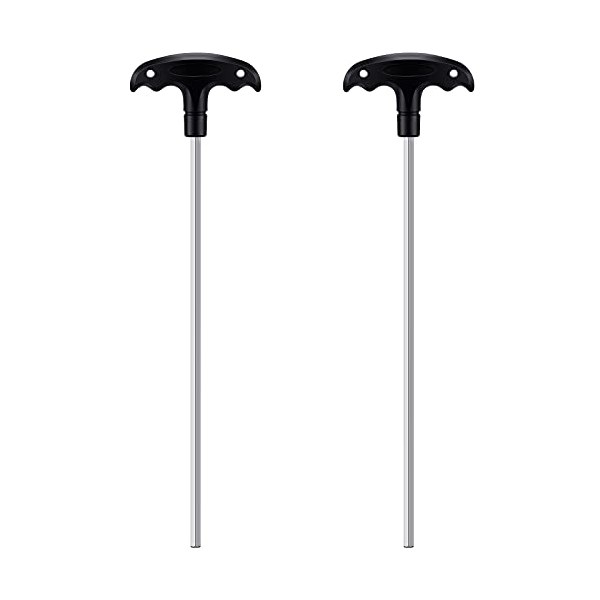 Pool Safety Cover Hex Key Tool (2-Pack)
Hex keys to install or remove a pool safety cover. View on Amazon →
Pool Safety Cover Hex Key Tool (2-Pack)
Hex keys to install or remove a pool safety cover. View on Amazon →
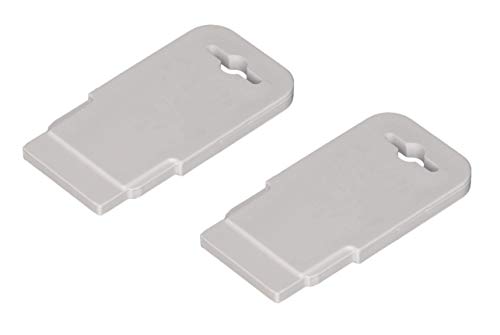 Pool Eyeball / Return Jet Fitting Removal Tool (ATIE)
Pops out & reseats Hayward SP1419 return-jet eyeballs — handy for closing. View on Amazon →
Pool Eyeball / Return Jet Fitting Removal Tool (ATIE)
Pops out & reseats Hayward SP1419 return-jet eyeballs — handy for closing. View on Amazon →
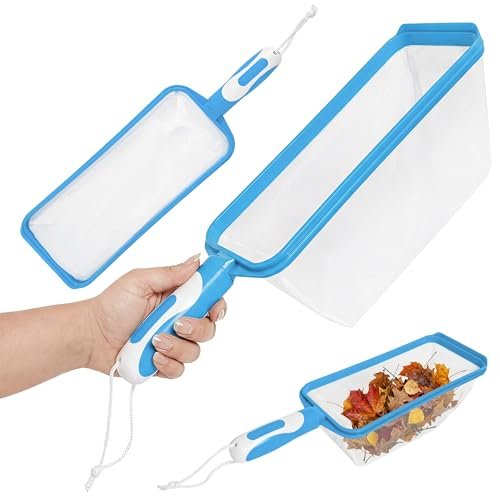 The Skimmie Handheld Pool Skimmer Net
Grab-and-go hand skimmer for leaves and debris off the surface. View on Amazon →
The Skimmie Handheld Pool Skimmer Net
Grab-and-go hand skimmer for leaves and debris off the surface. View on Amazon →
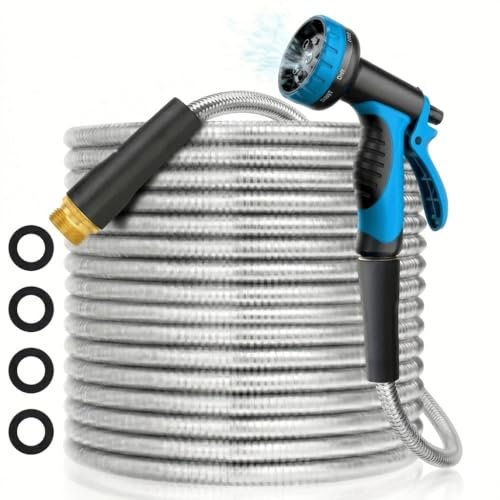 50 ft Flexible Metal Garden Hose (Kink-Free)
Durable hose for filling, priming, and rinsing equipment. View on Amazon →
50 ft Flexible Metal Garden Hose (Kink-Free)
Durable hose for filling, priming, and rinsing equipment. View on Amazon →
Still need help? Ask a Pool & Spa Expert AD
Get a personalized answer from PoolGuy810 — 30 years owning a pool and spa repair company. Describe your issue and get step-by-step help.
Related Pool Guides
Need More Help?
Try our free pool calculators and tools to help diagnose and fix your pool problems.
Browse Pool ToolsSLAM calculator, pH calculator, salt dosing & more