
How Long Do Inground Pools Last? Complete Lifespan Guide

Which type of inground pool is actually worth the investment?
Read full question
Walked into three pool showrooms with my checkbook ready, but now I need the straight truth about which inground pools actually last before I commit. I'm looking at concrete, vinyl, and fiberglass pools, but each one claims theirs is superior.
I don't want to make a $50k+ decision and then have to replace or major renovate in 10 years. I'm willing to do proper maintenance myself to save on service costs, but I need to know realistic lifespans for each type. Which pool materials actually last and which ones are just marketing hype?
Quick Answer
Inground pools last 10-100 years depending on the type: concrete pools can last 50-100 years with proper maintenance, vinyl pools typically last 10-20 years, and fiberglass pools last 25-35 years. Proper maintenance is the key factor in maximizing lifespan.
Step-by-Step Pool Lifespan Assessment
- Identify your pool type - Look at your pool's interior surface. Concrete pools have plaster, pebble, or tile finishes. Vinyl pools have a smooth liner that can be felt as flexible material. Fiberglass pools have a smooth, gel-coat surface that's rigid.
- Determine the age of your pool - Check building permits, previous owner records, or look for manufacturer dates on equipment. This establishes your baseline for expected remaining life.
- Assess current condition - Walk around your pool examining the structure, surface, and equipment. Look for cracks, stains, equipment wear, and any signs of settling or movement.
- Evaluate your maintenance history - Pools with consistent chemical balance and regular professional maintenance last significantly longer than neglected pools.
- Calculate expected remaining lifespan - Use the guidelines below based on your pool type, age, and condition to estimate when major renovations or replacement might be needed.
Concrete Pool Lifespan: 50-100 Years
Concrete (gunite or shotcrete) pools offer the longest lifespan of any inground pool type. The concrete shell itself can last 100+ years, but interior finishes require periodic renewal:
- Plaster finishes: Need resurfacing every 7-15 years depending on water chemistry maintenance
- Pebble finishes: Last 15-20 years with proper chemical balance
- Tile finishes: Can last 20-30 years or more with quality installation
The key to maximizing concrete pool life is maintaining proper water chemistry. Keep pH between 7.4-7.6, total alkalinity at 80-120 ppm, and calcium hardness at 250-350 ppm. Low pH and calcium levels cause plaster etching, while high levels cause scaling.
Vinyl Pool Lifespan: 10-20 Years
Vinyl liner pools have the shortest lifespan due to the liner material breaking down over time:
- Liner replacement needed every 8-15 years - UV exposure, chemical exposure, and normal wear cause vinyl to become brittle and fade
- Panel walls can last 20-30 years - Steel walls may rust if water gets behind the liner, while polymer walls resist corrosion better
- Complete reconstruction often needed after 20-25 years - By this time, the coping, deck connections, and structural components typically need replacement
Proper chemical balance is crucial for vinyl pools. Maintain free chlorine (FCFree Chlorine — The chlorine actively sanitizing your water right now. This is the number you keep an eye on. how much you need →) at appropriate levels based on your CYACyanuric Acid (stabilizer) — Sunscreen for your chlorine — it keeps sunlight from burning it off. The catch: the more you have, the more chlorine you need to keep. learn more → (Cyanuric Acid/stabilizer) level - consult the all-in-one pool calculator for specific FC/CYAFC/CYA chart — The chart that sets your chlorine target from your stabilizer (CYA) level — the two go together. see the chart → ratios, keep pH at 7.4-7.6, and avoid chlorine levels above 10 ppm which can bleach and damage vinyl. Per the CDC pool code (Model Aquatic Health Code), free chlorine should not exceed 10 ppm while anyone is in the water, so wait until it is below 10 ppm to swim. The same code also calls for the water to be clear enough to see the bottom and pH held at 7.2-7.8.
Fiberglass Pool Lifespan: 25-35 Years
Fiberglass pools offer a middle-ground lifespan with minimal maintenance requirements:
- Gel coat surface: Lasts 15-25 years before showing significant wear or staining
- Fiberglass shell: Can last 30+ years with proper installation and ground stability
- Refinishing options: Gel coat can be renewed or pools can be painted with epoxy coatings
Fiberglass pools are more forgiving with chemical imbalances but still require proper maintenance. Target lower total alkalinity (60-80 ppm) and be cautious with abrasive cleaning tools that can damage the gel coat.
Factors That Extend Pool Life
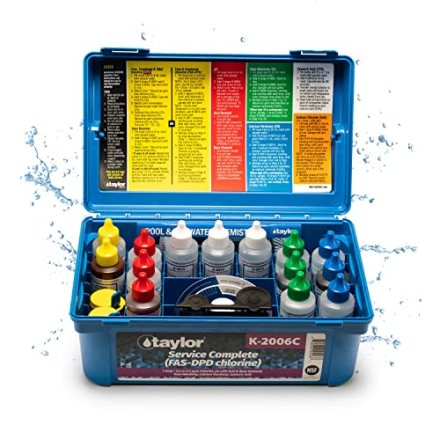
- Consistent water testing - Test water 2-3 times per week using a quality test kit like Taylor K-2006C. Maintain proper chemical balance at all times.
- Quality equipment maintenance - Service pumps, filters, and heaters annually. Replace equipment before complete failure to prevent water quality issues.
- Professional inspections - Have a qualified pool technician inspect your pool annually to catch problems early.
- Proper winterization - In freeze climates, properly close your pool to prevent freeze damage to plumbing and surfaces.
- Address problems immediately - Small cracks, equipment issues, or chemical imbalances become major problems if ignored.
Warning Signs Your Pool Needs Major Work
Immediate attention required if you notice:
- Structural cracks that continue to grow
- Pool losing more than 1/4 inch of water per day
- Persistent chemical balance problems despite proper treatment
- Equipment failing frequently
- Surface deterioration exposing underlying materials
Maximizing Your Pool Investment
The most important factor in pool longevity is consistent, proper maintenance. Pools with decades of good chemical balance and regular care often exceed their expected lifespans, while neglected pools may need major work in half the expected time. Keep detailed records of your maintenance, work with qualified professionals for major repairs, and address issues promptly to get the maximum life from your inground pool investment.
For the full breakdown of safe chlorine levels by CYA level, see our pool water chemistry guide.

Still need help? Ask a Pool & Spa Expert AD
Get a personalized answer from PoolGuy810 — 30 years owning a pool and spa repair company. Describe your issue and get step-by-step help.
Need More Help?
Try our free pool calculators and tools to help diagnose and fix your pool problems.
Browse Pool ToolsSLAM calculator, pH calculator, salt dosing & more