
Can I Swim in Pool After Getting a Tattoo? Safety Guide

New pool owner - when can I swim after getting a tattoo?
Read full question
Every time I see that crystal-clear pool water calling my name, my week-old tattoo reminds me why I shouldn't have jumped in last weekend. I also recently got a tattoo and I'm wondering when it would be safe to take my first swim.
The pool store told me about keeping chlorine levels balanced, but they didn't mention anything about tattoos. How long should I wait before getting in? I want to make sure I don't risk any infections or mess up the healing process. Are there specific things I should check about my pool's chemical balance before swimming with a new tattoo?
Quick Answer
You should wait 2-4 weeks after getting a tattoo before swimming in a pool to prevent infection and ensure proper healing. The pool must have proper chlorine levels and balanced chemistry. Use a quality test kit to verify free chlorine, pH, total alkalinity, and cyanuric acid levels before swimming. Maintain stricter pool chemistry standards if family members or guests have fresh tattoos.
First, Let's Diagnose the Risks
Before determining when it's safe to swim, we need to understand why fresh tattoos and pool water don't mix well. A new tattoo is essentially an open wound that's vulnerable to bacterial infections, chemical irritation, and color fading. Pool water, even when properly maintained, contains chlorine and other chemicals that can interfere with the healing process.
The main risks include:
- Bacterial infections from inadequately sanitized water
- Stinging and irritation on the fresh tattoo, especially if pool chemistry is off
- Color bleeding or fading from chlorine exposure
- Delayed healing due to prolonged water exposure
- Scarring from premature scab removal
Healing Timeline and When to Test Pool Water
Your tattoo healing process determines when swimming becomes safe. During the first week, your tattoo will weep plasma and ink, forming scabs that protect the healing skin underneath. Never swim during this critical phase.
Week 1-2: The tattoo is still an open wound. Pool water can introduce bacteria and cause serious infections. The chlorinated water will also sting and irritate the broken, healing skin.
Week 2-3: Scabs begin falling off naturally, but the skin underneath remains tender and vulnerable. Light exposure to chlorinated water should still be avoided.
Week 3-4: Most tattoos have formed a protective layer of new skin, making swimming safer if proper precautions are taken.
Pool Chemistry Requirements for Tattoo Safety
Once your tattoo has healed sufficiently (typically 3-4 weeks), your pool water chemistry becomes critical. Use a quality test kit like the Taylor K-2006 to verify these parameters before swimming:
Essential Water Balance Parameters
- Free Chlorine (FCFree Chlorine — The chlorine actively sanitizing your water right now. This is the number you keep an eye on. how much you need →): 4-6 ppm for CYACyanuric Acid (stabilizer) — Sunscreen for your chlorine — it keeps sunlight from burning it off. The catch: the more you have, the more chlorine you need to keep. learn more → 30-50 ppm, 6-8 ppm for CYA 60-80 ppm (salt pools) - This ensures adequate sanitation. For example, if your CYA is 40 ppm, maintain FC around 4-6 ppm; if CYA is 70-80 ppm (salt pools), maintain FC around 6-8 ppm. Test using either DPD test drops or test strips.
- pH Level: 7.4-7.6 - Balanced pH prevents skin irritation and ensures chlorine effectiveness. Use muriatic acid to lower pH or sodium carbonate to raise it.
- Total Alkalinity: 80-120 ppm - Proper TATotal Alkalinity — The buffer that keeps your pH from bouncing around. Get this in range and pH gets a lot easier to manage. learn more → stabilizes pH levels. Adjust with sodium bicarbonate to raise. Lowering TA requires careful use of muriatic acid as it primarily affects pH.
- Cyanuric Acid (CYA): 30-50 ppm (traditional) / 70-80 ppm (salt) - Stabilizer protects chlorine from UV degradation. Add stabilizer according to manufacturer specifications as the CYA increase varies significantly based on product type.
Pre-Swimming Pool Testing Protocol
Before each swimming session with a recently healed tattoo, follow this testing sequence:
- Test free chlorine levels 2-3 hours before swimming to ensure stability
- Verify pH is within the 7.4-7.6 range using phenol red indicator
- Check total alkalinity if pH seems unstable
- Ensure you can clearly see the bottom and main drain with no visible algae or debris
- Retest chlorine immediately before swimming to confirm levels haven't dropped
Swimming Safety Solutions
Even with proper timing and water chemistry, additional protective measures help ensure safe swimming:
Protective Barriers
Consider using waterproof tattoo bandages like Saniderm or Tegaderm for extra protection during short swimming sessions. These films add some barrier protection, but they are not fully reliable for submersion — the safest course is to wait until the tattoo is healed, and if you do get in, keep it brief and rinse immediately after.
Limited Exposure Protocol
- Start with 15-20 minute swimming sessions
- Avoid prolonged submersion of the tattooed area
- Exit immediately if you experience any stinging or irritation
- Rinse thoroughly with fresh water immediately after swimming
Post-Swimming Care Routine
After swimming in your pool, proper aftercare prevents complications:
- Immediate rinse: Use lukewarm fresh water to remove all pool chemicals from your skin
- Gentle cleaning: Use a fragrance-free, antibacterial soap to cleanse the tattoo area
- Pat dry: Never rub the tattoo with a towel; gently pat with a clean, soft cloth
- Moisturize: Apply a thin layer of fragrance-free lotion or specialized tattoo aftercare product
- Monitor for signs: Watch for increased redness, swelling, or unusual discharge that might indicate infection
Pool Maintenance During Tattoo Healing Season
If family members or guests have fresh tattoos, maintain stricter pool chemistry standards:
- Test and adjust chemical levels daily instead of every few days
- Maintain chlorine at the higher end of the safe range for your CYA level
- Shock the pool weekly with liquid chlorine (typically 12.5% sodium hypochlorite) following manufacturer dosage instructions to eliminate contaminants
- Clean skimmer baskets and filters more frequently
- Consider running the pump for longer cycles to ensure better circulation
Warning Signs to Stop Swimming
Discontinue pool use immediately if you notice:
- Excessive redness around the tattoo
- Pus or unusual discharge
- Increased pain or throbbing
- Red streaking extending from the tattoo
- Fever or feeling unwell after swimming
- Pool water that appears cloudy or has a strong chemical smell
These symptoms may indicate infection or chemical imbalance that requires professional attention.
For the full breakdown of safe chlorine levels by CYA level, see our pool water chemistry guide or use our all-in-one pool calculator to get the right free chlorine for your CYA.
 Taylor K-2006C Complete FAS-DPD Pool & Spa Test Kit
The FAS-DPD kit pool pros trust — reads chlorine accurately even at shock/SLAM levels, plus pH, alkalinity, calcium hardness and CYA. View on Amazon →
Taylor K-2006C Complete FAS-DPD Pool & Spa Test Kit
The FAS-DPD kit pool pros trust — reads chlorine accurately even at shock/SLAM levels, plus pH, alkalinity, calcium hardness and CYA. View on Amazon →
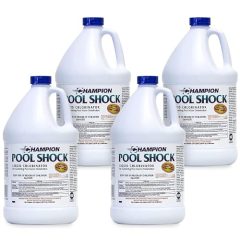 Liquid Chlorine / Sodium Hypochlorite (12.5%)
Everyday sanitizer — the B in BBB View on Amazon →
Liquid Chlorine / Sodium Hypochlorite (12.5%)
Everyday sanitizer — the B in BBB View on Amazon →
Still need help? Ask a Pool & Spa Expert AD
Get a personalized answer from PoolGuy810 — 30 years owning a pool and spa repair company. Describe your issue and get step-by-step help.
Need More Help?
Try our free pool calculators and tools to help diagnose and fix your pool problems.
Browse Pool ToolsSLAM calculator, pH calculator, salt dosing & more