
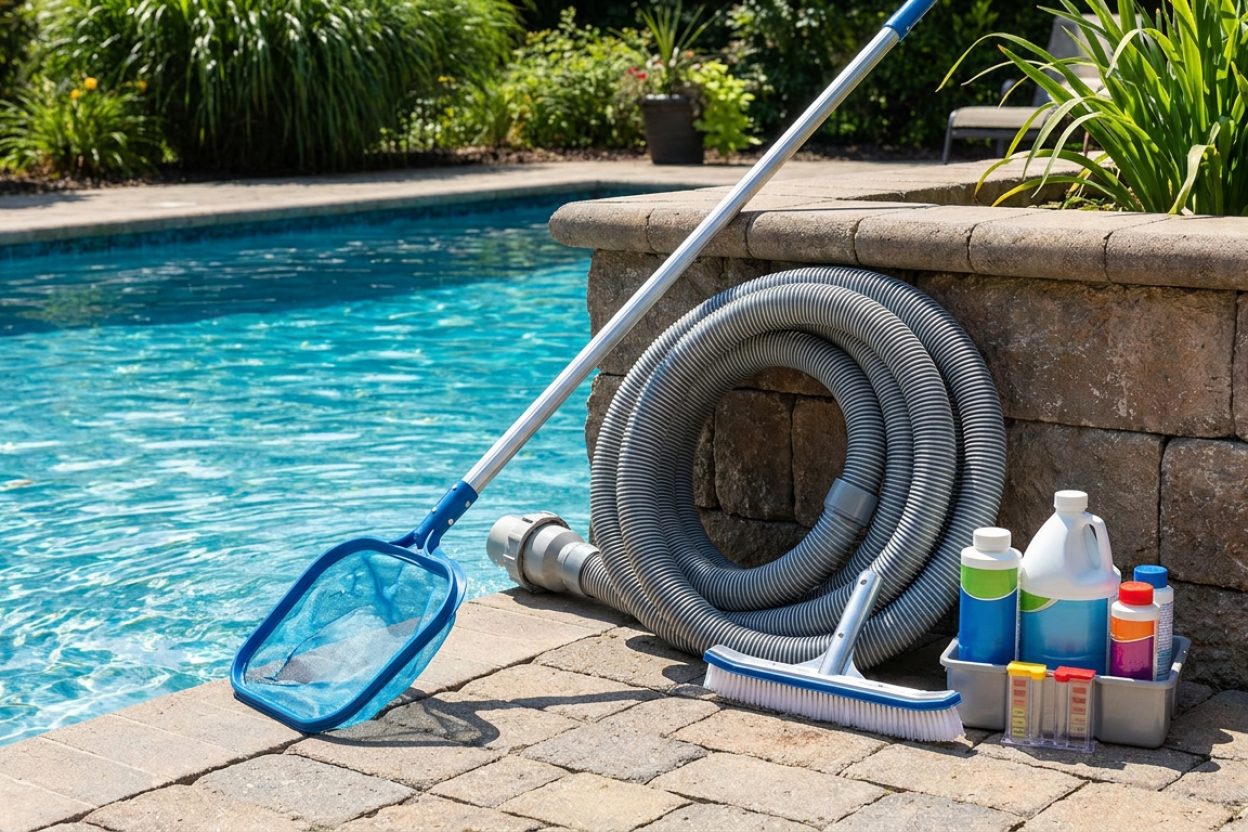
How to Use Pool Shock: Complete Step-by-Step Guide

First time shocking my pool - what's the actual process?
Read full question
Looked everywhere for guidance on liquid chlorine versus granular shock but I'm still completely lost on the actual shocking process for my pool. The pool store told me to use liquid chlorine and something about raising the free chlorine to "shock level" but I have no idea what that means or how to figure out what level that is.
I've heard it has something to do with my CYA levels? And that I should do it at night? I just want to make sure I'm doing this right and not wasting chemicals or damaging anything. Can someone walk me through the proper process step by step?
Quick Answer
Pool shocking involves adding liquid chlorine to raise free chlorine to shock level (based on your CYA), circulating for proper distribution, and maintaining that level until water clears. Shocking at dusk or night minimizes UV loss, but daytime shocking is fine when needed — just expect to use a bit more chlorine.
Understanding Pool Shock
Most pool owners make one critical mistake when shocking their pool: they dump the chemicals in at the wrong time and wonder why their water still looks like a swamp the next day. The most effective shock method uses liquid chlorine (sodium hypochlorite) rather than granular shock when you do not want to add calcium (cal-hypo) or CYACyanuric Acid (stabilizer) — Sunscreen for your chlorine — it keeps sunlight from burning it off. The catch: the more you have, the more chlorine you need to keep. learn more → (dichlor) — though both are fine shocks when those levels are low.
The key to proper shocking is understanding the relationship between your Cyanuric Acid (CYA) level and the required Free Chlorine (FCFree Chlorine — The chlorine actively sanitizing your water right now. This is the number you keep an eye on. how much you need →) shock level. This isn't a one-size-fits-all approach – your shock level depends entirely on your current CYA reading.
Determining Your Shock Level
Before adding any chemicals, test your pool water using a reliable test kit like the Taylor K-2006C. You need accurate readings for:
- Free Chlorine (FC)
- Combined Chlorine (CCCombined Chlorine — "Used-up" chlorine left over from doing its job. Above about 0.5 ppm is the classic sign water needs a shock. learn more →)
- pH level
- Cyanuric Acid (CYA)
Your shock level is determined by your CYA level using the FC/CYAFC/CYA chart — The chart that sets your chlorine target from your stabilizer (CYA) level — the two go together. see the chart → relationship — our all-in-one pool calculator estimates the free chlorine target for your CYA:
- CYA 30ppm: Shock level 12ppm FC
- CYA 40ppm: Shock level 16ppm FC
- CYA 50ppm: Shock level 20ppm FC
- CYA 60ppm: Shock level 24ppm FC
- CYA 70ppm: Shock level 28ppm FC
If your Combined Chlorine is above 0.5ppm, you'll need to perform a SLAMShock Level And Maintain — raise free chlorine to a target based on your CYA and hold it there until the algae is gone. It's a process, not a one-time dose. the SLAM walkthrough → (Shock Level And Maintain) process instead of a simple shock.
Pre-Shock Preparation
Adjust your pH to between 7.2-7.4 before shocking. High pH reduces chlorine effectiveness, while very low pH can make the process unnecessarily harsh. If your pH is above 7.6, add muriatic acid to bring it down. For every 0.2 pH points you need to reduce, add approximately 1 quart of muriatic acid per 20,000 gallons of water.
Ensure your pool pump and filter system are running and will continue running throughout the shocking process. You'll need circulation for proper chemical distribution and to help the chlorine do its work effectively.
Calculating Chlorine Dosage
Liquid chlorine (12.5% sodium hypochlorite) is the preferred shocking agent. To calculate how much you need:
For every 1 ppm FC increase in a 10,000-gallon pool, add approximately 11 fl oz of 12.5% liquid chlorine. Scale this calculation based on your pool size and desired FC increase. For a quick estimate, use our all-in-one pool calculator. Always re-test your water after dosing and add gradually, following the product label and manufacturer's instructions.
As a rule of thumb, a gallon of 12.5% liquid chlorine raises FC by roughly 12-13 ppm per 10,000 gallons — but your shock target scales with CYA, so rather than doing the arithmetic by hand, use our easy-to-use pool calculator or browse our pool guides to size the dose, then add, circulate, and retest.
Step-by-Step Shocking Process
Timing
Shocking in the evening is best (daytime sun burns off chlorine faster), but daytime is fine when you need it — just expect to use a bit more. Sunlight rapidly degrades chlorine, making daytime shocking ineffective and wasteful. Start the process when the sun is setting or has already set.
Application Method
- With your pump running, pour the calculated amount of liquid chlorine slowly around the pool perimeter, focusing on the deep end
- Use a pool brush to help distribute the chlorine, especially in areas with poor circulation
- Allow the pump to circulate the water for at least 30 minutes before testing
- Test your FC level and add more chlorine if needed to reach your target shock level
Monitoring and Maintenance
Test your FC level again after 8-12 hours. For a standard shock (CC below 0.5ppm), your chlorine should drop significantly overnight as it eliminates contaminants. If you're performing a SLAM process, maintain the shock level by adding more liquid chlorine as needed.
Safety Considerations
Never mix different types of pool chemicals. Add liquid chlorine separately from any other chemicals, waiting at least 30 minutes between different chemical additions.
Store liquid chlorine in a cool, dark place and use within 6-8 weeks of purchase for maximum potency. Always add chemicals to water, never water to chemicals.
Avoid swimming for at least 8 hours after shocking, or until free chlorine drops below 10 ppm (per CDC) and the water passes the overnight chlorine loss test (OCLT).
When to Shock Your Pool
Regular shocking should be done:
- Weekly during heavy use periods
- After heavy rainfall or storms
- When combined chlorine exceeds 0.5ppm
- After pool parties or heavy bather loads
- When water appears cloudy or has an odor
- As part of opening/closing procedures
Troubleshooting Common Issues
If your pool doesn't clear after shocking, you likely have an algae problem requiring the full SLAM process. Continue maintaining shock level until you pass the OCLT – losing less than 1ppm FC overnight with proper circulation.
Green or cloudy water that persists indicates you need to maintain shock level longer, not add more chemicals. Patience and consistent FC maintenance are key to clearing problematic water.
For the full breakdown of safe chlorine levels by CYA level, see our pool water chemistry guide.
 Taylor K-2006C Complete FAS-DPD Pool & Spa Test Kit
The FAS-DPD kit pool pros trust — reads chlorine accurately even at shock/SLAM levels, plus pH, alkalinity, calcium hardness and CYA. View on Amazon →
Taylor K-2006C Complete FAS-DPD Pool & Spa Test Kit
The FAS-DPD kit pool pros trust — reads chlorine accurately even at shock/SLAM levels, plus pH, alkalinity, calcium hardness and CYA. View on Amazon →
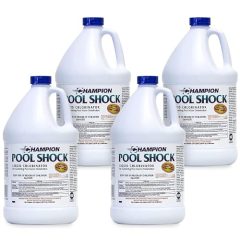 Liquid Chlorine / Sodium Hypochlorite (12.5%)
Everyday sanitizer — the B in BBB View on Amazon →
Liquid Chlorine / Sodium Hypochlorite (12.5%)
Everyday sanitizer — the B in BBB View on Amazon →
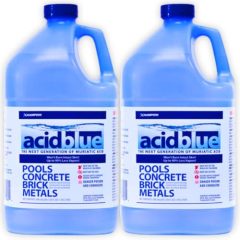 Acid Blue - Low Fume Muriatic Acid for Swimming Pools & Spas - Lower's pH, Reduces Alkalinity - 2 Gallon
View on Amazon →
Acid Blue - Low Fume Muriatic Acid for Swimming Pools & Spas - Lower's pH, Reduces Alkalinity - 2 Gallon
View on Amazon →
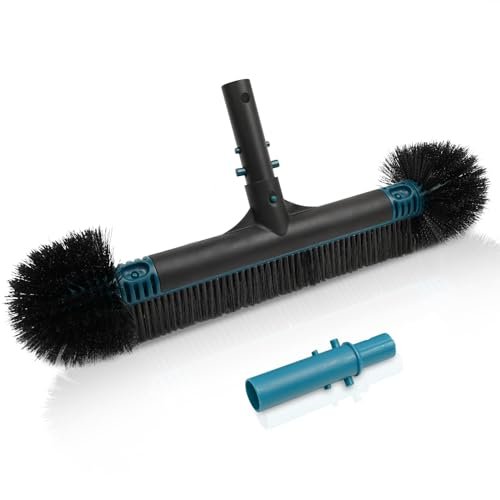 Poolvio 20" 2-in-1 Pool Brush Head (Walls & Floor)
Sturdy 20-inch brush head that clips onto any standard telescopic pole. View on Amazon →
Poolvio 20" 2-in-1 Pool Brush Head (Walls & Floor)
Sturdy 20-inch brush head that clips onto any standard telescopic pole. View on Amazon →
Still need help? Ask a Pool & Spa Expert AD
Get a personalized answer from PoolGuy810 — 30 years owning a pool and spa repair company. Describe your issue and get step-by-step help.
Need More Help?
Try our free pool calculators and tools to help diagnose and fix your pool problems.
Browse Pool ToolsSLAM calculator, pH calculator, salt dosing & more