
Do Salt Water Pools Use Chlorine? The Complete Truth

Salt water pools - do they actually have chlorine in them?
Read full question
Since getting my salt water pool, I've been too embarrassed to ask this probably obvious question: does it actually use chlorine or not? Some say salt water pools are chlorine-free, others say they still have chlorine. Which is it?
Looking at switching from traditional chlorine but want to understand what I'm actually getting into. Does the salt system eliminate chlorine completely or not?
Quick Answer
Yes, salt water pools absolutely use chlorine. The salt water generator converts salt into chlorine through electrolysis, producing the same sanitizing chlorine as traditional pools, just through a different method.
The Direct Answer
Good news: understanding salt water pool chlorine systems is solidly DIY territory—no expensive pool technician needed to decode this common misconception. This is one of the most common misconceptions about salt water pools. The key difference is that salt water pools generate their own chlorine through a process called electrolysis, rather than adding chlorine directly to the pool.
How Salt Water Pools Create Chlorine
Salt water generators (SWGs) work through a fascinating chemical process:
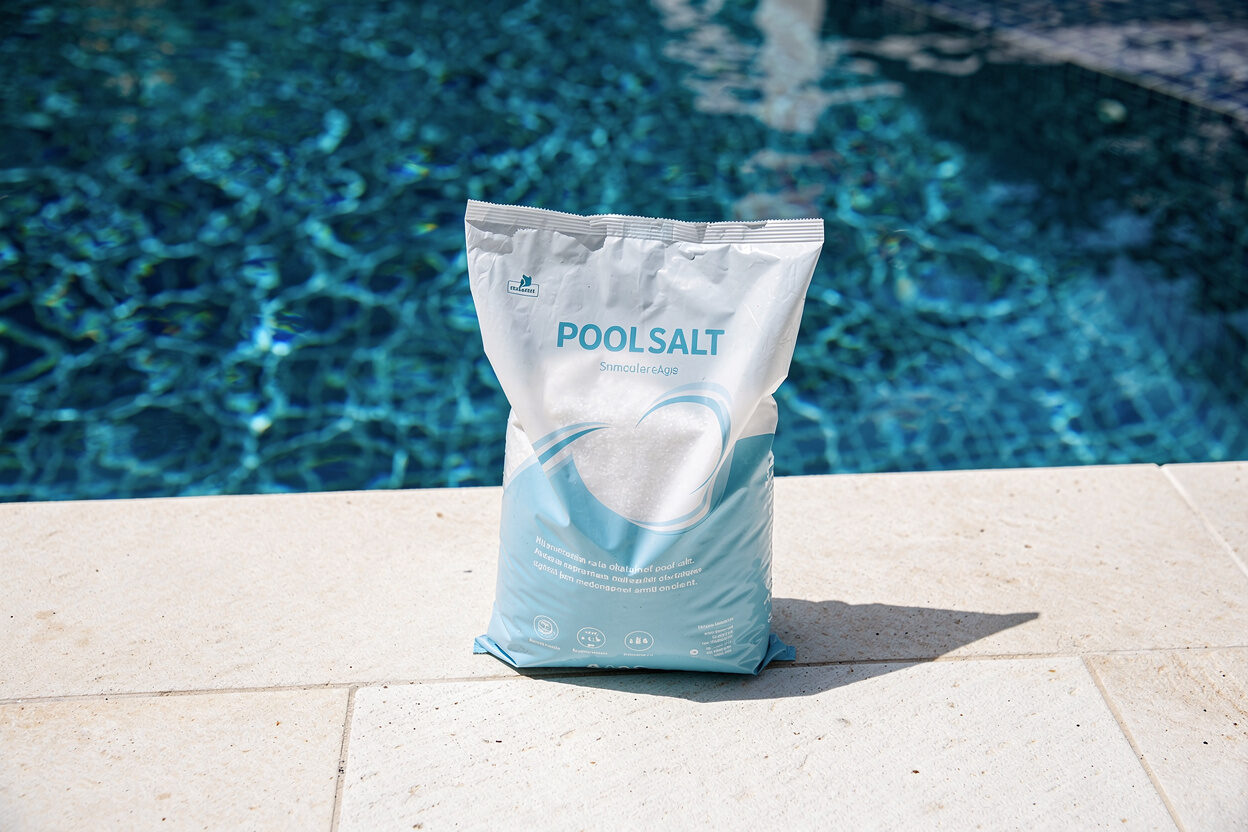
- Salt Addition: You add pool salt (sodium chloride) to your pool water, typically maintaining 2,700-3,400 ppm
- Electrolysis Process: Water flows through the generator cell containing titanium plates with a ruthenium oxide coating
- Electrical Current: The generator applies electrical current to the plates, splitting salt molecules
- Chlorine Production: This process creates hypochlorous acid (HOCl) - the same active sanitizer found in liquid chlorine
- Continuous Cycle: The chlorine eventually converts back to salt, creating a self-sustaining cycle
Why the Confusion Exists
Many pool owners mistakenly believe salt water pools are "chlorine-free" because:
- Marketing materials often emphasize the "no chlorine smell" benefit
- You don't manually add liquid chlorine or chlorine tablets
- The water feels softer and less harsh on skin and eyes
- There's less chloramine formation (the actual cause of chlorine smell)
However, when you test a properly maintained salt water pool, you'll find free chlorine held at the right level for your CYACyanuric Acid (stabilizer) — Sunscreen for your chlorine — it keeps sunlight from burning it off. The catch: the more you have, the more chlorine you need to keep. learn more →. Because salt pools usually run higher CYA (around 70-80 ppm), that target is actually a bit higher than a typical manually-chlorinated pool (CYA 30-50) - so use the FC/CYAFC/CYA chart — The chart that sets your chlorine target from your stabilizer (CYA) level — the two go together. see the chart → chart rather than a fixed number.
Chemical Management in Salt Water Pools
Salt water pools require the same chemical balancing as traditional pools, with some specific considerations:
Free Chlorine (FC)
Target the same FCFree Chlorine — The chlorine actively sanitizing your water right now. This is the number you keep an eye on. how much you need → levels based on your Cyanuric Acid (CYA) levels. Use the FC/CYA relationship — our all-in-one pool calculator estimates the free chlorine target for your CYA. Test daily during swimming season and adjust generator output accordingly.
Cyanuric Acid (CYA)
Salt water pools are often run at higher CYA than traditional pools—many SWGSalt Water Generator — The "salt cell" that makes chlorine from the salt in a saltwater pool. Same chlorine — it just makes its own. pool terms → manufacturers recommend roughly 70-80 ppm to reduce UV chlorine loss (follow your generator's guidance), versus 30-50 ppm for non-salt pools. Higher CYA levels reduce chlorine effectiveness regardless of generation method.
pH Management
Salt water generators naturally raise pH as they operate. Maintain pH between 7.4-7.6 by adding muriatic acid regularly. Most SWG pools require weekly pH adjustment during active season.
Total Alkalinity (TA)
Keep TATotal Alkalinity — The buffer that keeps your pH from bouncing around. Get this in range and pH gets a lot easier to manage. learn more → lower in salt water pools: 60-80 ppm compared to 80-120 ppm in traditional pools. This helps manage the pH rise caused by the generator.
Calcium Hardness (CH)
Maintain 250-350 ppm for plaster pools, or 175-225 ppm for vinyl/fiberglass. Low calcium can cause equipment corrosion in salt water systems.
When Salt Water Pools Still Need Added Chlorine
Despite having a generator, you'll sometimes need to add chlorine manually:
- Pool Opening: Shock with liquid chlorine to establish proper sanitizer levels
- Algae Treatment: Perform SLAMShock Level And Maintain — raise free chlorine to a target based on your CYA and hold it there until the algae is gone. It's a process, not a one-time dose. the SLAM walkthrough → (Shock Level And Maintain) method using liquid chlorine for faster results
- Heavy Bather Loads: Boost chlorine levels during parties or high usage periods
- Equipment Issues: When the generator needs cleaning or repair
- Off-Season: Many owners prefer adding liquid chlorine during cooler months
Benefits of Salt Water Chlorine Generation
While salt water pools definitely use chlorine, the generation method offers several advantages:
- Consistent chlorine production eliminates dosing guesswork
- Reduced chloramine formation means less eye and skin irritation
- No storage of concentrated chlorine chemicals
- Softer-feeling water due to dissolved salt content
- Lower long-term chemical costs after initial equipment investment
Testing and Maintenance Requirements
Test your salt water pool chemistry 2-3 times per week during swimming season:
- Daily: Test FC levels and adjust generator output as needed
- Weekly: Test and adjust pH, typically with muriatic acid
- Bi-weekly: Test TA, CYA, and salt levels
- Monthly: Test calcium hardness and inspect generator cell
Clean the generator cell when calcium buildup becomes visible, typically every 500 hours of operation or as needed based on inspection. Use a mild muriatic acid solution (10:1 water to acid ratio) for cleaning.
Common Mistakes to Avoid
Don't fall into these salt water pool traps:
- Never adding chlorine: Sometimes manual addition is necessary
- Ignoring CYA levels: Too low leaves chlorine unprotected; too high makes it ineffective
- Neglecting pH: High pH promotes scaling and slightly shifts chlorine toward its less-active form, while low pH risks corrosion and etching
- Wrong salt type: Only use pure sodium chloride pool salt, never table salt
- Overlooking cell maintenance: Dirty cells can't produce adequate chlorine
Remember: whether generated by salt or added directly, chlorine is chlorine. Salt water pools simply use a more automated, gentler method of chlorine production while maintaining the same sanitizing power that keeps your pool safe and clean.
For the full breakdown of safe chlorine levels by CYA level, see our pool water chemistry guide.
 Taylor K-2006C Complete FAS-DPD Pool & Spa Test Kit
The FAS-DPD kit pool pros trust — reads chlorine accurately even at shock/SLAM levels, plus pH, alkalinity, calcium hardness and CYA. View on Amazon →
Taylor K-2006C Complete FAS-DPD Pool & Spa Test Kit
The FAS-DPD kit pool pros trust — reads chlorine accurately even at shock/SLAM levels, plus pH, alkalinity, calcium hardness and CYA. View on Amazon →
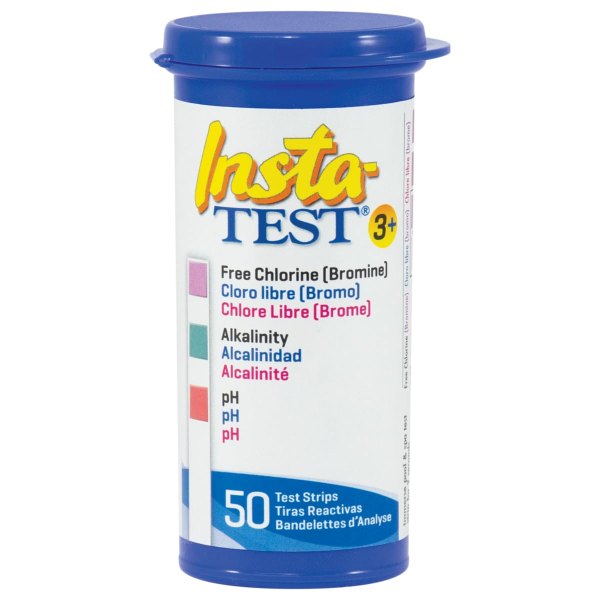 LaMotte Insta-Test 3 Pool Strips (50 ct)
Pro-grade 3-way strips from LaMotte — chlorine, pH & alkalinity, fast and accurate. Top-rated at 4.8★. View on Amazon →
LaMotte Insta-Test 3 Pool Strips (50 ct)
Pro-grade 3-way strips from LaMotte — chlorine, pH & alkalinity, fast and accurate. Top-rated at 4.8★. View on Amazon →
Still need help? Ask a Pool & Spa Expert AD
Get a personalized answer from PoolGuy810 — 30 years owning a pool and spa repair company. Describe your issue and get step-by-step help.
Related Pool Guides
Need More Help?
Try our free pool calculators and tools to help diagnose and fix your pool problems.
Browse Pool ToolsSLAM calculator, pH calculator, salt dosing & more