
Do Pools Need Chlorine? Essential Pool Sanitizer Guide

New pool owner - is chlorine really necessary?
Read full question
Between my neighbor claiming pools don't need chlorine with proper balance, the pool store insisting it's essential, and YouTube giving conflicting advice, I'm completely lost.
Are there other options besides chlorine? I've heard people mention saltwater pools and UV systems - do those work just as well? I want to keep my family safe but also don't want to over-complicate things as a beginner. What's the most reliable way to keep pool water clean and safe?
Quick Answer
Yes, pools absolutely need chlorine or another sanitizer to kill bacteria, viruses, and algae. Chlorine is the most effective and affordable option, but alternatives like bromine, UV systems, and saltwater generators are also available. Proper chlorine levels should correspond to your cyanuric acid (CYA) level using the FC/CYA relationship. For saltwater pools, target CYA levels of 70-80ppm.
Why Pools Need Sanitizers
Pool water without sanitizer quickly becomes dangerous. In unsanitized water, bacteria like E. coli and Pseudomonas build up and can cause stomach upset, skin rashes, or ear and eye irritation. Viruses such as norovirus and hepatitis can survive for days in untreated water. Additionally, algae will bloom within 2-3 days, turning your crystal-clear pool into a green swamp.
The CDC reports that recreational water illnesses (RWIs) affect thousands of swimmers annually, many tied to inadequate sanitation, though some pathogens like Cryptosporidium resist chlorine even in well-maintained pools. This makes sanitization not just recommended—it's essential for public health and safety.
Chlorine: The Gold Standard
Chlorine works by releasing hypochlorous acid (HOCl) when dissolved in water. This powerful oxidizer destroys bacteria and viruses by breaking down their cell walls and disrupting vital proteins. What makes chlorine superior is its residual effect—it continues protecting your pool between treatments.
Proper Chlorine Levels
Your free chlorine (FCFree Chlorine — The chlorine actively sanitizing your water right now. This is the number you keep an eye on. how much you need →) level should correspond to your cyanuric acid (CYACyanuric Acid (stabilizer) — Sunscreen for your chlorine — it keeps sunlight from burning it off. The catch: the more you have, the more chlorine you need to keep. learn more →) level using the FC/CYAFC/CYA chart — The chart that sets your chlorine target from your stabilizer (CYA) level — the two go together. see the chart → relationship:
- CYA 30ppm: FC should be 3-5ppm
- CYA 50ppm: FC should be 5-7ppm
- CYA 70ppm: FC should be 8-10ppm
- CYA 80ppm: FC should be 9-11ppm
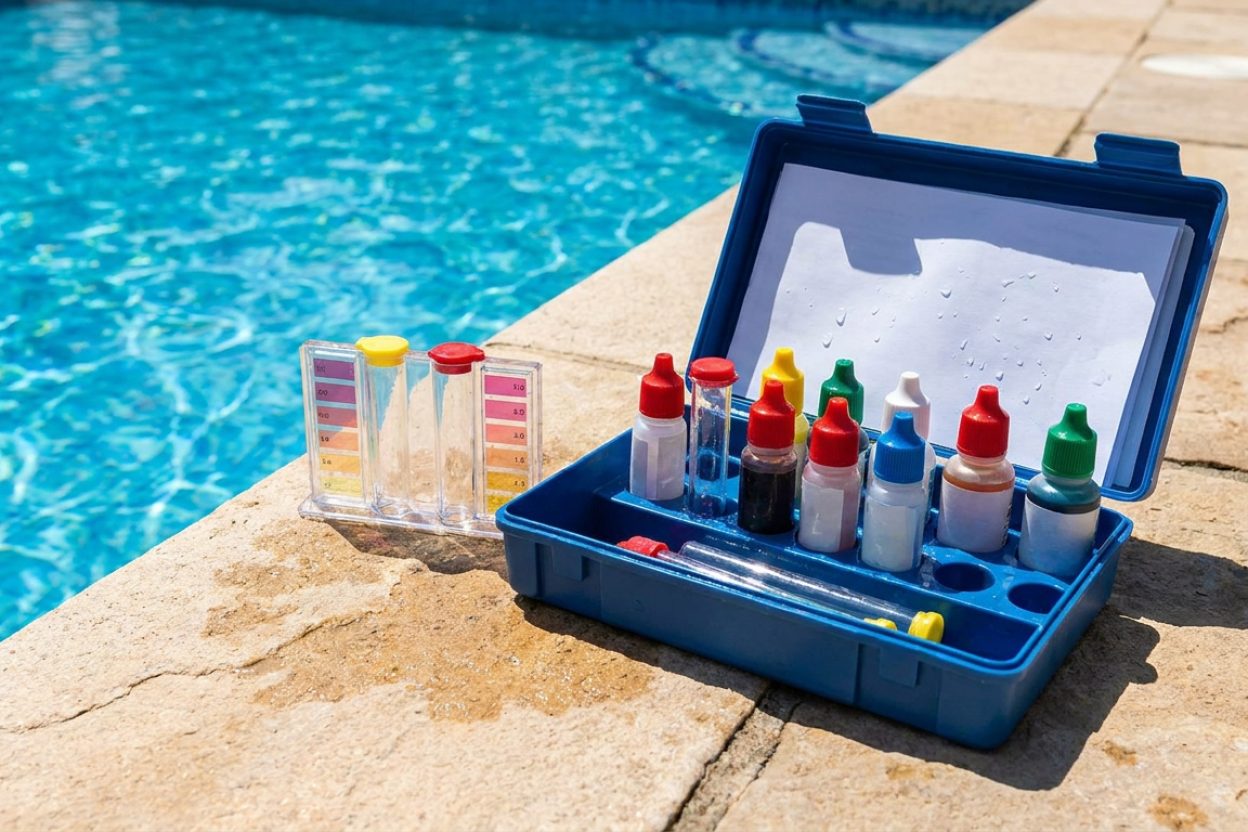
Test your water 2-3 times weekly using a Taylor K-2006 test kit for accurate readings. Pool store test strips are notoriously unreliable and can give false readings that compromise your pool's safety.
Free Pool Calculators
Use our free tools to estimate chemical doses for your pool:
Best Chlorine Products
Liquid chlorine (sodium hypochlorite) is the preferred choice for most pool owners. It's pure, adds only chlorine, and dissolves immediately. Our all-in-one pool calculator sizes the dose from your pool volume, current FC, and product concentration.
Avoid trichlor tablets and cal-hypo shock for regular maintenance—trichlor adds excessive CYA over time, while cal-hypo adds calcium that can cause scaling issues.
Chlorine Alternatives
Saltwater Chlorine Generators
Salt systems don't eliminate chlorine—they produce it through electrolysis. A saltwater generator converts dissolved salt into chlorine gas, which immediately becomes sodium hypochlorite in your pool. You'll still need to maintain proper FC levels and water balance, but the system automates chlorine production.
Target CYA levels of 70-80ppm for saltwater pools since the steady chlorine production handles the reduced efficiency better than manual dosing.
Bromine Systems
Bromine works similarly to chlorine but remains active even after killing contaminants, creating a 'bromide bank' that reactivates with oxidation. It's gentler on skin and eyes and doesn't produce chloramines. However, bromine costs 2-3 times more than chlorine and works poorly outdoors due to UV degradation.
Maintain bromine levels at 3-5ppm, testing with bromine-specific test reagents since chlorine test kits won't read accurately.
UV and Ozone Systems
UV lights and ozone generators kill pathogens as water passes through the system, but they provide zero residual sanitization. You'll still need a small chlorine residual (0.5-1ppm) to handle contamination between filtration cycles.
These systems excel at reducing chlorine demand and eliminating chloramines but require significant upfront investment ($1,500-$5,000) and ongoing maintenance.
The SLAM Process for Problem Pools
If your pool has turned green or cloudy, you'll need to SLAMShock Level And Maintain — raise free chlorine to a target based on your CYA and hold it there until the algae is gone. It's a process, not a one-time dose. the SLAM walkthrough → (Shock Level And Maintain) regardless of your normal sanitization method. This process involves:
- Test and record your current CYA level
- Calculate your shock level FC using the all-in-one pool calculator or the FC/CYA chart
- Add liquid chlorine to reach shock level
- Run your pump 24/7 and maintain shock level FC
- Brush walls and floor twice daily
- Test FC every few hours and add chlorine as needed
- Continue until you can pass the Overnight Chlorine Loss Test (OCLT) - FC loss should be 1ppm or less overnight, combined chlorine (CCCombined Chlorine — "Used-up" chlorine left over from doing its job. Above about 0.5 ppm is the classic sign water needs a shock. learn more →) is 0.5 ppm or less, and the water is clear
Never use algaecides or clarifiers during a SLAM—the shock-level chlorine already kills the algae, so the algaecide just gets oxidized and wastes money, and clarifiers clog your filter when it's working hardest.
Common Mistakes to Avoid
Don't rely on 'shock' alone. Weekly shocking doesn't replace daily sanitization. Many pool owners shock once weekly but ignore daily FC levels, creating windows where bacteria can multiply.
Avoid non-chlorine oxidizers as your primary sanitizer. Products like potassium monopersulfate can't kill bacteria—they only oxidize organic matter. They're useful supplements but never replacements for proper sanitization.
Don't overdose with CYA. While cyanuric acid protects chlorine from sunlight, levels above 100ppm require an impractically high FC to stay effective. If your CYA exceeds 100ppm, partial water replacement becomes necessary.
Testing and Monitoring
Invest in a quality test kit like the Taylor K-2006 or TF-100. Test FC and pH 2-3 times weekly, and complete chemistry (including CYA, TATotal Alkalinity — The buffer that keeps your pH from bouncing around. Get this in range and pH gets a lot easier to manage. learn more →, and CH) monthly. Digital meters can supplement test kits but shouldn't replace them entirely.
Keep detailed logs of your test results and chemical additions. This data helps identify patterns and prevents costly mistakes.
Safety reminder: Never mix different chemical types, and always add chemicals to water, not water to chemicals. Store all sanitizers in cool, dry locations away from incompatible materials.
For the full breakdown of safe chlorine levels by CYA level, see our pool water chemistry guide.
 Taylor K-2006C Complete FAS-DPD Pool & Spa Test Kit
The FAS-DPD kit pool pros trust — reads chlorine accurately even at shock/SLAM levels, plus pH, alkalinity, calcium hardness and CYA. View on Amazon →
Taylor K-2006C Complete FAS-DPD Pool & Spa Test Kit
The FAS-DPD kit pool pros trust — reads chlorine accurately even at shock/SLAM levels, plus pH, alkalinity, calcium hardness and CYA. View on Amazon →
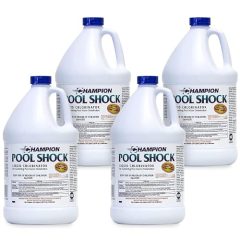 Liquid Chlorine / Sodium Hypochlorite (12.5%)
Everyday sanitizer — the B in BBB View on Amazon →
Liquid Chlorine / Sodium Hypochlorite (12.5%)
Everyday sanitizer — the B in BBB View on Amazon →
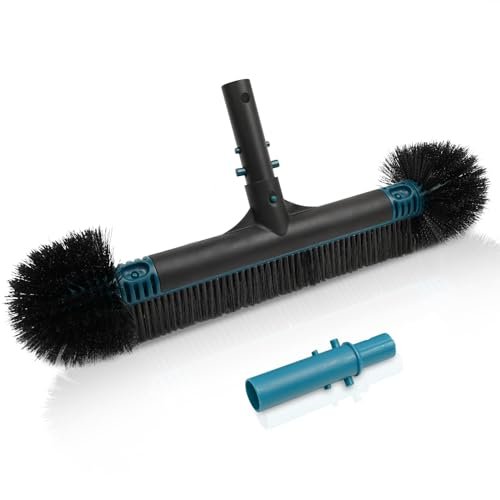 Poolvio 20" 2-in-1 Pool Brush Head (Walls & Floor)
Sturdy 20-inch brush head that clips onto any standard telescopic pole. View on Amazon →
Poolvio 20" 2-in-1 Pool Brush Head (Walls & Floor)
Sturdy 20-inch brush head that clips onto any standard telescopic pole. View on Amazon →
Still need help? Ask a Pool & Spa Expert AD
Get a personalized answer from PoolGuy810 — 30 years owning a pool and spa repair company. Describe your issue and get step-by-step help.
Related Pool Guides
Need More Help?
Try our free pool calculators and tools to help diagnose and fix your pool problems.
Browse Pool ToolsSLAM calculator, pH calculator, salt dosing & more