
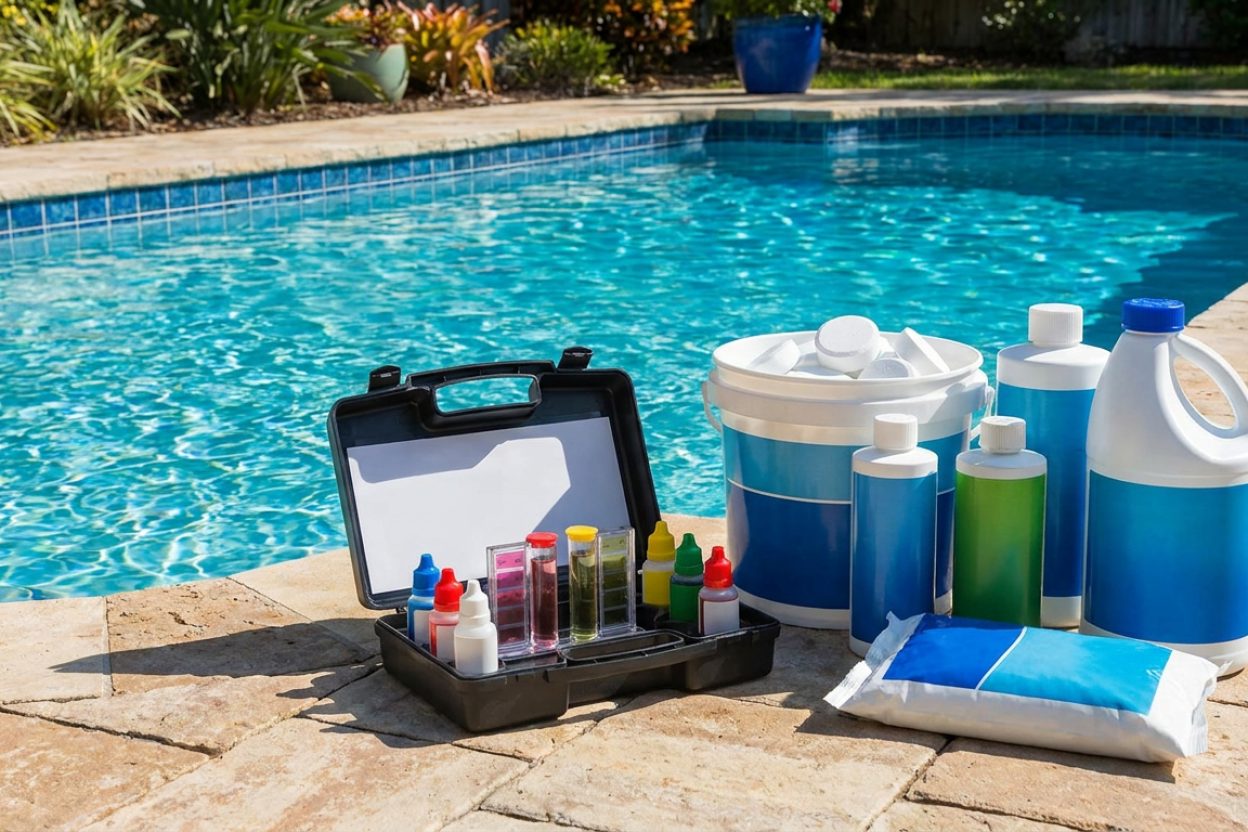
Why Pool Alkalinity Gets Low: 7 Common Causes & Solutions

What causes pool alkalinity to drop? Safe for kids to swim?
Read full question
Opened my pool this morning and the alkalinity had crashed again — only happens when it's above 85 degrees but stays perfectly normal during cooler weather. My kids swim in it almost daily during summer, so I'm really concerned about whether this is safe for them.
I'm trying to figure out what's causing this so I can fix it properly. We've had a lot of rain lately, and I've been shocking the pool more often because of increased usage. Could these things be making the alkalinity drop? What are the main reasons pool alkalinity gets low, and should I keep the kids out until I get it balanced again?
Quick Answer
Pool alkalinity typically drops due to heavy rainfall, organic contamination, acidic trichlor chlorine, and acidic fill water. Rain's main effect is its slight acidity plus overflow exchange — test and re-balance after a heavy storm. Low alkalinity isn't a swimmer-health hazard, so kids can usually keep swimming as long as free chlorine and pH are in range; just correct the TA so pH stays stable.
Quick Answer: Fix Low Alkalinity First, Then Investigate
When your total alkalinity drops below 80 ppm, add sodium bicarbonate (baking soda) immediately. For a quick estimate, our all-in-one pool calculator works out how much to add from your pool size and current vs. target levels. Low alkalinity lets pH swing, which can cause eye and skin discomfort and is hard on pool surfaces and equipment until corrected. Test after 6 hours and adjust as needed to reach 80-120 ppm for regular pools or 60-80 ppm for salt water generators. Once corrected, identify what caused the drop to prevent future issues.
Can the Kids Keep Swimming?
Yes — usually. Low total alkalinity by itself is not a swimmer-health hazard; it's a water-balance and equipment issue. As long as free chlorine and pH are in their safe ranges, swimming is fine. The catch is that low TATotal Alkalinity — The buffer that keeps your pH from bouncing around. Get this in range and pH gets a lot easier to manage. learn more → lets pH swing around, and an out-of-range pH is what causes eye and skin irritation — so test pH and correct the alkalinity rather than leaving it. If you notice this mostly happens when it's above 85°F, that fits: warm weather means heavier use, more frequent shocking, more evaporation and top-offs, and often more summer rain — all of which nudge alkalinity and pH around.
The 7 Main Causes of Low Pool Alkalinity
1. Heavy Rainfall (Most Common Cause)
Rainwater has virtually zero alkalinity and a pH around 5.6, making it acidic. Just 2-3 inches of rain can dramatically dilute your pool's alkalinity. Rain only adds the volume falling on the pool's surface (a few hundred up to ~1,500 gallons for an average pool in a heavy storm), and the pool overflows the excess. The bigger effect on alkalinity is the rain's slight acidity plus overflow exchange — test after heavy rain and re-balance rather than assuming a fixed drop.
This is why you should always test your water chemistry within 24 hours after any significant rainfall, especially during storm seasons.
2. Organic Contamination and Decomposition
When leaves, grass clippings, pollen, and other organic matter decompose in your pool, they release acids that consume alkalinity. The bacterial breakdown process produces carbonic acid and other organic acids that directly attack your alkalinity buffer.
Pools surrounded by trees or experiencing heavy pollen seasons are particularly susceptible. Even a moderate amount of leaf debris can drop alkalinity by 20-30 ppm over several days.
3. Shocking with Acidic (Trichlor) Chlorine
Most chlorine products don't lower alkalinity. Liquid chlorine and cal-hypo are alkaline (pH ~13 and ~11.8) and actually nudge pH and alkalinity up, not down; dichlor is roughly neutral and mainly adds CYACyanuric Acid (stabilizer) — Sunscreen for your chlorine — it keeps sunlight from burning it off. The catch: the more you have, the more chlorine you need to keep. learn more →. Trichlor is the real alkalinity-lowerer — it's strongly acidic (pH ~2.8-3.0), so as it dissolves it converts bicarbonate to carbonic acid and steadily reduces total alkalinity.
If you rely on trichlor tablets or trichlor shock, that's what's gradually pulling your alkalinity down. This is why TFP/SLAM recommends liquid chlorine — it doesn't load the pool with calcium (cal-hypo) or CYA (dichlor/trichlor) and won't drive alkalinity down the way acidic trichlor does.
4. Acidic Fill Water
Your local water supply might have low alkalinity to begin with. Well water is often acidic due to dissolved carbon dioxide and organic acids from soil. Some municipal water supplies also have low alkalinity, especially if they use reverse osmosis treatment.
Test your fill water separately to establish a baseline. If your tap water has alkalinity below 50 ppm, you'll need to boost it every time you add significant amounts of fresh water.
5. Muriatic Acid Overdose
Adding too much muriatic acid to lower pH will consume alkalinity faster than intended. The relationship between pH and alkalinity means you can't adjust one without affecting the other.
This commonly happens when pool owners see high pH readings and aggressively add acid without considering the alkalinity impact. Always test both parameters and add acid gradually - no more than 1 quart per 20,000 gallons at a time.
6. CO2 Injection Systems
If you use a CO2 system to control pH, it works by forming carbonic acid in the water. While more gentle than muriatic acid, continuous CO2 injection will gradually lower alkalinity over time.
Monitor alkalinity weekly if you use CO2, and supplement with sodium bicarbonate as needed to maintain proper buffering capacity.
7. Swimmer Load and Body Oils
Heavy bather loads introduce acids through sweat, cosmetics, and body oils. While this typically requires dozens of swimmers over several days to significantly impact alkalinity, busy pool parties or swim lessons can contribute to alkalinity loss.
Sunscreen and cosmetics are particularly problematic because they contain fatty acids that break down into smaller organic acids.
How to Test and Confirm Low Alkalinity
Use a reliable test kit like the Taylor K-2006C or TF-100, which measure total alkalinity through acid titration. Digital test strips are notoriously inaccurate for alkalinity readings.
Test at least twice weekly during swimming season, and always test 24 hours after rainfall, shocking, or adding chemicals. Total alkalinity should read 80-120 ppm for traditional chlorine pools, or 60-80 ppm if you have a salt water generator.
Prevention Strategies
Cover your pool during storms when possible to minimize rainwater dilution. Remove organic debris promptly - skim daily and vacuum weekly. When shocking, use liquid chlorine instead of cal-hypo when feasible.
If your fill water has chronically low alkalinity, consider adding sodium bicarbonate to fresh water before it enters the pool. For every 1,000 gallons of low-alkalinity fill water, pre-treat with appropriate amounts of baking soda based on testing.
Safety Warning: Always add chemicals with the pump running and never mix different chemicals together. Add them one at a time, allowing at least 30-60 minutes of circulation between additions—and never add acid and a base (like alkalinity increaser) back-to-back.
For the full breakdown of safe chlorine levels by CYA level, see our pool water chemistry guide.
 Taylor K-2006C Complete FAS-DPD Pool & Spa Test Kit
The FAS-DPD kit pool pros trust — reads chlorine accurately even at shock/SLAM levels, plus pH, alkalinity, calcium hardness and CYA. View on Amazon →
Taylor K-2006C Complete FAS-DPD Pool & Spa Test Kit
The FAS-DPD kit pool pros trust — reads chlorine accurately even at shock/SLAM levels, plus pH, alkalinity, calcium hardness and CYA. View on Amazon →
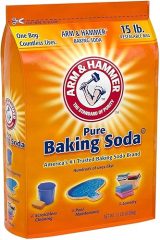 Arm & Hammer Pure Baking Soda (Alkalinity Up)
Raises Total Alkalinity cheaply View on Amazon →
Arm & Hammer Pure Baking Soda (Alkalinity Up)
Raises Total Alkalinity cheaply View on Amazon →
 The Skimmie Handheld Pool Skimmer Net
Grab-and-go hand skimmer for leaves and debris off the surface. View on Amazon →
The Skimmie Handheld Pool Skimmer Net
Grab-and-go hand skimmer for leaves and debris off the surface. View on Amazon →
Still need help? Ask a Pool & Spa Expert AD
Get a personalized answer from PoolGuy810 — 30 years owning a pool and spa repair company. Describe your issue and get step-by-step help.
Related Pool Guides
Need More Help?
Try our free pool calculators and tools to help diagnose and fix your pool problems.
Browse Pool ToolsSLAM calculator, pH calculator, salt dosing & more