
Can I Shock Pool After Adding Baking Soda? Complete Guide

Safe to shock pool after adding baking soda? Timing questions
Read full question
Noticed my neighbor's pool stays crystal clear when he adds baking soda then shocks immediately, but mine turns cloudy every time — what's his secret? I added baking soda to raise my alkalinity this morning, but now I'm wondering about timing.
Can I go ahead and shock the pool right away, or do I need to wait? I don't want to waste the shock treatment or mess up my water chemistry. The pool store guy mentioned something about waiting but then tried to upsell me on their "premium" shock system. Just looking for straight answers on proper timing and whether I should test anything specific before shocking.
Quick Answer
Yes, you can shock your pool after adding baking soda, and you do not need to wait long — baking soda mixes fast and does not react with chlorine, so just let it circulate and confirm pH first. Test your water chemistry first to ensure optimal chlorine effectiveness. Use the FC/CYA relationship — our all-in-one pool calculator estimates the free chlorine target for your CYA. For 30 ppm CYA, shock to 12 ppm FC; for 50 ppm CYA, shock to 20 ppm FC.
Understanding the Chemistry Behind Baking Soda and Shock
Baking soda (sodium bicarbonate) primarily raises total alkalinity in your pool, with a secondary effect of increasing pH. When you add baking soda, you're creating better water chemistry conditions for chlorine shock to work effectively. Chlorine works best when pH is between 7.2-7.6 and total alkalinity is between 80-120 ppm for traditional pools (60-80 ppm for salt water pools).
The key is that baking soda doesn't interfere with chlorine chemically - in fact, it helps create the ideal environment for chlorine to do its job. However, you need to allow time for the baking soda to fully dissolve and circulate before adding your shock treatment.
Proper Timing and Sequence
Before Adding Baking Soda
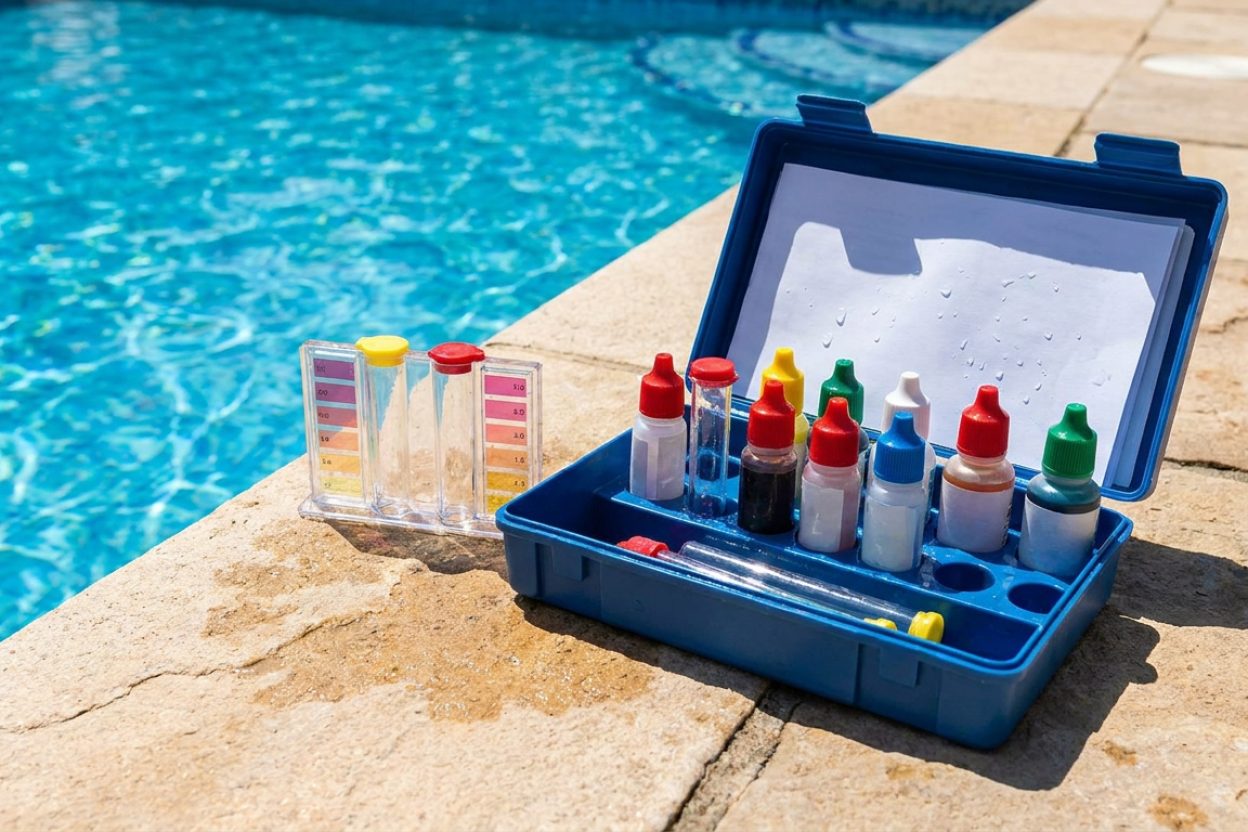
Test your current water chemistry using a reliable test kit like the Taylor K-2006C. Record your current pH, total alkalinity, free chlorine, and cyanuric acid levels. This baseline helps you understand how much baking soda you need and how it will affect your shock treatment plan.
Adding Baking Soda Correctly
Not sure how much to add? Our all-in-one pool calculator estimates the amount from your pool size and current vs. target alkalinity.
Use the all-in-one pool calculator to size the baking soda dose for your pool and target. Broadcast the baking soda evenly across the pool surface with your pump running. For larger adjustments, split the dose and add half now, half in 6-8 hours to avoid overshooting your target.
How Long to Wait
You don't need a long wait — baking soda doesn't react with chlorine, so there's nothing to "wait out" chemically. Give it time to dissolve and circulate (often 20 minutes to an hour is plenty; a few hours lets you retest with full confidence), then confirm your pH before shocking. The short wait simply gives you:
- Complete dissolution and circulation of the sodium bicarbonate
- pH and alkalinity levels to stabilize
- Water chemistry to reach equilibrium
- Time for accurate retesting before shock application
Testing and Adjusting Before Shocking
After the waiting period, retest your water chemistry. Your pH should ideally be between 7.2-7.6 for optimal shock effectiveness. If pH rises above 7.8 after adding baking soda, add muriatic acid to bring it down before shocking - high pH significantly reduces chlorine effectiveness.
Check your cyanuric acid (CYACyanuric Acid (stabilizer) — Sunscreen for your chlorine — it keeps sunlight from burning it off. The catch: the more you have, the more chlorine you need to keep. learn more →) level to determine the proper shock level. Use the FC/CYAFC/CYA chart — The chart that sets your chlorine target from your stabilizer (CYA) level — the two go together. see the chart → relationship — our all-in-one pool calculator estimates the free chlorine target for your CYA. For 30 ppm CYA, shock to 12 ppm FCFree Chlorine — The chlorine actively sanitizing your water right now. This is the number you keep an eye on. how much you need →; for 50 ppm CYA, shock to 20 ppm FC. Always base shock level on your FC/CYA ratio for optimal effectiveness.
Choosing the Right Shock Product
Use liquid chlorine (sodium hypochlorite) for the most effective shock treatment. For a quick estimate, use our all-in-one pool calculator to estimate the amount, based on your pool size and current vs. target levels.
Calcium hypochlorite adds calcium and is alkaline, so in high-alkalinity water it can cause temporary cloudiness - liquid chlorine avoids this.
For SLAMShock Level And Maintain — raise free chlorine to a target based on your CYA and hold it there until the algae is gone. It's a process, not a one-time dose. the SLAM walkthrough → (Shock Level And Maintain) treatments on green or cloudy pools, liquid chlorine is essential. The process requires maintaining shock level FC continuously until the pool clears, combined chlorine (CCCombined Chlorine — "Used-up" chlorine left over from doing its job. Above about 0.5 ppm is the classic sign water needs a shock. learn more →) drops to 0.5 ppm or less, and it passes the overnight chlorine loss test.
Post-Shock Monitoring
After shocking, run your filtration system continuously for 24-48 hours. Test free chlorine levels every 6-8 hours initially, then daily once levels stabilize. The combined effect of proper alkalinity (from baking soda) and adequate chlorine levels will clear most water quality issues.
Monitor pH in the days following treatment. Liquid chlorine nudges pH up briefly when added, but it settles back as the chlorine is consumed, so over time liquid chlorine is roughly pH-neutral. You may need minor pH adjustments with muriatic acid to maintain the 7.2-7.6 range.
Common Mistakes to Avoid
Don't shock before the baking soda has circulated - not because it harms the chlorine (it doesn't react with it), but so your pH reading is accurate; shocking while pH is briefly spiked just makes the chlorine less effective until it settles. Don't skip retesting - confirm pH and alkalinity are back in range before you shock. Don't shock with trichlor tablets - they dissolve slowly, are acidic, and add cyanuric acid; use liquid chlorine (or cal-hypo) to shock instead.
If You Overshoot Alkalinity
Overshot your total alkalinity? You can lower it at home: add muriatic acid to bring pH down to about 7.0-7.2, then aerate the water (aim the returns upward, or add a fountain or aerator) to bring pH back into range, repeating as needed. This is routine maintenance - it doesn't require a professional or draining the pool. (If your chemistry keeps behaving in ways you genuinely can't explain after this, then it's worth a pro's eyes.)
For the full breakdown of safe chlorine levels by CYA level, see our pool water chemistry guide.
 Taylor K-2006C Complete FAS-DPD Pool & Spa Test Kit
The FAS-DPD kit pool pros trust — reads chlorine accurately even at shock/SLAM levels, plus pH, alkalinity, calcium hardness and CYA. View on Amazon →
Taylor K-2006C Complete FAS-DPD Pool & Spa Test Kit
The FAS-DPD kit pool pros trust — reads chlorine accurately even at shock/SLAM levels, plus pH, alkalinity, calcium hardness and CYA. View on Amazon →
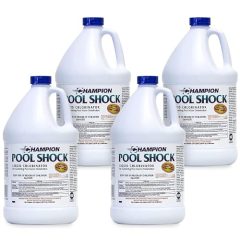 Liquid Chlorine / Sodium Hypochlorite (12.5%)
Everyday sanitizer — the B in BBB View on Amazon →
Liquid Chlorine / Sodium Hypochlorite (12.5%)
Everyday sanitizer — the B in BBB View on Amazon →
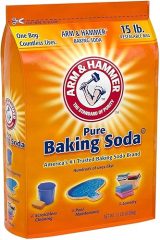 Arm & Hammer Pure Baking Soda (Alkalinity Up)
Raises Total Alkalinity cheaply View on Amazon →
Arm & Hammer Pure Baking Soda (Alkalinity Up)
Raises Total Alkalinity cheaply View on Amazon →
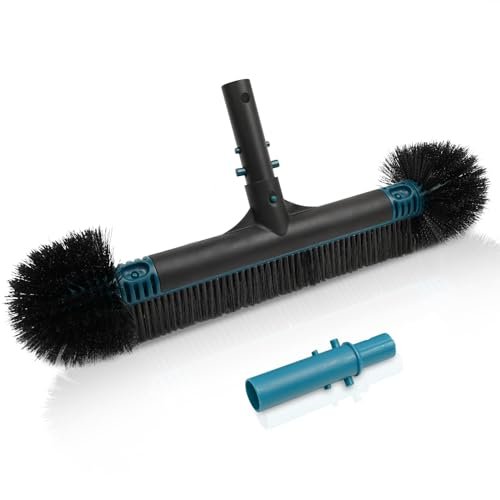 Poolvio 20" 2-in-1 Pool Brush Head (Walls & Floor)
Sturdy 20-inch brush head that clips onto any standard telescopic pole. View on Amazon →
Poolvio 20" 2-in-1 Pool Brush Head (Walls & Floor)
Sturdy 20-inch brush head that clips onto any standard telescopic pole. View on Amazon →
Still need help? Ask a Pool & Spa Expert AD
Get a personalized answer from PoolGuy810 — 30 years owning a pool and spa repair company. Describe your issue and get step-by-step help.
Related Pool Guides
Need More Help?
Try our free pool calculators and tools to help diagnose and fix your pool problems.
Browse Pool ToolsSLAM calculator, pH calculator, salt dosing & more