
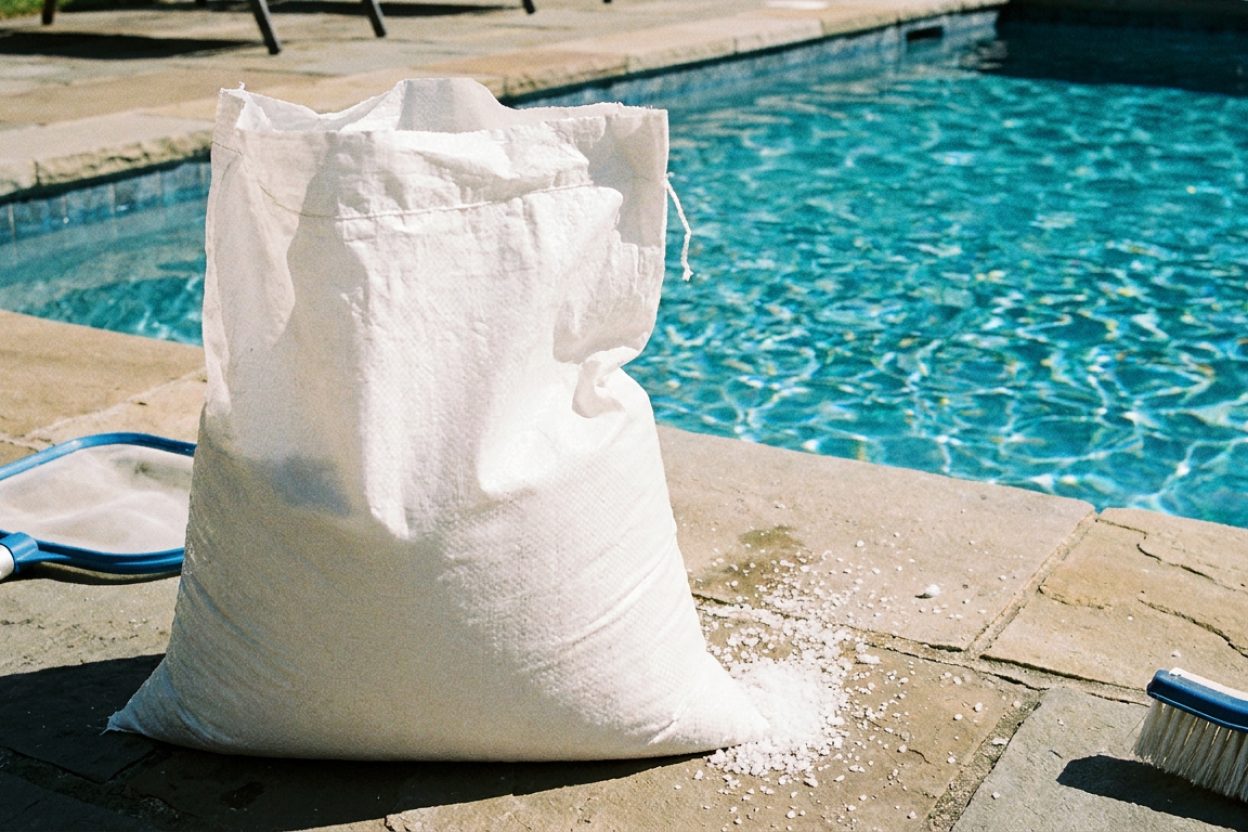
Can You Use Table Salt in a Saltwater Pool?

Ran out of pool salt — can I substitute table salt or water softener pellets?
Read full question
Looked all over town yesterday for pool salt and every store nearby is sold out, so I topped up what little I had left and now I'm sitting just under the target level on my salt chlorine generator. I've got a full bag of regular iodized table salt in the pantry, a half-bag of water softener pellets in the garage, and some leftover ice-melt from winter. The generator is still reading low and I don't want to wait a week for an online order to arrive.
I'm wondering if any of those substitutes will actually work in a pinch, or if dumping the wrong stuff in will trash the salt cell. The replacement cells aren't cheap, so I really don't want to find out the hard way. What actually makes pool-grade salt different from the other stuff sitting in my garage?
Quick Answer
Pure sodium chloride is pure sodium chloride, but the additives hiding in table salt, water softener pellets, and ice-melt are what put your salt cell and pool surfaces at risk. Water softener salt is the closest safe substitute in a pinch, but iodized table salt and ice-melt should be avoided. Pool-grade salt is the right long-term choice because it dissolves cleanly and protects your equipment.
The Short Answer: It's About What's IN the Salt, Not the Salt Itself
Plain sodium chloride is plain sodium chloride — your salt chlorine generator doesn't care where it came from. The problem is that almost none of the bags sitting in your garage contain just sodium chloride. The additives blended into table salt, water softener products, and ice-melt are what create real headaches for your cell, your plaster, and your water chemistry. Here's exactly what you're working with in each bag.
Breaking Down Your Options
Regular Table Salt — Avoid If Possible
Standard iodized table salt contains two things you don't want in your pool: iodine and anti-caking agents. Iodine can cause yellowing or greenish tints in your water and interfere with your sanitizer readings. Anti-caking agents like sodium ferrocyanide or sodium silicate don't dissolve cleanly — they can leave a haze in the water, cloud up your pool, and over time contribute to staining on plaster or concrete surfaces. A small emergency top-up with non-iodized plain table salt is unlikely to cause a catastrophe, but iodized table salt really should stay in the kitchen.
Water Softener Salt Pellets — Acceptable in a Pinch
This is the most commonly debated substitute, and the honest answer is: water softener salt is often a reasonable short-term option, provided it is high-purity and additive-free. Many water softener salts are 99%+ pure sodium chloride with no iodine. The main downside is the pellet or crystal size — larger granules dissolve more slowly than the finer grind used in pool-grade salt, so you'll want to pre-dissolve them or give your pump extra circulation time. Check the bag label carefully; some water softener products include resin-cleaning additives or rust inhibitors that you absolutely do not want entering your pool system. If the bag says "clean and protect" or anything similar, pass on it.
Ice-Melt — Hard No
Ice-melt products are the riskiest option by far. Most blends contain calcium chloride, magnesium chloride, potassium chloride, or a mix of all three — none of which belong in a salt chlorine generator system designed for sodium chloride. Calcium chloride will raise your calcium hardness and can contribute to scaling on your cell plates over time, reducing cell efficiency and lifespan. Some ice-melt products also include colorants and corrosion inhibitors formulated for metal roadways, not pool equipment. Keep the ice-melt in the garage and don't use it.
What Actually Makes Pool Salt Different
Pool-grade salt is typically mined or solar-evaporated sodium chloride processed to high purity — most quality products are 99%+ sodium chloride — with a fine, fast-dissolving grind and no additives. That's really it — there's no magic ingredient. The value is in what isn't there: no iodine, no anti-caking agents, no calcium, no colorants. It dissolves quickly when broadcast across the pool surface while your pump runs, it won't cloud your water, and it won't deposit mineral residue on your cell plates or pool finish over time.
Salt cells aren't cheap — replacement cells are a significant expense, so consistently using clean, pure salt is genuinely worth it from a cost-protection standpoint. You can learn more about keeping the full system balanced in our saltwater pool complete guide.
How to Add Salt Safely (Whatever Type You Use)
- Test first. Confirm your actual salt level with test strips or a digital meter before adding anything. You want to know exactly how much you need rather than guessing.
- Broadcast around the perimeter. Add salt by walking around the pool edge and pouring it in slowly, keeping your pump running the whole time.
- Brush it in. Use a pool brush to push any undissolved salt away from the walls and floor — especially important with larger pellets — to prevent localized concentration that can bleach or stain surfaces.
- Wait before running the cell. Let the salt fully dissolve and circulate (typically several hours to overnight) before turning the chlorine generator back on — this is standard practice and helps the cell read accurate salt levels from the start.
- Retest after 24 hours. Salt levels can read incorrectly until everything is fully mixed and the water temperature stabilizes.
Not sure exactly how much salt to add? Our salt pool dosing calculator can give you a closer estimate based on your pool volume and current salt reading, so you're not guessing.
The Right Target Range
Many residential salt chlorine generators list a target salt concentration in the range of roughly 2,500–3,500 ppm, but always check your specific generator's manual — recommended ranges vary by unit.
One more thing worth knowing: salt doesn't get consumed the way chlorine does. The main reasons your level drops are backwashing, splash-out, rain overflow, and dilution from added water. Once you get to your target level, top-ups are only occasional — another reason it's worth ordering the right product rather than improvising repeatedly.
Bottom Line for Your Situation
Check your water softener salt bag for additives — if it's plain high-purity sodium chloride with no extras listed, it can hold you over for a week until proper pool salt arrives. Skip the table salt if it's iodized, and absolutely skip the ice-melt. Order a bag or two of pool-grade salt as soon as you can and use that going forward to protect your cell investment.
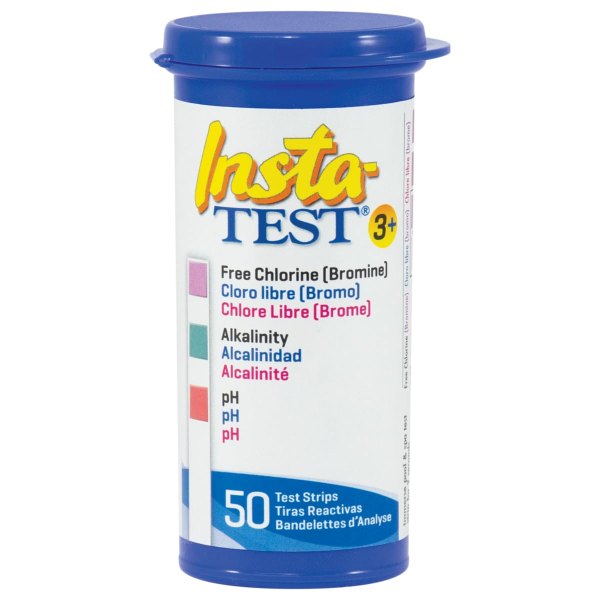 LaMotte Insta-Test 3 Pool Strips (50 ct)
Pro-grade 3-way strips from LaMotte — chlorine, pH & alkalinity, fast and accurate. Top-rated at 4.8★. View on Amazon →
LaMotte Insta-Test 3 Pool Strips (50 ct)
Pro-grade 3-way strips from LaMotte — chlorine, pH & alkalinity, fast and accurate. Top-rated at 4.8★. View on Amazon →
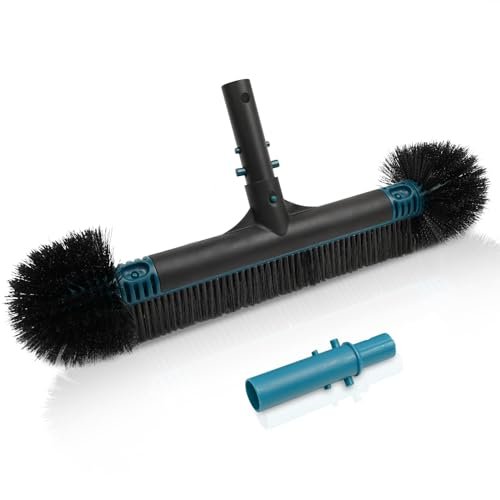 Poolvio 20" 2-in-1 Pool Brush Head (Walls & Floor)
Sturdy 20-inch brush head that clips onto any standard telescopic pole. View on Amazon →
Poolvio 20" 2-in-1 Pool Brush Head (Walls & Floor)
Sturdy 20-inch brush head that clips onto any standard telescopic pole. View on Amazon →
Still need help? Ask a Pool & Spa Expert AD
Get a personalized answer from PoolGuy810 — 30 years owning a pool and spa repair company. Describe your issue and get step-by-step help.
Related Pool Guides
Need More Help?
Try our free pool calculators and tools to help diagnose and fix your pool problems.
Browse Pool ToolsSLAM calculator, pH calculator, salt dosing & more