
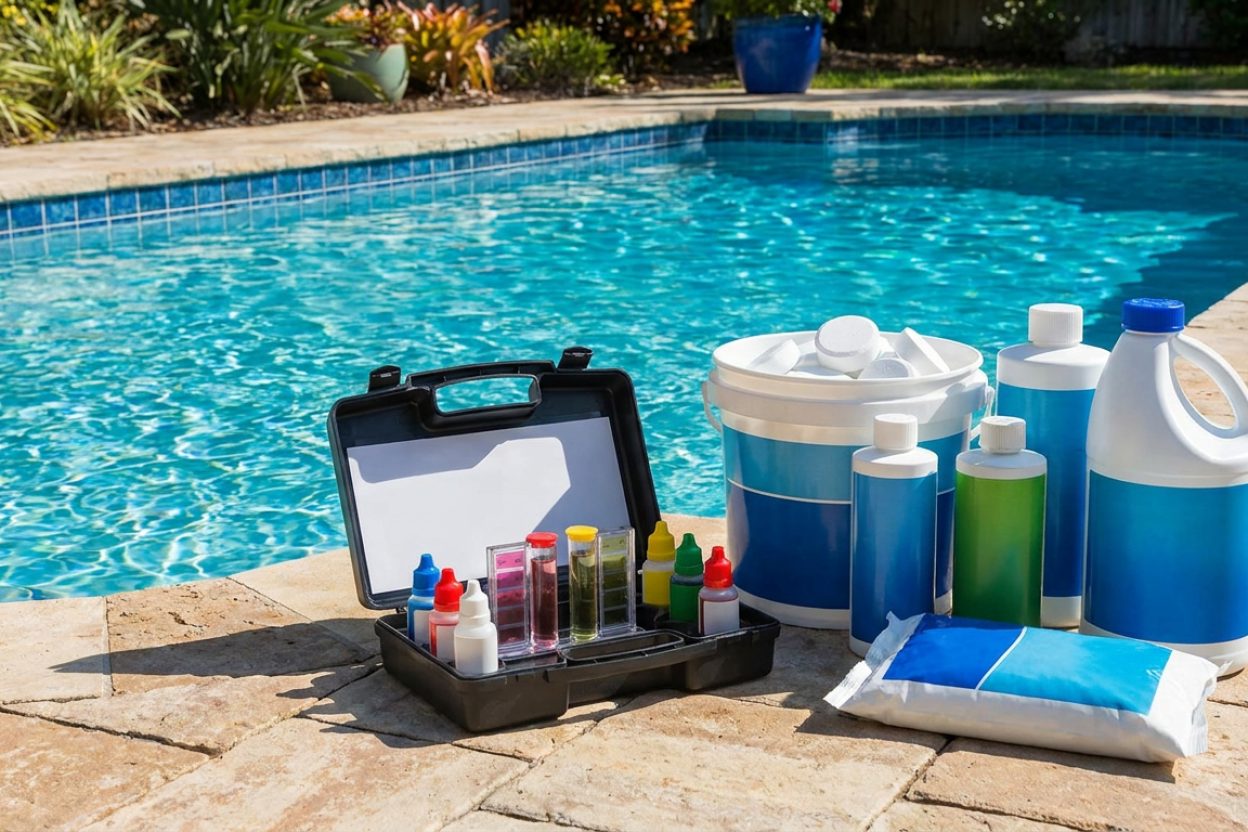
Hydrogen Peroxide to Lower Chlorine in Overshocked Pool

Can I Use Hydrogen Peroxide to Fix an Overshocked Pool?
Read full question
Three pounds of shock into a 15,000-gallon pool — I may have gotten a little enthusiastic. My test kit is maxed out and the water looks like it belongs in a science experiment, not a backyard. Nobody's swimming in it anytime soon and I want to fix this fast.
Standing in the pool store aisle right now, staring at hydrogen peroxide products, sodium thiosulfate, and a few other things I don't recognize — and I have no clue which one I actually need. Someone in my neighborhood group chat swore that hydrogen peroxide is the move, but I've also seen warnings that it can tank your pH or strip your sanitizer to zero if you overdo it.
Can hydrogen peroxide actually neutralize a chlorine overload safely? How much would I need, is it safe for my equipment and liner, and are there smarter or more reliable ways to bring the chlorine back down to a swimmable level without creating a new problem?
Quick Answer
Yes — hydrogen peroxide neutralizes excess chlorine fast and cleanly, leaving just water and oxygen. Match the strength to your water: for a hot tub, spa, or small pool, cheap household 3% from the drugstore is all you need; for a full-size pool, step up to a concentrated 27–35% pool or food-grade oxidizer, since 3% would take gallons. Either way, dose in small amounts and retest — it's easy to overshoot and crater chlorine to zero. Sunlight or partial dilution are gentler if you're not rushed.
The Short Version: Yes, But Tread Carefully
Hydrogen peroxide is a legitimate and chemically sound way to knock down an overchlorinated pool. When H₂O₂ meets free chlorine, it breaks it down into plain water and oxygen — no nasty residue, no new chemical imbalance (other than a slight pH dip). It's genuinely fast and effective. The catch? It's easy to overshoot. Go too heavy on the dose and you can crater your chlorine level from dangerously high to dangerously zero within hours. That's why the method is worth doing right rather than doing quickly.
Here's the other thing to settle first: get your pH to 7.0 or higher before treating — not because the reaction fails at lower pH, but because acidic water combined with chemical treatment stresses pool surfaces and equipment. It also gives you a more stable baseline for retesting afterward. If your pH crashed during the shock event (common with unstabilized pool shock), bump it up first, then treat the chlorine.
What Product to Actually Buy — and How Much
The one thing that decides which product you want is how much water you're treating — match the peroxide strength to your volume and the rest is easy.
Hot tub, spa, or a very small pool? Plain household 3% hydrogen peroxide from the drugstore is all you need, and it's by far the cheapest, most convenient option — no special-ordering a concentrated oxidizer. People dismiss 3% as "too weak," and that's fair for a full-size pool (you'd be pouring in gallons of it), but a few-hundred-gallon spa only takes a modest pour — on the order of a cup or so to bring a big overshoot down, added in small splashes with a retest in between. The drugstore stuff carries a trace of stabilizer that's harmless at these amounts; if you'll be doing it regularly, technical- or food-grade peroxide is purer, but for an occasional fix the brown bottle works fine.
Full-size pool? 3% becomes impractical at that volume, so step up to a concentrated product. The pool-store option most pros reach for is a 27–28% pool-grade oxidizer — ask for it by concentration; prices vary by retailer. Food-grade 35% hydrogen peroxide (from pool suppliers and online) is the most economical for a larger pool since you need far less of it. Either way, because your test kit is maxed out you're facing a big drop you can't measure yet — so dose conservatively, circulate, wait, and retest rather than treating to a single formula. Pool volume, water temperature, CYACyanuric Acid (stabilizer) — Sunscreen for your chlorine — it keeps sunlight from burning it off. The catch: the more you have, the more chlorine you need to keep. learn more → level, and existing chemistry all affect how fast it works, and at 35% it's an aggressive oxidizer (see the safety note below).
The Right Way to Apply It
- Confirm pH is 7.0 or higher before starting. Adjust if needed.
- Run your pump and circulate the water throughout the entire treatment.
- Add the peroxide slowly, pouring it around the perimeter of the pool rather than dumping it all in one spot.
- Wait and retest. Give it at least 30 minutes to an hour before testing again, and retest multiple spots. Don't immediately add another dose before the first one has fully reacted.
- Repeat in small increments until your free chlorine is in a safe, swimmable range. What "safe" means depends on your CYA (stabilizer) level — see the pool water chemistry guide for how FCFree Chlorine — The chlorine actively sanitizing your water right now. This is the number you keep an eye on. how much you need → targets scale with CYA, because a flat "1–3 ppm" target only applies to pools with no stabilizer at all.
- Check pH again after treatment. Hydrogen peroxide tends to nudge pH downward slightly, so you may need a small pH adjustment once you're done.
Equipment Compatibility: One Important Warning
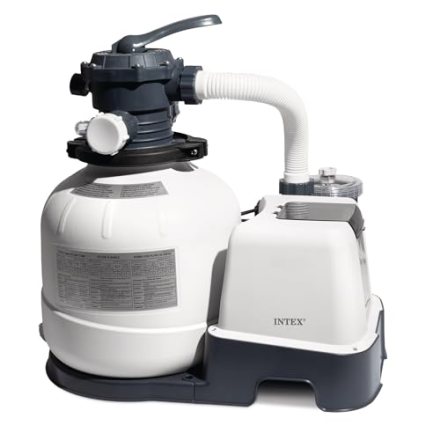
Sand filters and cartridge filters handle hydrogen peroxide treatments just fine — keep the pump running and you're good. DE (diatomaceous earth) filters are a different story. Some manufacturers recommend caution with DE filters during peroxide treatments — check your filter manufacturer's guidance. If in doubt, you can route flow to bypass the filter during initial treatment and reintroduce it once peroxide has diluted into the water. Not sure which filter type you have? The pool filter types guide can help you identify it.
The DIY-Friendly Alternatives (Lower Risk of Overshooting)
If the hydrogen peroxide approach feels like too much chemistry to manage right now — especially when your chlorine level is so high the test kit can't read it — these methods are more forgiving:
- Sunlight: Uncover the pool and let UV radiation do its thing. Unstabilized chlorine can dissipate significantly in 24–48 hours of direct sun at moderate overstock levels — at very high concentrations it may take several days even without CYA protection. If your CYA is high, this will be much slower.
- Dilution: Drain 1/4 to 1/3 of the pool and refill with fresh water. This is the most predictable method — you're literally reducing the concentration of everything, including chlorine. It's slow and uses water, but it's hard to mess up.
- Stop adding chlorine and wait: If you're not in a rush, sometimes patience is the right call. Stop all chlorination and let the chlorine naturally dissipate. With high CYA, this takes longer; with low CYA and sun exposure, it can happen fairly fast.
When to Call a Pro Instead of DIYing It
Most overshocking situations are absolutely DIY-fixable — you don't need a service tech to come out just because you added too much shock. Handle it yourself if your chlorine is high but your other chemistry (pH, alkalinity, CYA) is reasonably close to normal, and you're comfortable working with chemicals carefully.
Consider calling a professional if:
- You're seeing damage — bleached liner, discolored plaster, corroded fittings — that may have been caused or worsened by the overchlorination.
- You've tried multiple correction attempts and chlorine levels still won't come down or stabilize.
- You're unsure about your pool's total volume and can't dose safely without that number (use our pool volume calculator to figure it out first).
- You have a DE filter and aren't sure how to route around it during chemical treatment.
- You're working with concentrated chemicals (35% H₂O₂) for the first time without prior experience — at that concentration, a spill on skin or eyes is a genuine hazard.
Safety Gear Is Non-Negotiable With Concentrated Peroxide
Food-grade 35% hydrogen peroxide is a strong oxidizer that can bleach skin and cause serious eye irritation on contact — handle it with chemical-resistant gloves and eye protection. Pool-grade 27% solutions are less aggressive but still warrant gloves and eye protection as a standard precaution. Peroxide degrades in heat and light and loses potency quickly — store what's left in a cool, dark location with a loose or vented cap to prevent pressure buildup from off-gassing. Never mix it directly with chlorine products outside of pool water.
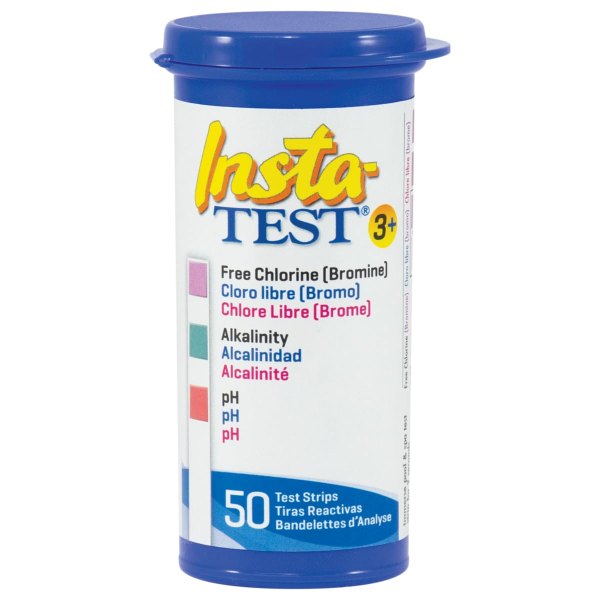 LaMotte Insta-Test 3 Pool Strips (50 ct)
Pro-grade 3-way strips from LaMotte — chlorine, pH & alkalinity, fast and accurate. Top-rated at 4.8★. View on Amazon →
LaMotte Insta-Test 3 Pool Strips (50 ct)
Pro-grade 3-way strips from LaMotte — chlorine, pH & alkalinity, fast and accurate. Top-rated at 4.8★. View on Amazon →
 Taylor K-2006C Complete FAS-DPD Pool & Spa Test Kit
The FAS-DPD kit pool pros trust — reads chlorine accurately even at shock/SLAM levels, plus pH, alkalinity, calcium hardness and CYA. View on Amazon →
Taylor K-2006C Complete FAS-DPD Pool & Spa Test Kit
The FAS-DPD kit pool pros trust — reads chlorine accurately even at shock/SLAM levels, plus pH, alkalinity, calcium hardness and CYA. View on Amazon →
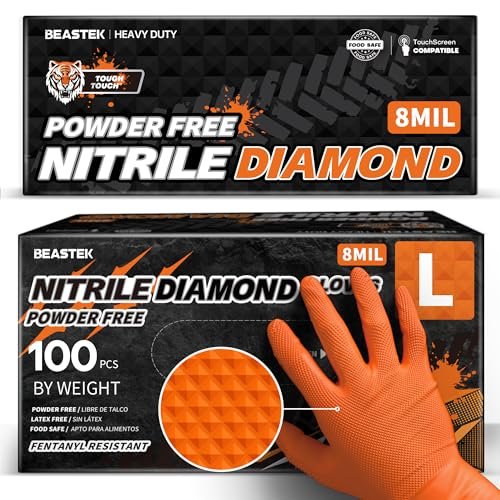 Beastek 8-mil Chemical-Resistant Nitrile Gloves
Disposable nitrile gloves for safe handling of pool chemicals. View on Amazon →
Beastek 8-mil Chemical-Resistant Nitrile Gloves
Disposable nitrile gloves for safe handling of pool chemicals. View on Amazon →
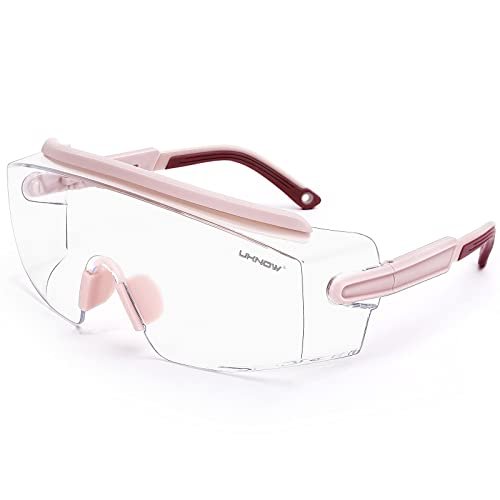 UKNOW Anti-Fog Chemical Splash Safety Goggles
Sealed splash goggles for handling muriatic acid and chlorine. View on Amazon →
UKNOW Anti-Fog Chemical Splash Safety Goggles
Sealed splash goggles for handling muriatic acid and chlorine. View on Amazon →
Still need help? Ask a Pool & Spa Expert AD
Get a personalized answer from PoolGuy810 — 30 years owning a pool and spa repair company. Describe your issue and get step-by-step help.
Related Pool Guides
Need More Help?
Try our free pool calculators and tools to help diagnose and fix your pool problems.
Browse Pool ToolsSLAM calculator, pH calculator, salt dosing & more