

Do Bioactive CYA Reducers Actually Work?

Will a bioactive CYA reducer actually fix my high stabilizer levels?
Read full question
During my routine water test this week, I discovered my cyanuric acid is sitting somewhere between 90 and 100 ppm — well above where it should be. Before I start tearing into a partial drain and refill (which means dealing with water costs, my local water restrictions, and rebalancing everything from scratch) — would one of those bioactive or enzyme-based CYA reducer products actually cover this situation and bring my levels down on its own?
I spotted a bottle of what looked like a bacterial/enzyme CYA reducer at the pool supply store, and the label was making some pretty bold claims about breaking down stabilizer without any draining. My pool holds about 18,000 gallons, so a drain-and-refill isn't exactly cheap or simple. The product isn't cheap either, so I want to know if it's genuinely effective before I spend the money.
Basically: does this stuff actually work the way it says it does, is it worth what they're charging for it, and realistically — how long am I looking at before I'd see results?
Quick Answer
Bioactive enzyme-based CYA reducers like Bio-Active do genuinely lower cyanuric acid levels, but typically only by around 10–20 ppm per treatment cycle — not a complete fix for pools above 80–100 ppm. For moderate overages (like your 90–100 ppm situation), they may help bring levels closer to the acceptable range, but many pool owners end up needing multiple applications or ultimately still doing a partial drain.
Short Answer: They Work — But Understand What "Working" Actually Means
Bioactive CYACyanuric Acid (stabilizer) — Sunscreen for your chlorine — it keeps sunlight from burning it off. The catch: the more you have, the more chlorine you need to keep. learn more → reducers, including the most well-known commercial product Bio-Active by BiOWiSH Technologies, do function as advertised in a scientific sense. They contain proprietary blends of enzymes and microorganisms reported to break down cyanuric acid's stable ring structure into simpler compounds. The precise biochemical pathway in pool conditions is not fully characterized in published literature, but the general concept of enzymatic CYA degradation is supported by microbiology research. That's real chemistry — it's not snake oil.
The honest catch is in the scale and speed. User-reported results vary widely — some pool owners report meaningful reductions per treatment cycle, while others see minimal change. There is no well-controlled published data establishing a reliable per-treatment drop, so individual results may differ significantly based on water conditions, temperature, and application. The process takes days to weeks rather than hours, and the effectiveness is shaped by your pool's temperature, pH, and starting CYA concentration. So before you buy, it helps to think through which scenario you're actually in.
Troubleshooting by CYA Level: Which Path Makes Sense?
If Your CYA Is 80–120 ppm (Your Situation)
This is the sweet spot where a bioactive reducer is most likely to give you a meaningful result without requiring heroic effort. Your pool is at 90–100 ppm, and the commonly recommended target range is around 30–50 ppm for a traditionally chlorinated pool — though the ideal level depends on your chlorine source and sanitizing approach. Check our pool water chemistry guide for specifics. That's a gap of roughly 40–60 ppm, meaning you may need multiple treatment rounds depending on how your pool responds.
Is it worth it? Potentially yes, especially if water costs or restrictions make a drain painful. Bulk packaging is available and several pool owners have noted that even with multiple applications, the total cost can come out lower than a significant drain-and-refill depending on local water rates. That said, you should go in with realistic expectations: this is a gradual process, not a weekend fix.
If Your CYA Is 150–200+ ppm
If you're in this range, the bioactive route becomes much less practical as a standalone solution. At concentrations above 200 ppm, the bioactive route becomes much less practical as a standalone solution — even manufacturer guidance (per product documentation) suggests multiple applications will be needed, and user reports in this range suggest only modest total reductions. A partial drain-and-refill is strongly recommended at these concentrations — you can use our CYA calculator to figure out exactly how much water to swap out to hit your target.
If Your Water Temperature Is Below ~60°F
Biological and enzymatic processes are temperature-sensitive. Cold water significantly slows the reaction rate, meaning you may see little to no reduction during cooler months or in regions with cold tap water. If you're opening a pool in early spring or treating in fall, factor this in — the product may work far more slowly or require additional applications.
What Conditions Help the Product Perform Best?
If you decide to go the bioactive route for your 90–100 ppm situation, stacking the deck in your favor matters:
- Balanced pH: Keep pH in the 7.4–7.6 range. Extremes in either direction can interfere with enzymatic activity.
- Warmer water: Enzyme activity accelerates with temperature. Summer treatment conditions are ideal.
- Adequate free chlorine: Maintain your normal free chlorine level calibrated to your CYA — do not let chlorine bottom out during treatment, as adequate sanitization is always required. Whether chlorine plays a direct chemical role in the breakdown process is not clearly documented, but keeping chemistry balanced supports overall water quality during treatment. See our pool water chemistry guide for how these two parameters interact.
- Patience: Don't test the day after treatment and expect a dramatic drop. Give each application the full recommended cycle before retesting.
What the Product Won't Do
According to manufacturer marketing materials, the product is described as self-limiting in its action. However, the precise mechanism for this is not independently documented — in practice, results typically plateau rather than continuing to zero, which is consistent with enzymatic activity diminishing as the substrate concentration drops. This also means you can't rely on them to bring CYA all the way down to zero or to a precise custom target. They're a reduction tool, not a precision instrument.
Additionally, bioactive reducers do not address whatever is causing your CYA to climb in the first place. If you're using stabilized chlorine tablets (trichlor) as your primary sanitizer, CYA will continue to accumulate over the season regardless of any reducer you add. Switching to unstabilized chlorine sources — like liquid chlorine or cal-hypo — for at least part of the season is the long-term answer to keeping CYA in check.
So Should You Buy It for Your Pool?
For a pool sitting at 90–100 ppm with normal water costs and no urgent timeline, a bioactive CYA reducer is a reasonable first attempt before committing to a drain. Set an honest expectation of needing multiple applications over several weeks, retest after each cycle, and track your progress. If after two or three rounds you're still not in range, that's your signal that a partial drain-and-refill is unavoidable.
If you do end up going the dilution route, our CYA calculator can tell you exactly what percentage of your pool volume to replace to land at your target — which helps minimize how much water you actually need to drain.
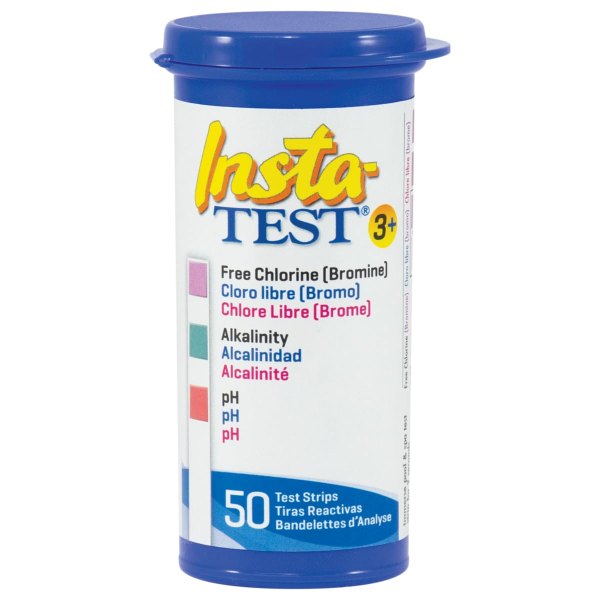 LaMotte Insta-Test 3 Pool Strips (50 ct)
Pro-grade 3-way strips from LaMotte — chlorine, pH & alkalinity, fast and accurate. Top-rated at 4.8★. View on Amazon →
LaMotte Insta-Test 3 Pool Strips (50 ct)
Pro-grade 3-way strips from LaMotte — chlorine, pH & alkalinity, fast and accurate. Top-rated at 4.8★. View on Amazon →
 Taylor K-2006C Complete FAS-DPD Pool & Spa Test Kit
The FAS-DPD kit pool pros trust — reads chlorine accurately even at shock/SLAM levels, plus pH, alkalinity, calcium hardness and CYA. View on Amazon →
Taylor K-2006C Complete FAS-DPD Pool & Spa Test Kit
The FAS-DPD kit pool pros trust — reads chlorine accurately even at shock/SLAM levels, plus pH, alkalinity, calcium hardness and CYA. View on Amazon →
 Pool Mate 4-Pounds Premium Pool Stabilizer and Conditioner, Concentrated Cyanuric Acid for Pools, Helps Chlorine Last Longer
View on Amazon →
Pool Mate 4-Pounds Premium Pool Stabilizer and Conditioner, Concentrated Cyanuric Acid for Pools, Helps Chlorine Last Longer
View on Amazon →
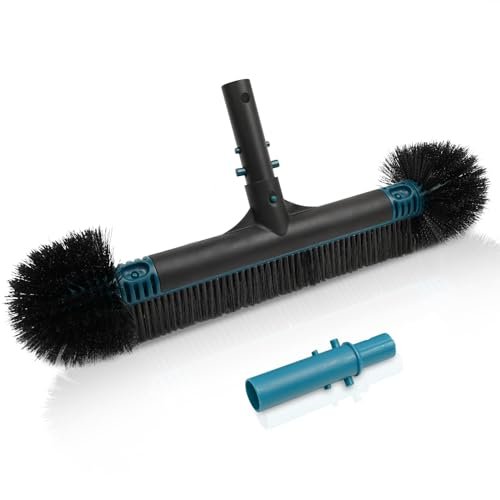 Poolvio 20" 2-in-1 Pool Brush Head (Walls & Floor)
Sturdy 20-inch brush head that clips onto any standard telescopic pole. View on Amazon →
Poolvio 20" 2-in-1 Pool Brush Head (Walls & Floor)
Sturdy 20-inch brush head that clips onto any standard telescopic pole. View on Amazon →
Still need help? Ask a Pool & Spa Expert AD
Get a personalized answer from PoolGuy810 — 30 years owning a pool and spa repair company. Describe your issue and get step-by-step help.
Related Pool Guides
Need More Help?
Try our free pool calculators and tools to help diagnose and fix your pool problems.
Browse Pool ToolsSLAM calculator, pH calculator, salt dosing & more