
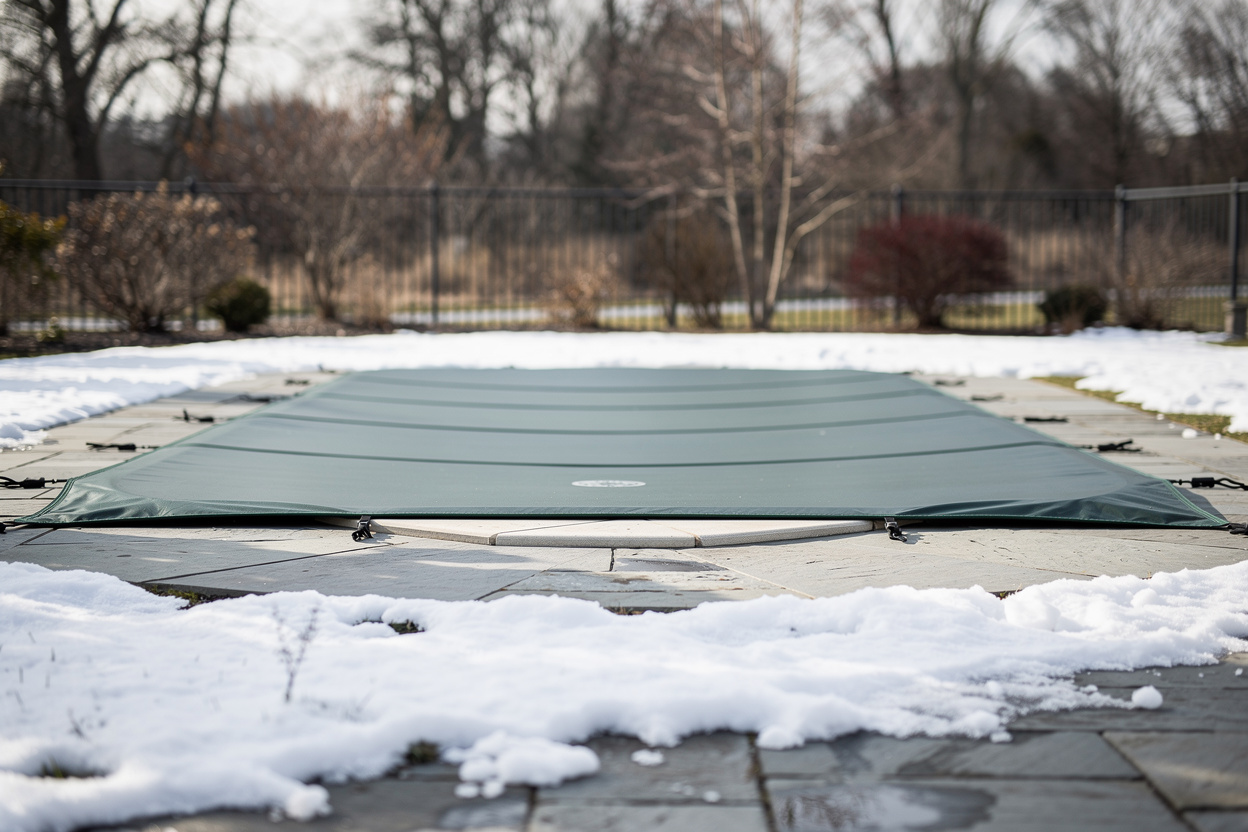
Can I Leave My Pool Covered All Summer? Complete Guide

Is keeping my pool covered all summer a bad idea for maintenance?
Read full question
Halfway through summer my pool cover started developing this weird slimy buildup underneath and now I'm panicking that I've been damaging my pool this whole time. They always claim the most expensive algaecides are essential and that I can't handle maintenance myself. I'm wondering if I can just cover my pool for the entire summer season to avoid all these costs and constant maintenance headaches.
I know it sounds lazy, but I'm looking for ways to cut down on the weekly chemical balancing and cleaning routine. Would keeping it covered actually save me money in the long run, or am I setting myself up for bigger problems? I'd rather do some DIY maintenance if needed than keep getting ripped off at the pool store.
Quick Answer
While you can technically leave your pool covered all summer, it's not ideal — cutting circulation under a cover lets water stagnate, grow biofilm, and let pH drift, so keep circulation and chlorine going. If you must keep it covered, you'll need to increase chemical monitoring, run circulation equipment daily, and potentially remove the cover weekly for maintenance. For the full breakdown of safe chlorine levels by CYA level, see our pool water chemistry guide.
Why Covering Your Pool All Summer Creates Problems
Leaving a pool covered continuously during summer creates several serious issues that go against fundamental pool chemistry principles. The real concern is stagnation - if you reduce circulation under the cover, the water doesn't mix well, which lets biofilm form on surfaces and lets pH drift. It's a circulation problem, not a mysterious bacterial one.
Chemical Imbalance Issues
When your pool is kept under a solid, opaque cover, UV-driven chlorine loss actually drops, so chlorine demand usually falls rather than rises (and CYACyanuric Acid (stabilizer) — Sunscreen for your chlorine — it keeps sunlight from burning it off. The catch: the more you have, the more chlorine you need to keep. learn more → matters less with little UV to protect against). The real considerations with continuous covering are reduced aeration and a warm, stagnant environment if circulation is cut back, while organic matter decomposes more rapidly in the dark, warm environment. You should still maintain FCFree Chlorine — The chlorine actively sanitizing your water right now. This is the number you keep an eye on. how much you need → at the normal target for your CYA level (use the FC/CYAFC/CYA chart — The chart that sets your chlorine target from your stabilizer (CYA) level — the two go together. see the chart → chart) - covering doesn't require elevated FC, so watch your actual chlorine loss and adjust to that rather than arbitrarily multiplying it.
pH levels also become unstable under covers. Without air exchange, reduced aeration can cause pH instability. You may need to test and adjust pH every 2-3 days instead of weekly.
Stagnation Risk if Circulation Drops
If you reduce pump runtime under a cover, the risk is stagnant, poorly mixed water — not extra strain on the pump itself. Keep circulation adequate so chemicals distribute evenly.
Modified Maintenance Requirements for Covered Pools
If circumstances require keeping your pool covered all summer, follow these intensive maintenance procedures:
Daily Chemical Monitoring
- Test FC and pH every morning using a quality test kit like the Taylor K-2006C
- Maintain FC at the normal target for your CYA; with little UV reaching the water, chlorine demand usually falls — dose to your actual test results
- Add liquid chlorine as needed; a covered pool typically needs less than an open one because UV loss drops — dose to your test results
- Test CYA monthly and keep it in the standard 30-50 ppm range
Circulation Requirements
- Run your pump 18-24 hours daily instead of the normal 8-12 hours
- Install additional circulation equipment if possible, such as additional return fittings
- Remove the cover weekly for 4-6 hours to allow gas exchange
- Brush all surfaces weekly when cover is removed
Filter Maintenance
Because the cover keeps debris out, filter load usually drops. Clean cartridges on your normal schedule, and backwash sand or DE filters based on pressure readings as usual. Consider upgrading to a larger filter system if planning extended covered periods.
Chemical Dosing for Covered Pools
Standard dosing calculations change dramatically for covered pools. For a 20,000-gallon pool, you might need:
- Liquid chlorine: typically the same or less than an open pool, since UV loss is reduced — dose to test results
- Muriatic acid: 1-2 quarts weekly for pH control
- Sodium bicarbonate: 5-10 pounds monthly to buffer pH swings
Safety Warning: Never add chemicals under a closed cover. Always remove or open covers completely, add chemicals, run circulation for 2 hours minimum, then re-cover.
Better Alternatives to Full-Time Covering
Partial Coverage Solutions
Instead of 24/7 covering, consider using an automatic pool cover that opens daily for 4-6 hours during peak sun. This provides energy savings while maintaining aerobic conditions.
Temporary Closure Method
For extended absences (2-4 weeks), perform a modified winterizing procedure: shock to 20 ppm FC (not safe to swim until free chlorine is back under 10 ppm), add algaecide, reduce pH to 7.2, cover tightly, and have someone check weekly.
When Covering All Summer Makes Sense
Full-time summer covering might be appropriate for:
- Pools undergoing major deck/landscaping renovations
- Energy conservation in extremely hot climates (110°F+ daily)
- Properties vacant for the entire season with professional maintenance service
- Pools being prepared for long-term closure or conversion
Common Mistakes to Avoid
Never assume covered pools need less maintenance. Many pool owners make the fatal error of reducing chemical additions and circulation time, leading to green, swampy conditions that require expensive SLAMShock Level And Maintain — raise free chlorine to a target based on your CYA and hold it there until the algae is gone. It's a process, not a one-time dose. the SLAM walkthrough → procedures to correct. SLAM involves raising FC to the shock level for your CYA (about 40% of CYA) and holding it until combined chlorine is below 0.5 ppm and overnight FC loss is below 1 ppm. Use our all-in-one pool calculator to determine the shock level for your CYA.
If your calcium hardness is already high, skip calcium hypochlorite shock since it adds more calcium - use liquid chlorine instead. If your calcium is low, cal-hypo shock is perfectly fine. Stick with liquid chlorine (sodium hypochlorite) for covered pools.
Avoid using excessive algaecides as a substitute for proper chlorine levels. Algaecides supplement but never replace adequate FC levels.
Cost Considerations
A properly covered pool usually costs less to run — covers cut chemical use and evaporation. Costs only rise if you let circulation lapse and then have to recover from algae or biofilm. Factor in potential equipment replacement from increased wear when making your decision.
For the full breakdown of safe chlorine levels by CYA level, see our pool water chemistry guide.
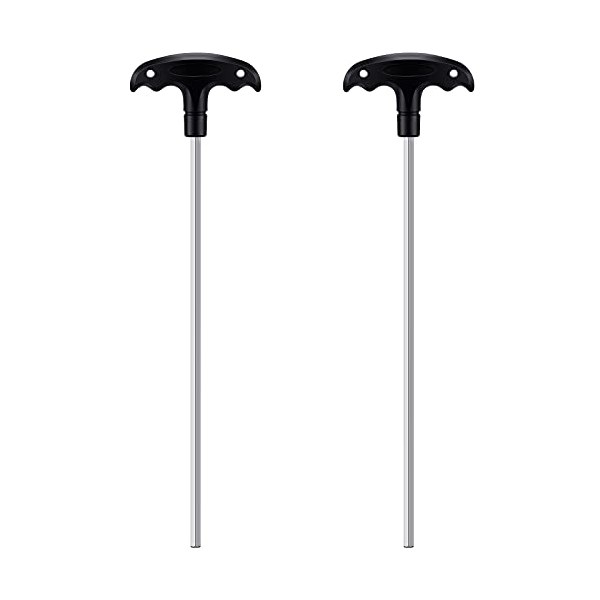 Pool Safety Cover Hex Key Tool (2-Pack)
Hex keys to install or remove a pool safety cover. View on Amazon →
Pool Safety Cover Hex Key Tool (2-Pack)
Hex keys to install or remove a pool safety cover. View on Amazon →
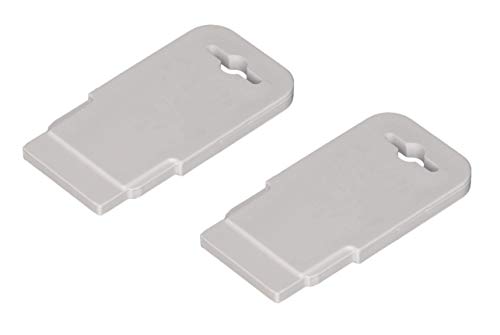 Pool Eyeball / Return Jet Fitting Removal Tool (ATIE)
Pops out & reseats Hayward SP1419 return-jet eyeballs — handy for closing. View on Amazon →
Pool Eyeball / Return Jet Fitting Removal Tool (ATIE)
Pops out & reseats Hayward SP1419 return-jet eyeballs — handy for closing. View on Amazon →
 Taylor K-2006C Complete FAS-DPD Pool & Spa Test Kit
The FAS-DPD kit pool pros trust — reads chlorine accurately even at shock/SLAM levels, plus pH, alkalinity, calcium hardness and CYA. View on Amazon →
Taylor K-2006C Complete FAS-DPD Pool & Spa Test Kit
The FAS-DPD kit pool pros trust — reads chlorine accurately even at shock/SLAM levels, plus pH, alkalinity, calcium hardness and CYA. View on Amazon →
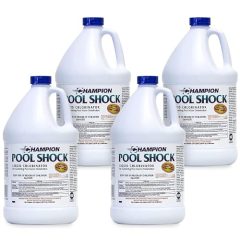 Liquid Chlorine / Sodium Hypochlorite (12.5%)
Everyday sanitizer — the B in BBB View on Amazon →
Liquid Chlorine / Sodium Hypochlorite (12.5%)
Everyday sanitizer — the B in BBB View on Amazon →
Still need help? Ask a Pool & Spa Expert AD
Get a personalized answer from PoolGuy810 — 30 years owning a pool and spa repair company. Describe your issue and get step-by-step help.
Related Pool Guides
Need More Help?
Try our free pool calculators and tools to help diagnose and fix your pool problems.
Browse Pool ToolsSLAM calculator, pH calculator, salt dosing & more