
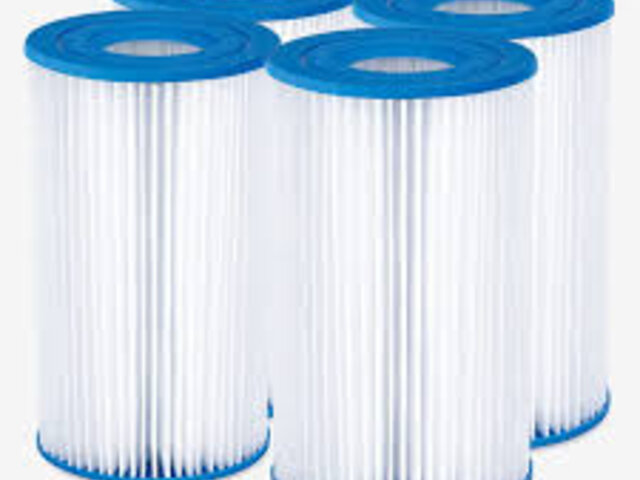
Can You Use a Pool Without a Filter? Risks & Alternatives

Is it safe for kids to swim in a pool without a working filter?
Read full question
Power went out for three days after the storm and my pool filter has been completely off. Water still looks okay surprisingly but my neighbor says it'll turn green any minute without filtration. Can you actually maintain a pool without running the filter, even temporarily?
Quick Answer
While technically possible for very short periods, using a pool without a filter is not recommended because water clarity and chemical balance deteriorate quickly, and green water creates a drowning hazard when you cannot see the bottom. Manual chemical maintenance alone cannot replace proper filtration.
Why Pool Filters Are Essential
Pool filters serve multiple critical functions beyond just making water look clear. They physically remove particles, oils, bacteria, and other contaminants that would otherwise accumulate and create health hazards.
Primary Functions of Pool Filtration
- Removes suspended particles and debris too small for skimmers
- Captures bacteria, algae spores, and other microorganisms
- Filters out body oils, sunscreen, and cosmetic residues
- Circulates water to prevent stagnation and dead zones
- Ensures even distribution of sanitizing chemicals
Health Risks of Swimming Without Filtration
Using a pool without proper filtration creates serious health hazards that escalate rapidly. Without circulation, chemicals do not distribute or work well, so over time bacteria and algae build up.
Immediate Health Concerns
- Bacterial growth: chlorine kills bacteria like E. coli and Pseudomonas whether or not the filter runs - with the pump off the real risk is uneven chlorine distribution, so keep FCFree Chlorine — The chlorine actively sanitizing your water right now. This is the number you keep an eye on. how much you need → up and brush to spread it around
- Skin and eye irritation: Accumulated oils and debris cause irritation
- Respiratory issues: Poor air quality from chemical imbalance
- Gastrointestinal illness: From accidentally ingesting contaminated water
Water Quality Deterioration
Without circulation and filtration, water chemistry becomes impossible to maintain properly. Dead zones develop where sanitizers cannot reach, creating pockets of contaminated water. Algae spores settle and begin growing within hours, while bacteria multiply exponentially in stagnant conditions.
Emergency Alternatives When Your Filter Fails
If your filter system breaks down unexpectedly, these temporary measures can help maintain basic water safety for 1-2 days maximum while you arrange repairs or replacement.
Immediate Steps for Filter Failure
- Stop all swimming immediately - Do not allow anyone in the water
- Test water chemistry using a reliable test kit or test strips
- Shock to the level set by your CYACyanuric Acid (stabilizer) — Sunscreen for your chlorine — it keeps sunlight from burning it off. The catch: the more you have, the more chlorine you need to keep. learn more → (use a pool calculator - roughly 40% of your CYA reading) using liquid chlorine or calcium hypochlorite according to manufacturer specifications for the specific product
- Add liquid chlorine according to manufacturer specifications to achieve target levels
- Manually skim surface debris every 2-3 hours
- Use a pool vacuum to remove settled debris from bottom
Manual Circulation Methods
Create water movement using these temporary solutions:
- Use a pool brush to manually circulate water every few hours
- Manually stir water with pool brush to create circulation
- Run a submersible pump if available to create basic circulation
- Use a shop vacuum designed for wet applications with proper GFCI protection to manually filter small areas
Chemical Management Without Filtration
Maintaining safe water chemistry without filtration requires aggressive and frequent chemical adjustments. This approach should only be used for 24-48 hours maximum.
Intensive Chemical Protocol
- Test every 2-4 hours using accurate test strips or liquid reagents
- Maintain free chlorine at the right level for your CYA (see the FC/CYAFC/CYA chart — The chart that sets your chlorine target from your stabilizer (CYA) level — the two go together. see the chart → chart), re-dosing before it falls below the minimum or if the water shows signs of contamination
- Keep pH between 7.4-7.6 for comfort and to protect surfaces
- Add appropriate amount of calcium hypochlorite per manufacturer specifications if using cal-hypo shock
- Brush all surfaces every 4 hours to prevent biofilm formation
- Retest and adjust chemicals after each brushing session
Warning Signs to Stop Use
Immediately close the pool if you notice:
- Cloudy or milky water appearance
- Green or blue-green water coloration
- Strong chemical odor (chloramines forming)
- Slimy surfaces on pool walls or steps
- Unable to maintain proper chlorine levels
Long-Term Consequences of No Filtration
Extended operation without filtration leads to permanent damage that's expensive and time-consuming to reverse.
Water Quality Issues
After just 3-5 days without filtration, you'll likely need a complete SLAMShock Level And Maintain — raise free chlorine to a target based on your CYA and hold it there until the algae is gone. It's a process, not a one-time dose. the SLAM walkthrough → (Shock Level And Maintain) process to restore water quality. This involves maintaining shock-level chlorine (based on your CYA level using the all-in-one pool calculator) until the water passes an overnight chlorine loss test. Note: High CYA levels require higher chlorine concentrations for effective sanitation - test CYA levels before implementing emergency chemical protocols.
Equipment Damage
Stagnant water promotes scale buildup, corrosion, and biofilm formation in plumbing lines. Over weeks of stagnation this can contribute to scale, corrosion, and biofilm, but it isn't a concern over the few days being discussed here.
Proper Filter Maintenance Prevention
Prevent filter emergencies with regular maintenance:
- Clean cartridge filters every 2-4 weeks
- Backwash sand and DE filters when pressure rises 8-10 psi above clean levels
- Replace filter media according to manufacturer schedules
- Keep spare filter cartridges for immediate replacement
- Service pump and motor annually by qualified technicians
When to Call Professionals
Contact pool professionals immediately if your filter system fails and you cannot restore basic filtration within 24 hours. Don't attempt major repairs yourself, as improper electrical work around water creates serious safety hazards.
For the full breakdown of safe chlorine levels by CYA level, see our pool water chemistry guide.
 Taylor K-2006C Complete FAS-DPD Pool & Spa Test Kit
The FAS-DPD kit pool pros trust — reads chlorine accurately even at shock/SLAM levels, plus pH, alkalinity, calcium hardness and CYA. View on Amazon →
Taylor K-2006C Complete FAS-DPD Pool & Spa Test Kit
The FAS-DPD kit pool pros trust — reads chlorine accurately even at shock/SLAM levels, plus pH, alkalinity, calcium hardness and CYA. View on Amazon →
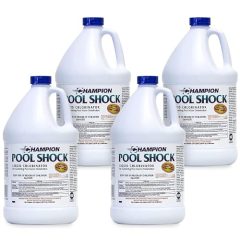 Liquid Chlorine / Sodium Hypochlorite (12.5%)
Everyday sanitizer — the B in BBB View on Amazon →
Liquid Chlorine / Sodium Hypochlorite (12.5%)
Everyday sanitizer — the B in BBB View on Amazon →
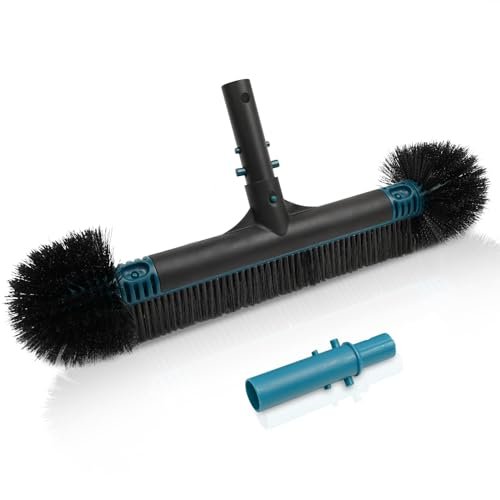 Poolvio 20" 2-in-1 Pool Brush Head (Walls & Floor)
Sturdy 20-inch brush head that clips onto any standard telescopic pole. View on Amazon →
Poolvio 20" 2-in-1 Pool Brush Head (Walls & Floor)
Sturdy 20-inch brush head that clips onto any standard telescopic pole. View on Amazon →
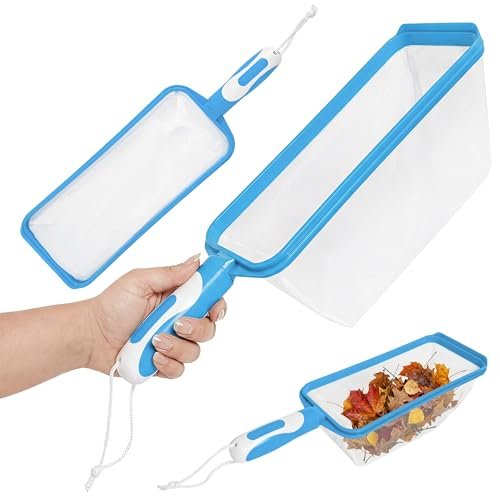 The Skimmie Handheld Pool Skimmer Net
Grab-and-go hand skimmer for leaves and debris off the surface. View on Amazon →
The Skimmie Handheld Pool Skimmer Net
Grab-and-go hand skimmer for leaves and debris off the surface. View on Amazon →
Still need help? Ask a Pool & Spa Expert AD
Get a personalized answer from PoolGuy810 — 30 years owning a pool and spa repair company. Describe your issue and get step-by-step help.
Related Pool Guides
Need More Help?
Try our free pool calculators and tools to help diagnose and fix your pool problems.
Browse Pool ToolsSLAM calculator, pH calculator, salt dosing & more