
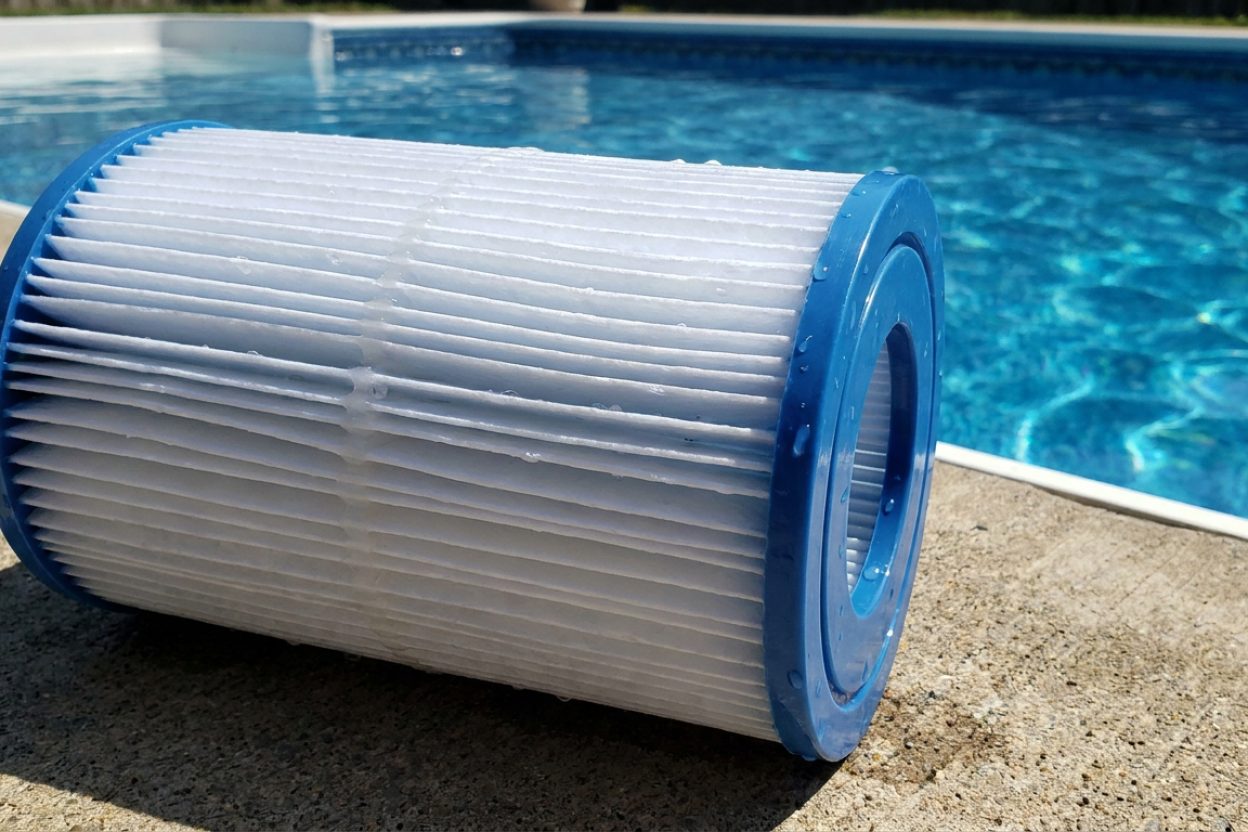
How to Use a Pool Sand Filter: Complete Step-by-Step Guide

Sand filter basics - tired of pool store pushing expensive extras
Read full question
The pool sand filter that worked fine for years started giving me cloudy water last month but now it's completely dead and those expensive pool store fixes aren't working.
Can someone just give me the straight facts on how to actually operate my sand filter? I want to know the basic daily routine, when I should backwash, and how to tell if it's working properly. I'm looking for simple, practical steps I can handle myself without breaking the bank on unnecessary add-ons.
Quick Answer
To use a pool sand filter, run the pump on 'Filter' mode for 8-12 hours daily, backwash when pressure rises 8-10 PSI above starting pressure, and rinse after each backwash. Regular operation maintains clean, clear pool water through mechanical filtration.
Daily Sand Filter Operation
- Set the multiport valve to 'Filter' position - This is your standard operating mode where water flows down through the sand bed, gets filtered, and returns to the pool through the return lines.
- Run your pump 8-12 hours daily - Turnover your entire pool volume at least once per day. For a 20,000-gallon pool with a 40 GPM pump, you need 8.3 hours minimum runtime.
- Monitor the pressure gauge daily - Record your starting pressure when the filter is clean (typically 8-15 PSI depending on your system). This becomes your baseline measurement.
- Check skimmer baskets and pump strainer - Clean these before debris reaches your sand filter to reduce the filtration load and extend time between backwashes.
When and How to Backwash Your Sand Filter
- Recognize backwash indicators - Backwash when pressure rises 8-10 PSI above starting pressure, water flow decreases noticeably, or water clarity diminishes despite proper chemistry.
- Turn off the pump completely - Never move the multiport valve while the pump is running, as this can damage the valve and filter internals.
- Move valve to 'Backwash' position - This reverses water flow, sending it up through the sand bed to flush out trapped debris.
- Turn pump back on - Water will flow out through the waste line or backwash hose, appearing dirty initially.
- Backwash for 2-3 minutes - Continue until the water in the sight glass (if equipped) runs clear. Don't over-backwash as this wastes water and can disturb the sand bed.
- Turn off pump and switch to 'Rinse' - This step is crucial and often skipped by pool owners.
- Rinse for 30-60 seconds - This settles the sand bed and clears any remaining debris from the plumbing before returning to normal operation.
- Turn off pump and return to 'Filter' - Record your new starting pressure, which should be close to your original clean filter pressure.
Understanding Multiport Valve Settings
Essential Operating Positions
- Filter - Normal daily operation mode for cleaning pool water
- Backwash - Reverses flow to clean the sand bed by flushing debris out the waste line
- Rinse - Sends water down through the sand to waste, settling the bed and flushing remaining debris before you return to Filter
- Waste - Bypasses the filter entirely, useful for lowering pool water level or removing debris directly
- Recirculate - Circulates water without filtering it; useful if the filter is being serviced or to mix in chemicals
- Closed/Winter - Stops all water flow, used primarily for winterization
Sand Filter Maintenance Schedule
- Weekly tasks - Monitor pressure gauge, clean skimmer and pump baskets, test and balance water chemistry using a quality test kit like Taylor K-2006.
- Monthly tasks - Deep clean the pump strainer basket, inspect multiport valve operation, check for leaks around the filter tank and plumbing connections.
- Seasonal tasks - Add filter cleaner like Natural Chemistry Filter Perfect or similar product to break down oils and organic buildup that regular backwashing can't remove.
- Annual tasks - Inspect sand condition. Well-maintained sand often lasts well beyond 5-7 years and usually only needs replacing when you see calcium scaling, channeling, or worn-down media that hurts filtration.
Troubleshooting Common Sand Filter Issues
Short Time Between Backwashes
If you're backwashing more than weekly, check for excessive debris sources like nearby trees, inadequate skimming, or poor water chemistry. High bather loads or algae problems also increase filtration demand.
Cloudy Water Despite Regular Backwashing
This often indicates channeling in the sand bed, where water finds easy paths through the sand rather than filtering properly. Consider adding pool-grade DE after backwashing to improve filtration temporarily — mix about 1/4 cup with water, pour it slowly into the skimmer, wait ~2 minutes, and repeat until filter pressure rises about 1 PSI — or plan for sand replacement.
Sand in Pool Returns
Sand returning to the pool usually means damaged laterals (the plastic pieces at the bottom of the filter) or excessively aggressive backwashing. Turn off the system immediately and contact a pool professional for lateral inspection and replacement.
Water Chemistry Impact on Sand Filters
Maintain proper pH levels between 7.4-7.6 - High pH reduces sanitizer effectiveness and can cause calcium buildup in the sand bed. Low pH is corrosive and can damage filter components.
Keep total alkalinity at 80-120 ppm for traditional chlorine pools or 60-80 ppm for salt water systems. Proper alkalinity buffers pH swings and maintains stable water chemistry.
Shock regularly with liquid chlorine - Use the SLAMShock Level And Maintain — raise free chlorine to a target based on your CYA and hold it there until the algae is gone. It's a process, not a one-time dose. the SLAM walkthrough → method (Shock Level And Maintain) when dealing with algae or contamination issues. Raise free chlorine to the shock level for your CYACyanuric Acid (stabilizer) — Sunscreen for your chlorine — it keeps sunlight from burning it off. The catch: the more you have, the more chlorine you need to keep. learn more → (about 40% of CYA) and hold until combined chlorine < 0.5 ppm and overnight FC loss < 1 ppm. For a CYA of 70-80 ppm, the shock level is 28-31 ppm. Use our all-in-one pool calculator to determine an estimate of chlorine needed.
Proper sand filter operation combined with balanced chemistry ensures crystal clear pool water while maximizing equipment life and minimizing maintenance requirements.
For the full breakdown of safe chlorine levels by CYA level, see our pool water chemistry guide.
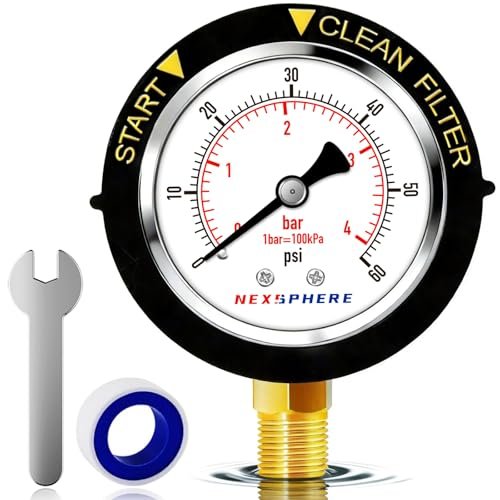 NexSphere Pool Filter Pressure Gauge, 0–60 PSI, 2 in Dial
Replacement back-mount gauge so you can read filter pressure and know when to backwash. View on Amazon →
NexSphere Pool Filter Pressure Gauge, 0–60 PSI, 2 in Dial
Replacement back-mount gauge so you can read filter pressure and know when to backwash. View on Amazon →
 50 ft Flexible Metal Garden Hose (Kink-Free)
Durable hose for filling, priming, and rinsing equipment. View on Amazon →
50 ft Flexible Metal Garden Hose (Kink-Free)
Durable hose for filling, priming, and rinsing equipment. View on Amazon →
 Taylor K-2006C Complete FAS-DPD Pool & Spa Test Kit
The FAS-DPD kit pool pros trust — reads chlorine accurately even at shock/SLAM levels, plus pH, alkalinity, calcium hardness and CYA. View on Amazon →
Taylor K-2006C Complete FAS-DPD Pool & Spa Test Kit
The FAS-DPD kit pool pros trust — reads chlorine accurately even at shock/SLAM levels, plus pH, alkalinity, calcium hardness and CYA. View on Amazon →
Still need help? Ask a Pool & Spa Expert AD
Get a personalized answer from PoolGuy810 — 30 years owning a pool and spa repair company. Describe your issue and get step-by-step help.
Related Pool Guides
Need More Help?
Try our free pool calculators and tools to help diagnose and fix your pool problems.
Browse Pool ToolsSLAM calculator, pH calculator, salt dosing & more