
How to Know If Your Pool Filter Is Dirty: Clear Warning Signs

What are the signs that my pool filter needs cleaning?
Read full question
Around the pool supply store staring at rows of filters with absolutely no idea how to tell if mine actually needs replacing. What should I be looking for to know when my filter is getting too dirty and needs attention?
I've heard something about pressure readings, but honestly I'm not sure what numbers I should be watching for or what other warning signs might tell me it's time to clean or replace the filter media.
Quick Answer
A dirty pool filter shows clear warning signs: high pressure gauge readings (8-10 PSI above clean pressure), cloudy or dull water, reduced water flow from return jets, and visibly dirty filter media. Check these indicators weekly to maintain optimal filtration.
Pressure Gauge - Your Most Reliable Indicator
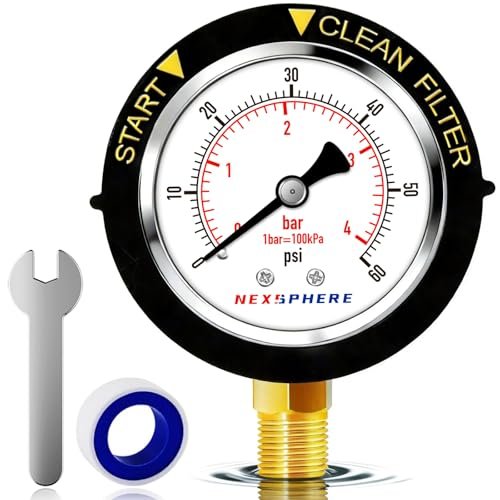
The pressure gauge on your filter system is your best friend for determining filter cleanliness. When you install a clean filter, note the starting pressure - this typically ranges from 8-15 PSI depending on your system size and pump specifications. As debris accumulates, the filter works harder to push water through, increasing pressure.
Clean your filter when pressure rises 8-10 PSI above the clean starting pressure. For example, if your clean pressure is 10 PSI, clean the filter when it reaches 18-20 PSI. Don't wait until pressure reaches 25+ PSI, as this severely restricts flow and puts unnecessary strain on your pump motor.
No Pressure Gauge? Get One Immediately
If your system lacks a pressure gauge, install one immediately. They cost under $15 and thread directly into the filter housing or multiport valve. Without this crucial tool, you're essentially flying blind with filter maintenance.
Water Quality Warning Signs
Your pool water provides excellent visual clues about filter condition, even before pressure builds significantly:
- Cloudy or hazy water: The most obvious sign of inadequate filtration. Clean water should be crystal clear with excellent visibility to the bottom
- Loss of water sparkle: Even if not visibly cloudy, dirty filters cause water to lose its bright, sparkling appearance
- Increased algae growth: Poor filtration allows algae spores and nutrients to circulate longer, promoting growth
- Persistent debris circulation: Fine particles that used to clear within hours now remain suspended for days
- Oily or scummy surface: Body oils and lotions aren't being filtered out effectively
Physical Performance Indicators
Monitor these operational signs that indicate reduced filter efficiency:
Reduced Return Jet Flow
Walk around your pool and observe return jet strength. Weak flow from return jets often indicates filter restriction, especially if the pump is running normally. Strong return flow is essential for proper circulation and chemical distribution.
Longer Cleaning Cycles
If your automatic cleaner takes longer to complete its cycle or seems less effective at picking up debris, restricted filter flow may be reducing suction.
Difficulty Maintaining Chemical Balance
Poor circulation from dirty filters makes it harder to maintain consistent chlorine levels and pH throughout the pool. You might notice increased chemical consumption or persistent problem areas.
Visual Filter Inspection Methods
Cartridge Filters
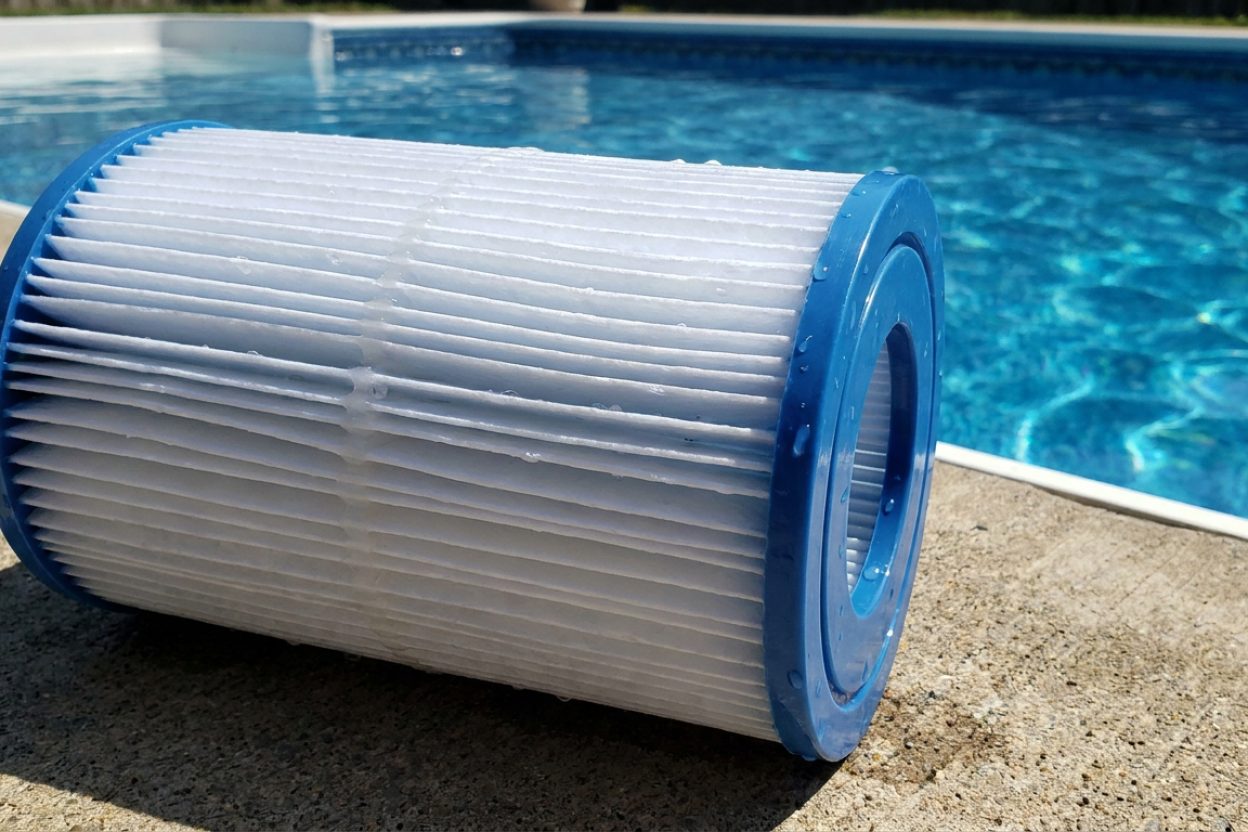
Remove cartridge filters for visual inspection every 2-4 weeks. Clean filters appear white or light-colored with visible pleats. Dirty cartridges show:
- Dark discoloration from accumulated organics
- Visible debris caught in pleats
- Oily or greasy feeling when touched
- Compressed or matted pleats that don't spring back
Sand Filters
Sand filters require backwashing when dirty, indicated by cloudy backwash water that doesn't clear quickly. However, pressure gauge readings remain your primary indicator since you can't easily inspect sand media.
DE (Diatomaceous Earth) Filters
DE filters show the most dramatic pressure increases when dirty. The white DE powder will appear gray or dark when loaded with debris. Most DE filters require cleaning every 4-6 weeks during swimming season.
Timing and Frequency Guidelines
Filter cleaning frequency depends on several factors:
- Pool usage: Heavy bather loads require more frequent cleaning
- Environmental factors: Trees, wind, and storms increase debris loads
- Filter size: Undersized filters clog faster and need more attention
- Water chemistry: Poor chemical balance accelerates filter fouling
General guidelines:
- Cartridge filters: Clean every 2-4 weeks; replace the element every 2-5 years (cleaning is not the same as replacing)
- Sand filters: Backwash when pressure rises 8-10 PSI, replace sand every 5-7 years (check manufacturer specifications)
- DE filters: Clean every 4-6 weeks, add fresh DE after each cleaning
Prevention and Maintenance Tips
Extend filter life and improve efficiency with these practices:
- Maintain proper water chemistry (pH 7.2-7.6, appropriate chlorine levels based on CYACyanuric Acid (stabilizer) — Sunscreen for your chlorine — it keeps sunlight from burning it off. The catch: the more you have, the more chlorine you need to keep. learn more →)
- Use a skimmer basket and clean it weekly
- Brush pool walls regularly to prevent algae buildup
- Consider enzyme products to break down oils and organics
- Rotate between two sets of cartridge filters for thorough drying between uses
Remember: A clean filter is essential for crystal clear water and efficient chemical usage. Don't wait for obvious problems - stay ahead with regular monitoring and maintenance.
Still need help? Ask a Pool & Spa Expert AD
Get a personalized answer from PoolGuy810 — 30 years owning a pool and spa repair company. Describe your issue and get step-by-step help.
Related Pool Guides
Need More Help?
Try our free pool calculators and tools to help diagnose and fix your pool problems.
Browse Pool ToolsSLAM calculator, pH calculator, salt dosing & more