

How Long to Run Your Pool Pump and Filter Daily - Complete Guide

How many hours should I run my pool filter each day?
Read full question
Every pool season I feel like an idiot asking this, but I genuinely have no idea how many hours my filter should actually be running daily. My kids swim almost every day during summer, and I want to make sure the water stays clean and safe for them. I've heard different opinions - some neighbors say they run theirs 24/7, while others only run it a few hours.
I'm worried about under-filtering and having bacteria or algae grow, but I also don't want to waste electricity if it's not necessary. Our pool gets heavy use with the kids and their friends, plus we've had some really hot weather lately. What's the right balance for daily filter runtime to keep the water properly clean?
Quick Answer
You don't need to run your pool filter 24/7, but it should run 8-12 hours daily for most pools. The exact runtime depends on your pool size, bather load, weather conditions, and filtration system efficiency.
First, Let's Diagnose Your Pool's Filtration Needs
Before setting a fixed schedule, we need to evaluate several factors that determine your optimal runtime:
Calculate Your Pool's Turnover Rate
Your pool's turnover rate is how long it takes to filter the entire volume of water once. This is your baseline minimum runtime.
a handy way to find your turnover rate is to use our all-in-one pool calculator, which estimates your runtime from your pool size and pump flow rate. To do it by hand instead, use the steps below (note that results can vary depending on your specific pump curve and plumbing):
- Determine your pool volume in gallons (length × width × average depth × 7.5 for rectangular pools)
- Check your pump's flow rate (GPM) on the equipment label or manual
- our pump runtime & energy calculator works out your turnover time from pool volume and pump flow rate.
- For your pool, our pump runtime & energy calculator works out turnover time and a suggested daily runtime.
Assess Current Pool Conditions
Look for these indicators that suggest you need longer filtration times:
- Cloudy or hazy water despite proper chemical balance
- Visible debris that isn't being captured
- Algae growth in low-circulation areas
- Difficulty maintaining chlorine levels
- Strong chemical odors indicating poor circulation
Determining Your Optimal Runtime Schedule
Base Runtime Formula
a handy way to determine your daily runtime target is to use our all-in-one pool calculator, which estimates the hours from your pool size and pump specs. To do it by hand, use the formula below — but keep in mind the result varies with your actual pump flow rate and plumbing, so the calculator is more reliable:
As a rough rule, run the pump for one to two full turnovers a day. our pump runtime & energy calculator works out the hours from your pool volume and pump flow rate.
Most pools need one to two complete turnovers a day to stay clear, which typically works out to 8-12 hours of run time for residential pools.
Seasonal Adjustments
Summer/Peak Season (May-September):
- Run 10-12 hours daily when temperatures exceed 85°F
- Heavy bather loads require an additional 1-2 hours
- During heat waves, consider 14-16 hours to combat algae growth
- Run during the warmest, highest-use part of the day, when heat, sunlight, and bather load drive the most chlorine demand (and if you have a salt system, daytime running helps replace the chlorine that sunlight burns off)
Winter/Off-Season (October-April):
- Reduce to 6-8 hours daily in moderate climates, but ensure this achieves at least one complete turnover (many pools require 8+ hours for adequate turnover)
- In freezing climates, run continuously when temperatures approach 32°F
- Lower bather loads allow for reduced filtration needs
Pool-Specific Factors
High-Use Pools: Add 1 hour for every 4-6 swimmers per day. Pool parties or heavy use days require 2-4 additional hours of runtime.
Pools with Salt Water Generators: Your chlorine generator only produces chlorine when the pump runs, so maintain consistent 10-12 hour schedules year-round. Salt level should be maintained at 2700-3400 ppm (note: follow your SWGSalt Water Generator — The "salt cell" that makes chlorine from the salt in a saltwater pool. Same chlorine — it just makes its own. pool terms → manufacturer).
Pools with Heaters: Warmer water raises chlorine demand and biological activity, so a heated pool often needs somewhat more circulation. Rather than a fixed percentage, watch your chlorine level and water clarity and add runtime if either starts to slip.
Troubleshooting Common Runtime Issues
Water Still Cloudy Despite Long Runtime
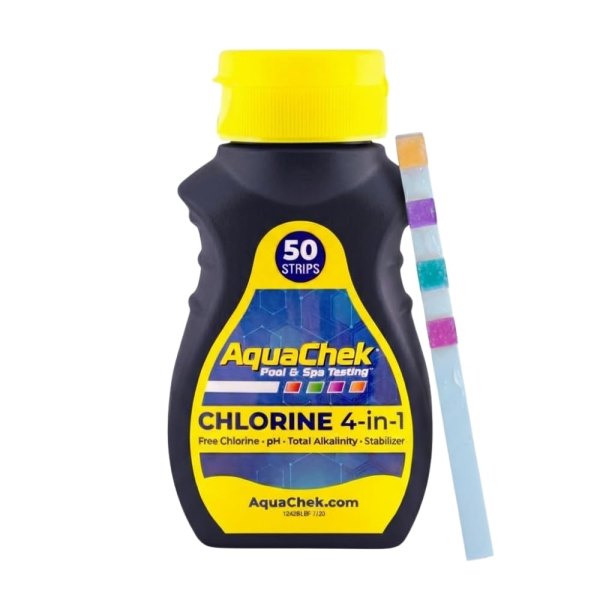
- Test your water chemistry using a Taylor K-2006C test kit
- Verify free chlorine is appropriate for your CYACyanuric Acid (stabilizer) — Sunscreen for your chlorine — it keeps sunlight from burning it off. The catch: the more you have, the more chlorine you need to keep. learn more → level (use the FC/CYAFC/CYA chart — The chart that sets your chlorine target from your stabilizer (CYA) level — the two go together. see the chart → relationship — our all-in-one pool calculator estimates the free chlorine target for your CYA)
- Check filter pressure - clean or backwash once the gauge climbs about 8-10 PSI above your filter's own clean/baseline reading for sand (5-8 PSI for cartridge); it's the rise above baseline that matters, not an absolute number on the gauge
- Ensure your pump is priming properly and achieving rated flow
- Consider if your filter is undersized - longer runtime may be needed
High Energy Bills from Pool Equipment
- Install a variable speed pump, which can cut pump energy use substantially (often well over half in favorable cases, since power drops with roughly the cube of speed; actual savings vary with your setup)
- Run during off-peak electricity hours (typically 10 PM - 6 AM)
- Use a pool timer to automate optimal scheduling
- Consider splitting runtime into two 6-hour periods for better circulation
Equipment Wear from Overuse
Running your filter more than needed mainly wastes electricity rather than harming the pump (pumps are designed for long daily runtimes). These are signs of an equipment problem or flow restriction to address — not reasons on their own to simply cut runtime:
- Pump motor running hot
- Frequent seal failures
- Excessive wear on impellers
- Higher than normal operating pressure
Optimal Daily Scheduling Strategy
Single Daily Runtime
Run your system continuously during the hottest part of the day (10 AM - 8 PM) when chlorine demand is highest and circulation is most critical.
Split Runtime Schedule
Divide your total runtime into two periods:
- Morning run: 6 AM - 10 AM (4 hours)
- Afternoon run: 2 PM - 10 PM (8 hours)
- This provides better chemical distribution and prevents dead spots
Monitoring and Adjustment
Test your water 2-3 times weekly during peak season using a quality test kit. Adjust runtime if you notice:
- Chlorine levels dropping faster than expected
- Algae beginning to form in corners or steps
- Water clarity declining despite proper chemical balance
- Dead spots where debris accumulates
Safety Warning: Never reduce filtration time below one full turnover a day; shorter runtimes reduce water clarity and make it harder to keep the chemistry balanced.
Energy-Efficient Alternatives
Consider upgrading to a variable speed pump, which can run at lower speeds for longer periods while using less energy than single-speed pumps running shorter cycles. Many pool owners run variable speed pumps 18-24 hours at low speed, achieving better filtration with lower energy costs than 8-12 hours of high-speed operation.
 Taylor K-2006C Complete FAS-DPD Pool & Spa Test Kit
The FAS-DPD kit pool pros trust — reads chlorine accurately even at shock/SLAM levels, plus pH, alkalinity, calcium hardness and CYA. View on Amazon →
Taylor K-2006C Complete FAS-DPD Pool & Spa Test Kit
The FAS-DPD kit pool pros trust — reads chlorine accurately even at shock/SLAM levels, plus pH, alkalinity, calcium hardness and CYA. View on Amazon →
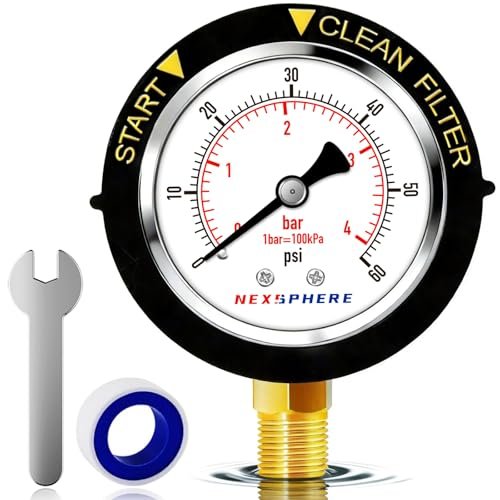 NexSphere Pool Filter Pressure Gauge, 0–60 PSI, 2 in Dial
Replacement back-mount gauge so you can read filter pressure and know when to backwash. View on Amazon →
NexSphere Pool Filter Pressure Gauge, 0–60 PSI, 2 in Dial
Replacement back-mount gauge so you can read filter pressure and know when to backwash. View on Amazon →
Still need help? Ask a Pool & Spa Expert AD
Get a personalized answer from PoolGuy810 — 30 years owning a pool and spa repair company. Describe your issue and get step-by-step help.
Related Pool Guides
Need More Help?
Try our free pool calculators and tools to help diagnose and fix your pool problems.
Browse Pool ToolsSLAM calculator, pH calculator, salt dosing & more