
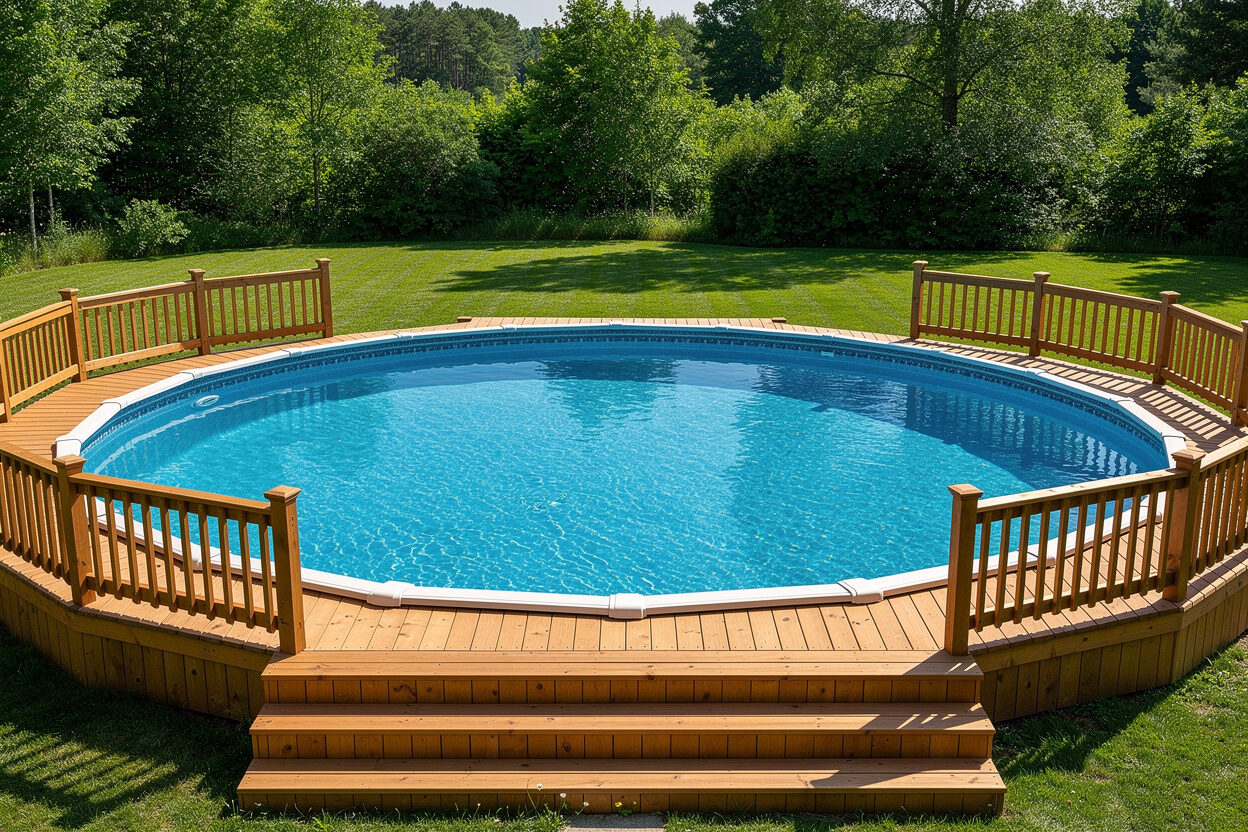
Can You Leave Above Ground Pool Up All Year? Winter Guide

Worth keeping above ground pool up year-round or just take it down?
Read full question
Halfway through winter prep I've tried partial winterization, full chemical shutdown, and running it with a heater — but I'm still getting conflicting advice about leaving my above ground pool up year-round.
Is it actually possible to leave my above ground pool up through winter and do the winterization myself? What really needs to be done to prevent damage, and can I skip some of these expensive add-ons they keep pushing? I'd rather invest time than keep throwing money at the pool store every season.
Quick Answer
Yes, you can leave an above ground pool up all year, but it requires proper winterization including chemical balancing, equipment protection, and regular maintenance to prevent freeze damage and extend pool life.
Benefits of Year-Round Pool Setup
Keeping your above ground pool up year-round offers several advantages. First, you avoid the labor-intensive process of taking down and reassembling your pool each season, which can take 6-8 hours each way. This saves significant time and reduces wear on pool components from repeated assembly. Additionally, you're ready for unexpected warm weather or extended swimming seasons without setup delays.
Year-round pools also maintain better structural integrity since the water provides consistent support to the pool walls. Empty pools can suffer wall damage from ground shifting, especially in areas with freeze-thaw cycles. The continuous water pressure helps maintain the pool's shape and prevents liner wrinkles or wall buckling.
Climate Considerations and Limitations
Your local climate plays a crucial role in determining whether year-round pool maintenance is practical. In moderate climates where temperatures rarely drop below 20°F, keeping pools operational year-round is relatively straightforward. However, in regions with harsh winters and sustained freezing temperatures, additional precautions become essential.
Pools in extremely cold climates (sustained temperatures below 0°F) face increased risks of equipment damage and structural issues. The freeze-expansion cycle can damage pool walls, plumbing, and equipment if not properly managed. Consider your area's lowest recorded temperatures and frequency of freeze-thaw cycles when making this decision.
Essential Winterization Steps
Chemical Balance Preparation
Proper chemical balancing before winter is critical for pool health. Test and adjust your water chemistry using a reliable test kit like the Taylor K-2006C. Target these winter levels:
- pH: 7.2-7.6 (slightly lower than summer levels)
- Total Alkalinity: 80-120 ppm
- Calcium Hardness: 175-225 ppm (vinyl/fiberglass) or 250-350 ppm (plaster/concrete)
- Free Chlorine: raise to SLAM/shock level for your CYACyanuric Acid (stabilizer) — Sunscreen for your chlorine — it keeps sunlight from burning it off. The catch: the more you have, the more chlorine you need to keep. learn more → (about 40% of your CYA, e.g. roughly 12-20 ppm) right before you cover, so there's a chlorine reserve through winter
- Cyanuric Acid (CYA): 30-50 ppm
You don't need a store "winter chemical kit" — many contain copper algaecide that can stain. Just balance the water normally and raise FCFree Chlorine — The chlorine actively sanitizing your water right now. This is the number you keep an eye on. how much you need → to shock level before covering. If you want algaecide as insurance, use copper-free PolyQuat 60 per label directions. Avoid trichlor tablets during winter, since they keep dissolving and steadily lower pH over the closed season.
Equipment Protection
Disconnect and drain all equipment that could freeze. Remove pump, filter, heater, and any automatic cleaners. Store these somewhere dry and protected from freezing, like a garage or basement (heating is not required). For built-in equipment, drain all water from pumps, filters, and plumbing lines. Use pool antifreeze (propylene glycol-based with pool-specific additives) in lines that can't be completely drained - never use automotive antifreeze which is toxic.
Install winter plugs in all return jets, skimmers, and other openings. These prevent water from entering plumbing lines where it could freeze and cause expensive damage. Ensure all plugs are tight and properly sealed.
Cover Selection and Installation
Choose an appropriate winter cover based on your needs and budget. Safety covers (mesh or solid) provide the best protection and can support weight, making them ideal for areas with children or pets. These typically cost $300-800 but offer superior durability and safety features.
Standard winter covers cost $50-200 but require more maintenance and don't provide safety benefits. Ensure your cover extends at least 1-2 feet beyond the pool's edge and use proper tie-downs or cable systems to secure it against winter winds.
For solid covers, install a cover pump to remove standing water, snow, and ice. Standing water can damage covers and create safety hazards. Mesh covers allow water to drain through but may require more spring cleanup.
Ongoing Winter Maintenance
Monthly inspections are essential even with a covered pool. Check cover integrity, remove excess snow load (over 2 feet), and ensure tie-downs remain secure. Heavy snow loads can damage covers or pool walls, so remove snow carefully using a soft brush or cover rake - never use sharp tools that could puncture the cover.
Monitor water levels monthly. Water levels should be adjusted according to your climate - consult local guidelines as some regions require lowering water below skimmer level to prevent freeze damage, while others maintain normal levels for structural support. Follow your local recommendations for appropriate water level during winter months. Add water if levels drop significantly due to evaporation or small leaks.
Spring Startup Considerations
Year-round pools typically require less spring startup work compared to seasonal setups. Begin spring preparation when daytime temperatures consistently reach 60°F. Remove and clean your winter cover thoroughly before storage. Reconnect all equipment and inspect for winter damage.
Test water chemistry immediately and adjust as needed. You'll likely need to shock the pool and rebalance chemicals. Run your filtration system continuously for the first week to clear any cloudiness or debris that accumulated over winter.
Cost Analysis
Year-round pool maintenance involves additional costs including winter covers ($50-800), winterizing chemicals ($50-100), and equipment storage considerations. However, you'll save on annual setup/takedown labor costs and avoid potential equipment damage from repeated assembly.
Factor in your local electricity costs for running cover pumps. Many owners find the convenience and time savings offset these additional expenses, especially when factoring in the cost of professional pool installation services.
Common Mistakes to Avoid
Never leave equipment connected in freezing climates without proper protection. Frozen pumps and filters are expensive to replace and damage isn't covered under most warranties. Avoid using cheap covers in areas with heavy snow loads - the cost of pool damage far exceeds cover savings.
Don't ignore winter maintenance thinking the cover handles everything. Regular inspections prevent small issues from becoming major problems. Finally, avoid adding regular pool chemicals during winter - stick to winterizing-specific products designed for long-term effectiveness.
For the full breakdown of safe chlorine levels by CYA level, see our pool water chemistry guide.

Still need help? Ask a Pool & Spa Expert AD
Get a personalized answer from PoolGuy810 — 30 years owning a pool and spa repair company. Describe your issue and get step-by-step help.
Related Pool Guides
Need More Help?
Try our free pool calculators and tools to help diagnose and fix your pool problems.
Browse Pool ToolsSLAM calculator, pH calculator, salt dosing & more