
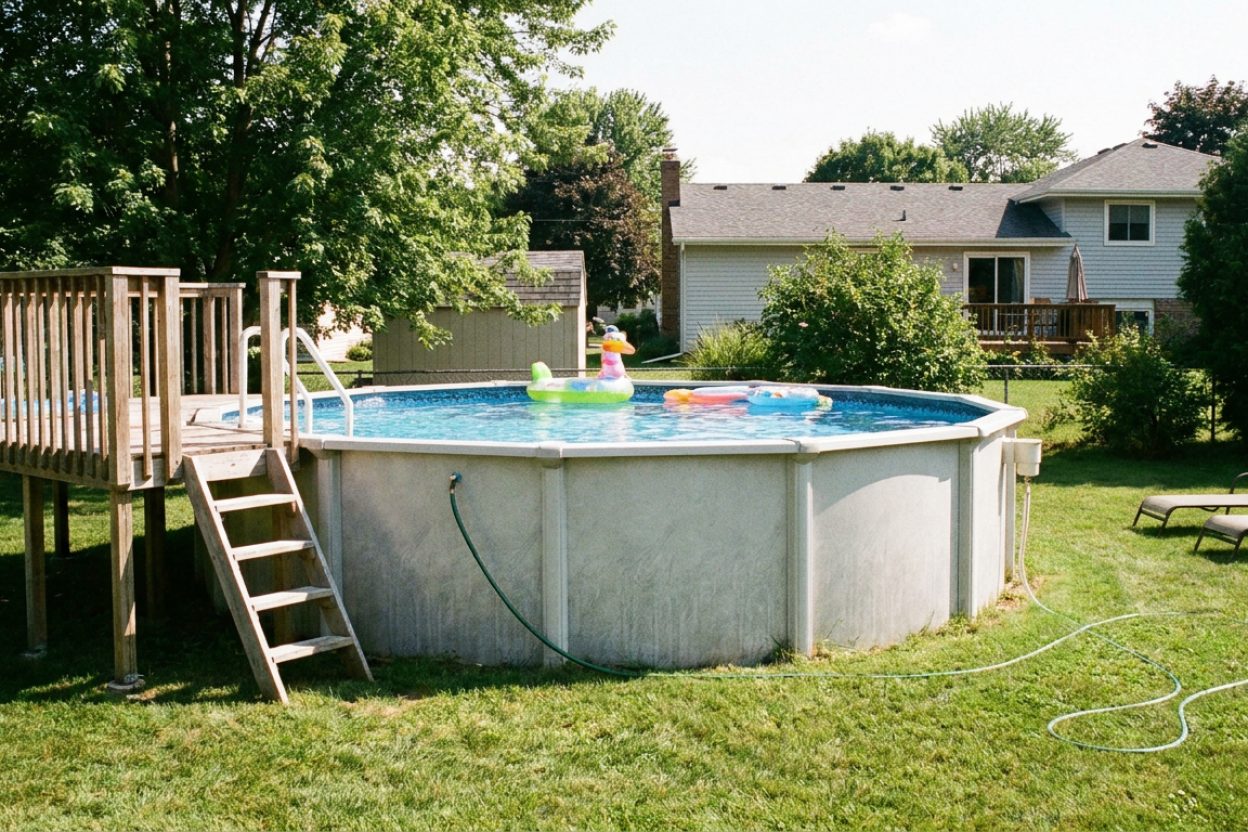
How to Clean Pool Liner: Complete Above Ground Pool Guide

First-time pool owner - how do I properly clean my liner?
Read full question
Three days until our big pool party and I'm staring at an above ground pool liner that looks absolutely revolting. The liner is starting to look a bit grimy and I can see some algae spots forming near the waterline. The pool store told me I need to clean it regularly but didn't give me specifics on how to do it safely.
I'm worried about damaging the vinyl since it wasn't cheap to replace. What kind of cleaner should I use, and what's the proper technique? I have a regular scrub brush but I'm not sure if that's too harsh. Should I be checking my water chemistry first before cleaning? Any guidance would be really appreciated since I don't want to mess this up!
Quick Answer
Clean your pool liner using a soft brush, pool-safe cleaner like dish soap or specialized vinyl cleaner, and gentle scrubbing motions. Always test water chemistry first and avoid abrasive cleaners that can damage the vinyl.
Quick Solution
Yes — a soft-bristled brush with mild, pool-safe cleaner will safely remove dirt and stains without damaging your above ground pool liner. Start by balancing your water chemistry, then use either a few drops of Dawn dish soap mixed with water or a specialized vinyl liner cleaner. Scrub gently in circular motions, working from top to bottom, then rinse thoroughly and vacuum any loosened debris.
Essential Pre-Cleaning Steps
Before touching your liner, test and balance your water chemistry. Poor water balance is often the root cause of liner staining and buildup. Use a Taylor K-2006 test kit to check your levels:
- pH: 7.4-7.6 (crucial for preventing staining)
- Free Chlorine: 4-6 ppm based on your CYACyanuric Acid (stabilizer) — Sunscreen for your chlorine — it keeps sunlight from burning it off. The catch: the more you have, the more chlorine you need to keep. learn more → level (use the all-in-one pool calculator to estimate the target)
- Total Alkalinity: 80-120 ppm
- Calcium Hardness: not critical for vinyl liners (per TFP, a wide range of roughly 50-350 ppm is fine); just watch the high end to avoid scaling
If your pH is above 7.8, add muriatic acid according to manufacturer instructions (typically 1-2 ounces per 1,000 gallons) to lower it gradually. Always wear protective equipment and ensure proper ventilation when handling muriatic acid. High pH causes scale buildup that makes liner cleaning much harder.
Cleaning Methods by Stain Type
General Dirt and Body Oils
Mix 2-3 drops of Dawn Ultra dish soap in a spray bottle with pool water. Spray the affected area and scrub gently with a soft-bristled brush or pool brush with nylon bristles. Work in small sections, scrubbing in circular motions from the waterline down. Rinse immediately with pool water to prevent soap residue.
Algae Stains and Biofilm
For green or black staining, you'll need to SLAMShock Level And Maintain — raise free chlorine to a target based on your CYA and hold it there until the algae is gone. It's a process, not a one-time dose. the SLAM walkthrough → (Shock Level And Maintain) your pool first. Add liquid chlorine to reach shock level based on your CYA level (consult the all-in-one pool calculator - typically 12 ppm FCFree Chlorine — The chlorine actively sanitizing your water right now. This is the number you keep an eye on. how much you need → for 30 ppm CYA, 20 ppm FC for 50 ppm CYA). Maintain this level for 24-48 hours, brushing twice daily. The chlorine will kill algae, making it easier to brush away from the liner surface.
Metal Stains (Brown, Purple, or Green)
Metal stains require a different approach. Lower your chlorine to 1 ppm or below and use a metal sequestrant like Natural Chemistry Metal Free (a whole-pool dose added per gallons of water). For direct spot treatment, use Natural Chemistry Stain Free (ascorbic/citric acid) applied to the stain and left briefly before brushing. For stubborn iron stains, create a paste with vitamin C tablets (ascorbic acid) and water, apply to the stain, and brush gently.
Safe Cleaning Products for Vinyl Liners
Never use harsh chemicals that can damage or fade your liner:
- Safe: Dawn dish soap, specialized vinyl cleaners, baking soda paste
- Avoid: Bleach-based cleaners, abrasive powders, steel wool, pumice stones, acetone
For a spot cleaner, mild dish soap or a dedicated vinyl liner cleaner works well. (Skip water additives like clarifiers or enzyme treatments for this job - those go in the water and won't scrub a liner.)
Proper Cleaning Technique
- Start at the waterline: This area collects the most oils and debris
- Work in 3-foot sections: Apply cleaner, scrub for 30 seconds, then rinse
- Use overlapping circular motions: This prevents streaking and ensures even cleaning
- Rinse thoroughly: Any soap or cleaner residue can cause foaming issues
- Vacuum immediately: Remove loosened debris before it settles elsewhere
Dealing with Stubborn Waterline Buildup
The waterline is where oils, lotions, and debris accumulate most heavily. For thick buildup, try this method: Apply undiluted vinyl cleaner or a paste made from baking soda and water. Let it sit for 10 minutes, then scrub with a soft brush. The key is patience - multiple gentle cleanings work better than aggressive scrubbing that can damage the liner.
When to Call a Professional
Contact a pool service if you notice:
- Liner becoming brittle or cracking during cleaning
- Stains that won't respond to safe cleaning methods
- Extensive algae growth that requires liner replacement consideration
- Chemical burns or discoloration from improper chemical use
Prevention Tips
Regular maintenance prevents most liner cleaning issues:
- Brush weekly, even when water looks clean
- Maintain proper water balance consistently
- Shower before swimming to reduce body oil buildup
- Clean your skimmer and pump baskets weekly
- Run your filter 8-12 hours daily during swim season
Remember, a clean liner starts with clean, balanced water. Focus on maintaining proper chemistry year-round, and physical cleaning becomes much easier and less frequent.
For the full breakdown of safe chlorine levels by CYA level, see our pool water chemistry guide.
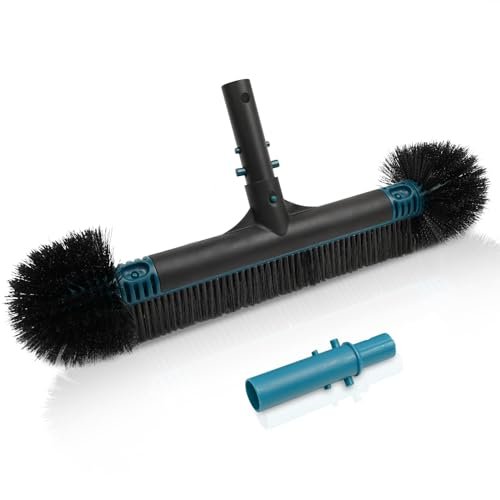 Poolvio 20" 2-in-1 Pool Brush Head (Walls & Floor)
Sturdy 20-inch brush head that clips onto any standard telescopic pole. View on Amazon →
Poolvio 20" 2-in-1 Pool Brush Head (Walls & Floor)
Sturdy 20-inch brush head that clips onto any standard telescopic pole. View on Amazon →
 Taylor K-2006C Complete FAS-DPD Pool & Spa Test Kit
The FAS-DPD kit pool pros trust — reads chlorine accurately even at shock/SLAM levels, plus pH, alkalinity, calcium hardness and CYA. View on Amazon →
Taylor K-2006C Complete FAS-DPD Pool & Spa Test Kit
The FAS-DPD kit pool pros trust — reads chlorine accurately even at shock/SLAM levels, plus pH, alkalinity, calcium hardness and CYA. View on Amazon →
Still need help? Ask a Pool & Spa Expert AD
Get a personalized answer from PoolGuy810 — 30 years owning a pool and spa repair company. Describe your issue and get step-by-step help.
Related Pool Guides
Need More Help?
Try our free pool calculators and tools to help diagnose and fix your pool problems.
Browse Pool ToolsSLAM calculator, pH calculator, salt dosing & more