
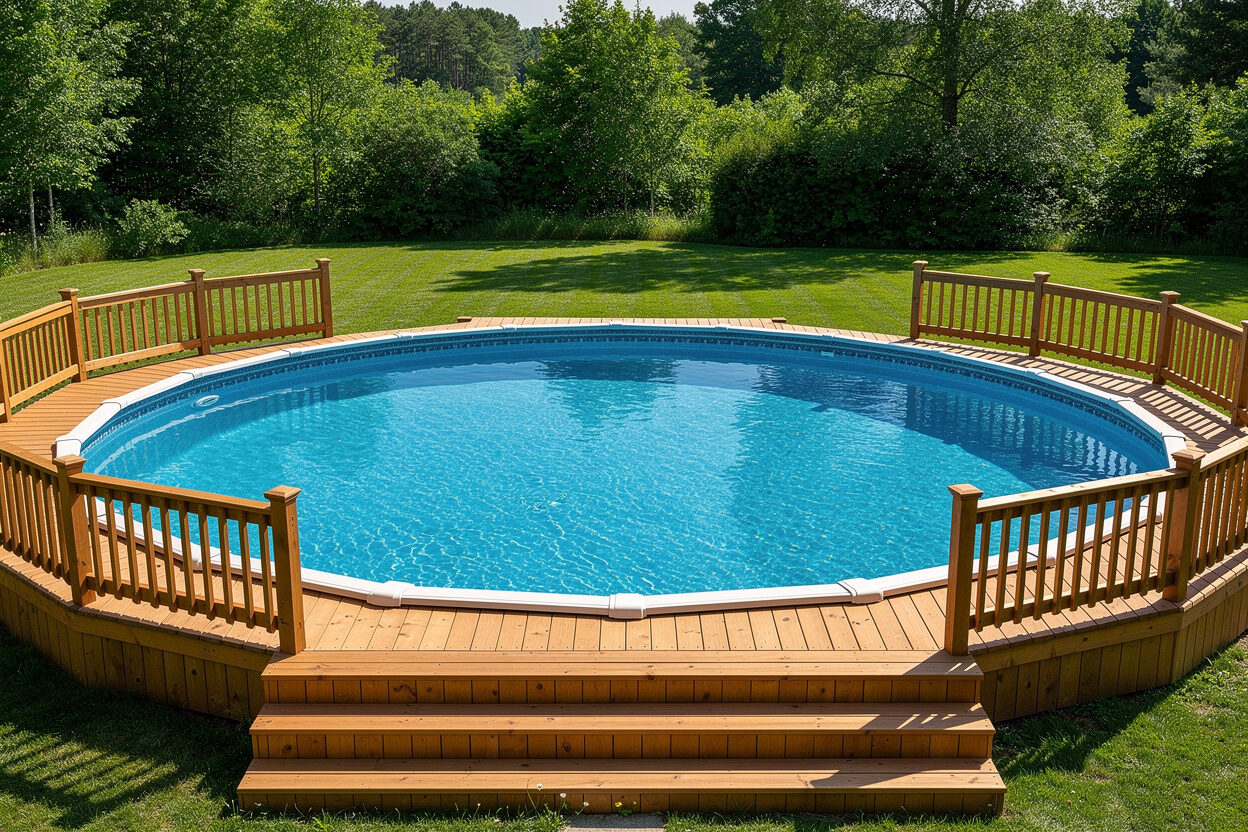
How Long Do Above Ground Pool Liners Last? Complete Guide

Above ground liner replacement - how often?
Read full question
Got hit with three straight days of heavy rain and blazing sun this week, and now I'm wondering if my above ground pool liner is going to need replacing soon. Have a 24' round above ground pool, vinyl liner is 3 years old but starting to show some wear.
How many years should I expect to get out of it? Worth investing in premium liner or just go standard? Want to know what's realistic before it starts leaking.
Quick Answer
Above ground pool liners typically last 6-10 years, with premium vinyl liners potentially lasting up to 15 years. Proper water chemistry, UV protection, and maintenance significantly extend liner life.
Factors That Determine Liner Lifespan
Liner Thickness and Quality
The thickness of your liner is the primary factor in determining longevity. Budget liners at 15-mil thickness offer basic protection but are more susceptible to punctures and UV degradation. Mid-range 20-mil liners provide better durability and chemical resistance. Premium 25-mil and 30-mil liners, while more expensive upfront, can significantly extend replacement intervals.
Water Chemistry Impact
Proper water balance is crucial for liner preservation. Maintain pH between 7.4-7.6 (acceptable 7.2-7.8) - levels above 7.8 promote scaling and cloudiness, while acidic conditions below 7.0 are corrosive and can wrinkle or degrade a vinyl liner. Keep total alkalinity at 80-120 ppm to buffer pH swings. Calcium hardness should stay between 175-225 ppm for vinyl liners - higher levels cause scaling, lower levels make water aggressive.
Concentrated chlorine can harm vinyl, but pool-diluted chlorine at the right level for your CYACyanuric Acid (stabilizer) — Sunscreen for your chlorine — it keeps sunlight from burning it off. The catch: the more you have, the more chlorine you need to keep. learn more → will not. Follow the FC/CYAFC/CYA chart — The chart that sets your chlorine target from your stabilizer (CYA) level — the two go together. see the chart → chart for proper chlorine levels - typically 4-6 ppm FCFree Chlorine — The chlorine actively sanitizing your water right now. This is the number you keep an eye on. how much you need → with 30-40 ppm stabilizer (CYA). Test water 2-3 times weekly during swimming season using a quality test kit like Taylor K-2006.
UV Radiation Damage
Direct sunlight is liner enemy #1. UV rays break down vinyl polymers, causing fading, brittleness, and cracking. Pool liners above ground receive more UV exposure than inground pools due to waterline exposure. Consider installing shade structures or using pool covers when not in use.
Maximizing Your Liner's Lifespan
Chemical Balance Best Practices
- Test water 2-3 times weekly during season, monthly during winter
- Never add chemicals directly to liner - pre-dissolve in bucket of pool water
- Avoid chlorine tablets in skimmer baskets - concentrated chlorine damages nearby liner
- Use liquid chlorine (sodium hypochlorite) for routine sanitizing
- Maintain CYA levels to protect chlorine and reduce chemical consumption
Physical Protection Measures
Install pool padding beneath the liner during initial setup. Use protective mats under ladders and steps to prevent wear spots. Remove sharp objects immediately - even small punctures can become major tears. Trim pets' nails and supervise children with toys that could damage the liner.
During winter, maintain water level at manufacturer specifications. Completely draining the pool can cause liner shrinkage and fitting damage. Use a quality winter cover to protect from debris and UV exposure.
Regular Maintenance Tasks
Clean the liner monthly with mild dish soap and soft brush - avoid abrasive cleaners containing bleach or acids. Address stains immediately using vitamin C tablets for metal stains or enzyme cleaners for organic matter. Inspect regularly for small tears that can be patched before becoming major problems.
Signs Your Liner Needs Replacement
- Multiple patches or recurring leaks
- Fading that makes the liner brittle to touch
- Permanent wrinkles that won't smooth out
- Cracking around fittings or waterline
- Stretching that pulls liner away from pool walls
- Staining that cleaning cannot remove
Different Liner Types and Expected Lifespans
Overlap Liners (6-8 years): Most economical option that drapes over pool walls. Easier to replace but more prone to shifting and damage.
Beaded Liners (7-10 years): Lock into a track system for secure fit. More expensive but provide better appearance and stability.
Unibead Liners (8-12 years): Convertible design works as either overlap or beaded. Premium option offering maximum flexibility and durability.
Common Mistakes That Reduce Liner Life
Over-chlorination during algae blooms damages liners faster than gradual algae growth. When dealing with green water, use the SLAMShock Level And Maintain — raise free chlorine to a target based on your CYA and hold it there until the algae is gone. It's a process, not a one-time dose. the SLAM walkthrough → method (Shock Level And Maintain) but monitor chlorine levels carefully - maintain shock level FC based on your CYA level per the FC/CYA chart, but don't exceed necessary levels.
Using trichlor tablets exclusively creates acidic conditions and excessive CYA buildup. Balance with liquid chlorine and monitor CYA levels monthly. Drain and refill partially when CYA exceeds 60 ppm in standard pools.
Ignoring water balance during off-season allows corrosive or scaling conditions to persist for months. Even when not swimming, test and adjust chemistry monthly minimum.
For the full breakdown of safe chlorine levels by CYA level, see our pool water chemistry guide.
 Taylor K-2006C Complete FAS-DPD Pool & Spa Test Kit
The FAS-DPD kit pool pros trust — reads chlorine accurately even at shock/SLAM levels, plus pH, alkalinity, calcium hardness and CYA. View on Amazon →
Taylor K-2006C Complete FAS-DPD Pool & Spa Test Kit
The FAS-DPD kit pool pros trust — reads chlorine accurately even at shock/SLAM levels, plus pH, alkalinity, calcium hardness and CYA. View on Amazon →
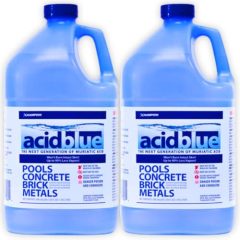 Acid Blue - Low Fume Muriatic Acid for Swimming Pools & Spas - Lower's pH, Reduces Alkalinity - 2 Gallon
View on Amazon →
Acid Blue - Low Fume Muriatic Acid for Swimming Pools & Spas - Lower's pH, Reduces Alkalinity - 2 Gallon
View on Amazon →
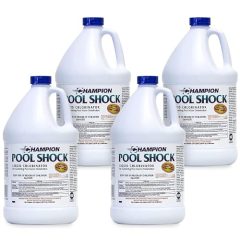 Liquid Chlorine / Sodium Hypochlorite (12.5%)
Everyday sanitizer — the B in BBB View on Amazon →
Liquid Chlorine / Sodium Hypochlorite (12.5%)
Everyday sanitizer — the B in BBB View on Amazon →
Still need help? Ask a Pool & Spa Expert AD
Get a personalized answer from PoolGuy810 — 30 years owning a pool and spa repair company. Describe your issue and get step-by-step help.
Related Pool Guides
Need More Help?
Try our free pool calculators and tools to help diagnose and fix your pool problems.
Browse Pool ToolsSLAM calculator, pH calculator, salt dosing & more