
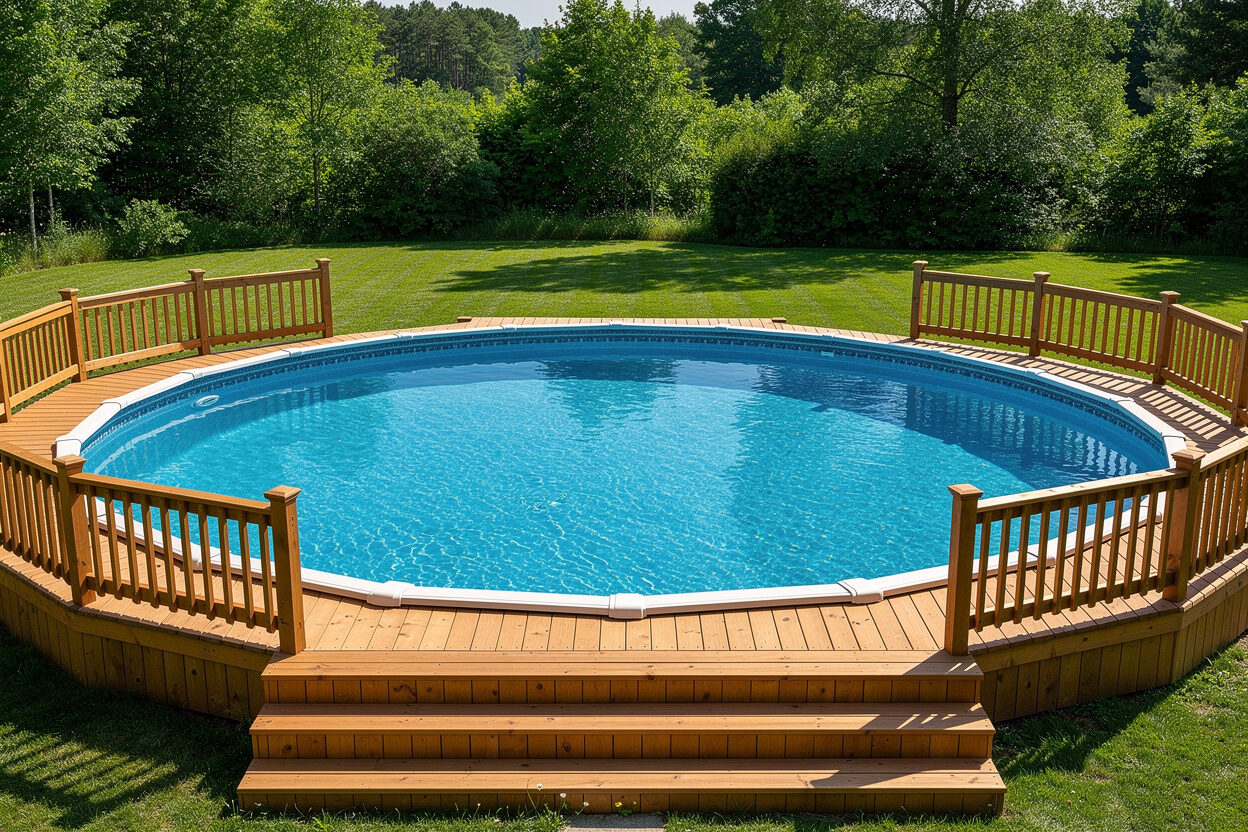
Do You Need Sand Under Above Ground Pool? Installation Guide

What's the best base material for above ground pool installation?
Read full question
The pool delivery truck is coming at 8 AM tomorrow and I'm frantically researching at midnight whether I actually need sand under my 24-foot above ground pool. I've heard different opinions - some people swear by sand, others say you don't need it at all, and I've seen mentions of foam boards and pool pads too.
My yard has a slight slope and some areas are softer soil while others are more compacted. The pool will hold about 13,500 gallons when full, so I want to make sure I get the foundation right to avoid any settling or damage issues later. What are my best options for the base material, and do I really need sand, or are there other alternatives that might work better for my situation?
Quick Answer
Sand is not always required under above ground pools, but it provides excellent leveling and protection. Pool pads, foam boards, or crushed stone can also work depending on your ground conditions.
Step-by-Step Guide to Determining Your Base Needs
- Assess your ground conditions
Walk around your installation area and check for rocks, roots, slopes, or soft spots. If your ground is naturally level with firm soil and no debris, you might not need sand. However, most yards require some form of base preparation. - Measure the slope
Use a string line and level to check if your area slopes more than 1 inch over any 10-foot span. Aim to be level within 1 inch across the entire pool diameter; slopes of 2-3 inches or more become a structural/collapse risk and require leveling, and sand is excellent for this purpose. - Consider your pool type
Soft-sided pools (like Intex) are more forgiving and may not need sand on level ground. Rigid-walled pools with metal frames require more precise leveling and benefit greatly from a sand base. - Evaluate drainage
Check how water drains in your area after rain. If water pools or drainage is poor, sand alone may not be sufficient - you may need to add drainage solutions or choose alternatives. - Calculate your sand needs
If you decide on sand, you'll need masonry sand (not play sand or concrete sand). Calculate approximately 1-2 inches deep after compaction across the entire pool area plus 2-3 feet beyond the pool walls.
When Sand Is the Best Choice
Sand works exceptionally well when you have:
- Uneven or sloped terrain that needs significant leveling
- Rocky or root-filled soil that could damage your liner
- A large pool (18 feet or larger) where precision leveling matters
- Good drainage in your yard
- Budget flexibility - sand is cost-effective for large areas
Proper Sand Installation Process
- Clear and level the area
Remove all grass, rocks, roots, and debris from an area 2-3 feet larger than your pool diameter. - Create a rough level
Use a rake and shovel to get the area approximately level within 1 inch. - Add and spread sand
Pour masonry sand and spread it evenly across the area. Start with about 1 inch depth. - Level the sand
Use a long straight board (2x4 or similar) to screed the sand level. Work from multiple directions to ensure evenness. - Compact lightly
Mist the sand lightly with water and walk on it or use a hand tamper. Don't over-compact as this can create hard spots. - Final leveling check
Use a string line and level to verify the sand is level within 1 inch across the entire area.
Alternatives to Sand
Pool Pads
Commercial pool pads made from foam or geotextile materials offer excellent protection without the mess of sand. They're ideal for smaller pools or when you have relatively level ground. Expect to spend $50-150 depending on pool size.
Foam Board Insulation
Rigid foam insulation boards can be cut to fit and provide both cushioning and insulation. This works well for smaller pools but can be expensive for larger installations.
Crushed Stone Base
For areas with drainage issues, a crushed stone base (topped with landscape fabric and sand or pool pads) provides excellent drainage while maintaining stability.
Common Installation Mistakes to Avoid
- Using the wrong type of sand - Only use masonry sand or pool sand, never play sand (which is too fine, compacts poorly, and can shift or wash away)
- Making the base too soft - Over-watering sand creates soft spots that will settle unevenly
- Insufficient area preparation - Not extending your base beyond the pool walls can cause edge settling
- Ignoring drainage - Sand can wash away or become unstable in areas with poor drainage
- Rushing the leveling process - Take time to get it right initially rather than trying to adjust later
Cost Considerations
Sand typically costs $25-50 per ton, and most above ground pools need 2-4 tons depending on size and required depth. Delivery adds $50-100 to the cost. Pool pads range from $50-200, while foam boards can cost $100-300 for larger pools. Consider the long-term benefits: a proper base prevents liner damage and extends your pool's life significantly.
Professional vs. DIY Installation
While sand installation is a DIY-friendly project, consider professional help if you have significant slope issues, drainage problems, or are installing a large, expensive pool. The cost of professional site preparation ($500-1500) is often worth it compared to potential liner damage or structural issues from improper installation.
Still need help? Ask a Pool & Spa Expert AD
Get a personalized answer from PoolGuy810 — 30 years owning a pool and spa repair company. Describe your issue and get step-by-step help.
Related Pool Guides
Need More Help?
Try our free pool calculators and tools to help diagnose and fix your pool problems.
Browse Pool ToolsSLAM calculator, pH calculator, salt dosing & more