
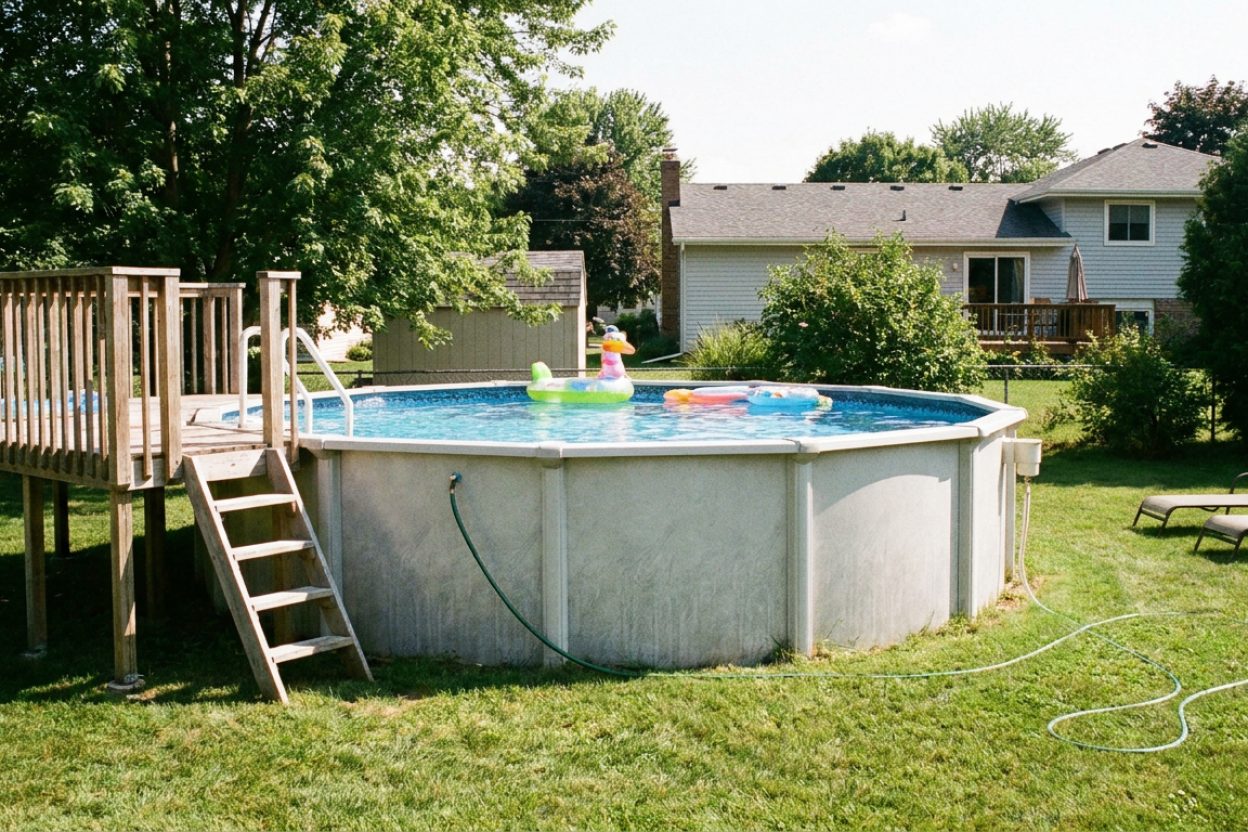
Can You Paint Above Ground Pool? Complete Guide & Best Methods

Fed up with my ugly pool - can I actually paint this thing?
Read full question
Called it—after all that rain last week, my above ground pool looks even more rusty and faded than before, practically mocking me from the backyard. It's become such an eyesore that I'm embarrassed to have people over. I've been researching pool painting but getting mixed information online - some say it works great, others say it's a waste of time and money.
My pool is one of those standard metal frame ones, probably about 15 years old with some rust spots and serious fading. I'm willing to put in the work if it'll actually make a difference, but I need to know if this is even feasible or if I'm just setting myself up for disappointment. What type of paint works on these things, and do I need special prep work?
Quick Answer
Yes, you can paint most above ground pool walls. Since you are coating the exterior (not a water-contact surface), use an exterior direct-to-metal (DTM) enamel over a rust-inhibiting primer for metal walls, and a plastic-bonding primer for resin walls.
Understanding Your Pool Material
Before selecting paint, you need to identify what your above ground pool is made of. Most fall into two categories:
Metal Pools (Steel or Aluminum)
These are the most common and most straightforward to paint. Steel walls may show rust spots over time, making them good candidates for painting—a magnet will stick to steel. Aluminum and galvanized walls can also be painted, but they need a self-etching or galvanized-metal primer for the topcoat to bond, so confirm your material first with the magnet test.
Resin Pools
These plastic composite pools are more challenging to paint because paint doesn't naturally adhere well to smooth plastic surfaces. However, with the right primer, they can be successfully painted.
Best Paint Types for Above Ground Pools
For Metal Pools
Because the outside of the wall never touches pool water, use a durable exterior, direct-to-metal (DTM) coating—not pool or marine paint. A DTM acrylic enamel (such as Rust-Oleum's DTM or Behr Premium Direct-to-Metal) gives a tough, weather- and UV-resistant finish at roughly $30-50 per gallon, covering about 250-350 sq ft, and many DTM products prime and topcoat in one. For a heavily rusted wall, a two-part epoxy DTM is the toughest option (around $50-80 per gallon). An exterior acrylic porch-and-floor enamel (such as KILZ Porch & Patio) is a fine budget pick. What matters is that the coating is rated for exterior metal and UV exposure—chlorine resistance is irrelevant on the outside of the wall.
For Resin Pools
You'll need a plastic-bonding (adhesion) primer, then a quality exterior enamel. XIM 400W Bonder (or INSL-X Stix) and Zinsser Bulls Eye 1-2-3 are good bonding primers for smooth plastic; avoid oil-based stain-blockers like Zinsser Cover Stain, which aren't made for adhesion on slick resin.
Preparation Process
Cleaning and Surface Prep
You're painting the outside of the wall, so there's no need to drain the pool—just work on the dry outer surface. Remove any loose paint, rust, or oxidation with a wire brush or sandpaper. For metal walls, sand lightly to create tooth for better adhesion. Clean the entire surface with a degreasing detergent and let it dry completely before priming.
Rust Treatment for Metal Pools
Apply a rust converter like Corroseal to any rust spots. These products chemically convert rust into a paintable surface. Work in a well-ventilated area and wear appropriate respiratory protection — a respirator with organic-vapor (OV) cartridges for solvent-based products — plus gloves and eye protection when using rust converters, primers, and paints. Read each product’s label and safety data sheet (SDS) before you start. Allow the converter to cure according to manufacturer directions, typically 24-48 hours.
Primer Application
This step is crucial for long-lasting results. For metal pools, use a true rust-inhibiting metal primer such as Rust-Oleum Rusty Metal Primer (Kilz Original is an interior stain-blocker, not a rust primer). For resin pools, apply plastic-bonding primer to the entire surface. Use thin, even coats and allow full cure time between coats.
Painting Process
- Choose optimal conditions: Paint when temperatures are between 50-85°F with low humidity and no rain forecast for 24 hours.
- Apply first coat: Use a high-quality synthetic brush or short-nap roller. Work in 4-foot sections to maintain a wet edge and avoid lap marks.
- Allow proper cure time: Wait the time specified by the manufacturer between coats, as recoat windows vary by product. Most exterior enamels allow recoating after about 4-6 hours; let the final coat cure fully (typically 24-72 hours, longer in cool or humid weather) before exposing it to rain or heavy handling.
- Apply second coat: Most exterior enamels require two coats for optimal durability and appearance. Apply the second coat in the opposite direction from the first.
- Final inspection: Check for missed spots or thin coverage and touch up as needed.
Safety tip: oily or solvent-soaked rags can self-heat and catch fire as they dry — lay them flat outdoors until fully dry, or seal them in a metal container with water, and dispose of leftover paint and solvents per your local hazardous-waste rules. Always follow the manufacturer’s label for thinning, recoat windows, cure time, and cleanup.
Timing and Weather Considerations
Plan your painting project for late spring or early fall when temperatures are moderate and humidity is low. Avoid painting in direct sunlight, as this can cause the paint to dry too quickly and create brush marks or poor adhesion. Early morning or late afternoon applications often work best.
Maintenance and Longevity
A properly painted above ground pool should last 3-5 years before needing touch-ups. Inspect the paint annually for chips, scratches, or wear spots. Address small issues immediately to prevent water infiltration and rust formation. Touch up chips and scratches promptly to keep moisture and rust from getting under the coating; sun and weather, not pool chemistry, are what wear an exterior finish over time.
Cost Considerations
Expect to spend $150-300 for paint and supplies for an average 24-foot round pool. This includes primer, paint, brushes, and cleaning supplies. While this seems expensive, it's much cheaper than replacing the pool and can significantly extend its lifespan.
Common Mistakes to Avoid
- Skipping primer - this is the most common cause of paint failure
- Painting over wet or damp surfaces
- Using interior paint instead of an exterior, direct-to-metal (DTM) formulation
- Applying paint too thickly, causing runs and poor adhesion
- Not allowing adequate cure time between coats
With proper preparation and quality materials, painting your above ground pool can dramatically improve its appearance while protecting the underlying structure from corrosion and wear.
Still need help? Ask a Pool & Spa Expert AD
Get a personalized answer from PoolGuy810 — 30 years owning a pool and spa repair company. Describe your issue and get step-by-step help.
Related Pool Guides
Need More Help?
Try our free pool calculators and tools to help diagnose and fix your pool problems.
Browse Pool ToolsSLAM calculator, pH calculator, salt dosing & more