
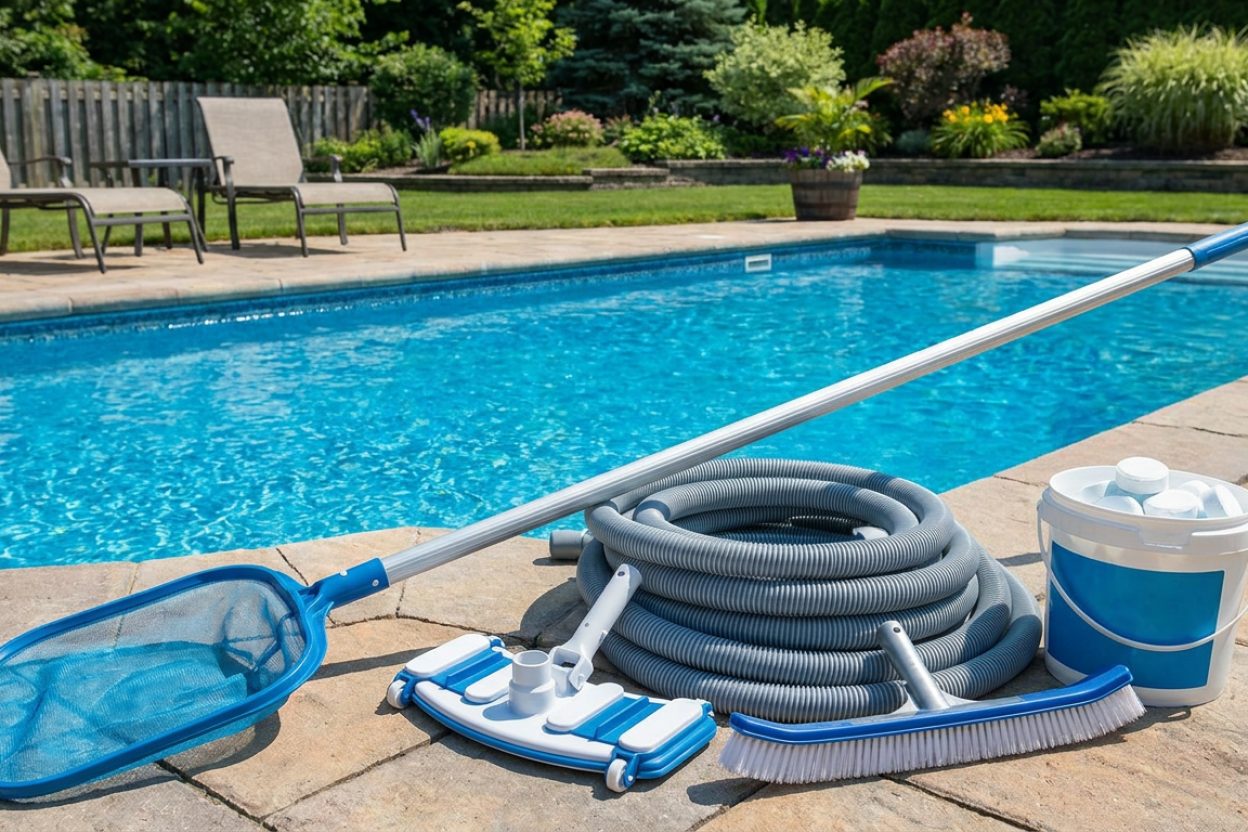
Pool Chemistry Points System - Water Balance Made Simple

What are the main chemistry points I need to track for my pool?
Read full question
Somewhere between my pool guy insisting I need a full testing kit and six different chemicals, I'm wondering if there's actually a simpler way to balance my water. My neighbor mentioned something about key "points" in pool chemistry that are most important to focus on, but I didn't catch all the details.
What are the main chemistry points I should be tracking to keep my water balanced? I'd love to know the target ranges so I can stop guessing and actually maintain clear, safe water. Right now I'm just winging it and probably making things more complicated than they need to be!
Quick Answer
Pool water balance comes down to a few key chemistry points: pH (7.4-7.6), free chlorine based on CYA levels, total alkalinity (80-120 for regular, 60-80 for salt), and calcium hardness (250-350 for plaster, 175-225 for vinyl/fiberglass).
Understanding Pool Chemistry Parameters
Pool water chemistry operates as an interconnected system where each chemical parameter affects the others. Maintaining proper levels in each measurement creates balanced, safe swimming water.
The Essential Chemistry Parameters
pH Level (7.4-7.6): This is your foundation measurement. pH affects how well chlorine works, swimmer comfort, and equipment longevity. Below 7.0 becomes acidic and corrosive, while above 7.8 leaves much less of your chlorine in the strong, active (hypochlorous acid) form, so it sanitizes more slowly.
Free Chlorine (FCFree Chlorine — The chlorine actively sanitizing your water right now. This is the number you keep an eye on. how much you need →) Points: Your sanitizer level depends entirely on your Cyanuric Acid (CYACyanuric Acid (stabilizer) — Sunscreen for your chlorine — it keeps sunlight from burning it off. The catch: the more you have, the more chlorine you need to keep. learn more →) level. Use the FC/CYAFC/CYA chart — The chart that sets your chlorine target from your stabilizer (CYA) level — the two go together. see the chart → relationship — our all-in-one pool calculator estimates the free chlorine target for your CYA. If CYA is 30ppm, maintain FC at 3-5ppm. If CYA is 50ppm, maintain FC at 5-7ppm. This relationship is crucial for effective sanitization.
Total Alkalinity (TATotal Alkalinity — The buffer that keeps your pH from bouncing around. Get this in range and pH gets a lot easier to manage. learn more →) Points: Target 80-120ppm for regular chlorine pools, 60-80ppm for salt water generator pools. TA acts as a pH buffer, preventing wild pH swings that make water management difficult.
Calcium Hardness (CH) Points: Maintain 250-350ppm for plaster pools, 175-225ppm for vinyl or fiberglass. Too low causes etching and equipment damage, too high causes scaling and cloudy water.
Step-by-Step Chemistry Balancing Process
- Test Your Starting Points: Use a quality test kit like Taylor K-2006C to measure pH, FC, TA, and CH. The K-2006C also includes a cyanuric acid (CYA) test, so you don't need a separate kit for it.
- Adjust Total Alkalinity First: If TA is low, add sodium bicarbonate (baking soda). If high, use muriatic acid carefully.
- Balance pH Second: Add muriatic acid to lower pH or sodium carbonate to raise it.
- Set Calcium Hardness: Add calcium chloride if low. If too high, partial water replacement (or reverse osmosis) is the main fix.
- Establish Proper CYA Level: Add stabilizer (cyanuric acid). Target 30-50ppm for regular pools, 70-80ppm for salt water pools. Pre-dissolve the CYA in a bucket of hot water before adding it to the pool, or use the SOCK method (place the CYA in a sock or nylon and place it in the skimmer basket or hang it in front of a return, squeezing occasionally). CYA dissolves slowly, so retest after a few days to a week and do not add more until you are sure the level has stabilized.
- Maintain Free Chlorine: Use liquid chlorine (sodium hypochlorite) rather than granular shock. For a quick estimate, use our all-in-one pool calculator to help you get in the ballpark, but always re-test your water after dosing and follow the product label or verify dosing with the manufacturer's instructions.
Advanced Chemistry Point Management
The SLAM Method for Problem Water
When your pool turns green or cloudy, implement the SLAMShock Level And Maintain — raise free chlorine to a target based on your CYA and hold it there until the algae is gone. It's a process, not a one-time dose. the SLAM walkthrough → (Shock Level And Maintain) process. Calculate your shock level based on CYA: typical shock levels range from 12ppm FC (CYA 30ppm) to 32ppm FC (CYA 80ppm). Use our all-in-one pool calculator for estimated levels based on your CYA reading. Maintain this level until combined chlorine (CCCombined Chlorine — "Used-up" chlorine left over from doing its job. Above about 0.5 ppm is the classic sign water needs a shock. learn more →) is 0.5 ppm or less and you pass the Overnight Chlorine Loss Test (OCLT).
Salt Water Generator Considerations
SWGSalt Water Generator — The "salt cell" that makes chlorine from the salt in a saltwater pool. Same chlorine — it just makes its own. pool terms → pools require different target points: lower TA (60-80ppm) prevents scaling on the cell, and higher CYA (70-80ppm) protects the constantly produced chlorine from UV degradation.
Common Chemistry Point Mistakes
- Chasing pH Without Checking TA: Low TA causes pH bounce, making it impossible to maintain stable pH levels.
- Using Store-Bought Shock: Calcium hypochlorite shock raises CH and pH, creating more problems. Liquid chlorine is cleaner and more predictable.
- Ignoring CYA Levels: Many pool owners never test stabilizer, leading to ineffective chlorine levels or over-chlorination.
- Adding Chemicals Too Quickly: Allow 2-4 hours between adjustments for proper circulation and chemical distribution.
Testing and Maintenance Schedule
Test FC and pH 2-3 times weekly during swimming season. Test TA, CH, and CYA monthly. Always retest 4-6 hours after adding chemicals to verify results before making additional adjustments.
Professional Tips for Perfect Balance
Record your test results to identify trends and seasonal patterns. Keep liquid chlorine and muriatic acid as your primary adjustment chemicals - they're pure, predictable, and don't add unwanted compounds to your water.
For the full breakdown of safe chlorine levels by CYA level, see our pool water chemistry guide.
 Taylor K-2006C Complete FAS-DPD Pool & Spa Test Kit
The FAS-DPD kit pool pros trust — reads chlorine accurately even at shock/SLAM levels, plus pH, alkalinity, calcium hardness and CYA. View on Amazon →
Taylor K-2006C Complete FAS-DPD Pool & Spa Test Kit
The FAS-DPD kit pool pros trust — reads chlorine accurately even at shock/SLAM levels, plus pH, alkalinity, calcium hardness and CYA. View on Amazon →
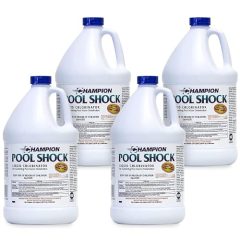 Liquid Chlorine / Sodium Hypochlorite (12.5%)
Everyday sanitizer — the B in BBB View on Amazon →
Liquid Chlorine / Sodium Hypochlorite (12.5%)
Everyday sanitizer — the B in BBB View on Amazon →
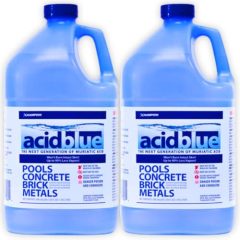 Acid Blue - Low Fume Muriatic Acid for Swimming Pools & Spas - Lower's pH, Reduces Alkalinity - 2 Gallon
View on Amazon →
Acid Blue - Low Fume Muriatic Acid for Swimming Pools & Spas - Lower's pH, Reduces Alkalinity - 2 Gallon
View on Amazon →
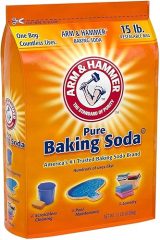 Arm & Hammer Pure Baking Soda (Alkalinity Up)
Raises Total Alkalinity cheaply View on Amazon →
Arm & Hammer Pure Baking Soda (Alkalinity Up)
Raises Total Alkalinity cheaply View on Amazon →
Still need help? Ask a Pool & Spa Expert AD
Get a personalized answer from PoolGuy810 — 30 years owning a pool and spa repair company. Describe your issue and get step-by-step help.
Need More Help?
Try our free pool calculators and tools to help diagnose and fix your pool problems.
Browse Pool ToolsSLAM calculator, pH calculator, salt dosing & more