
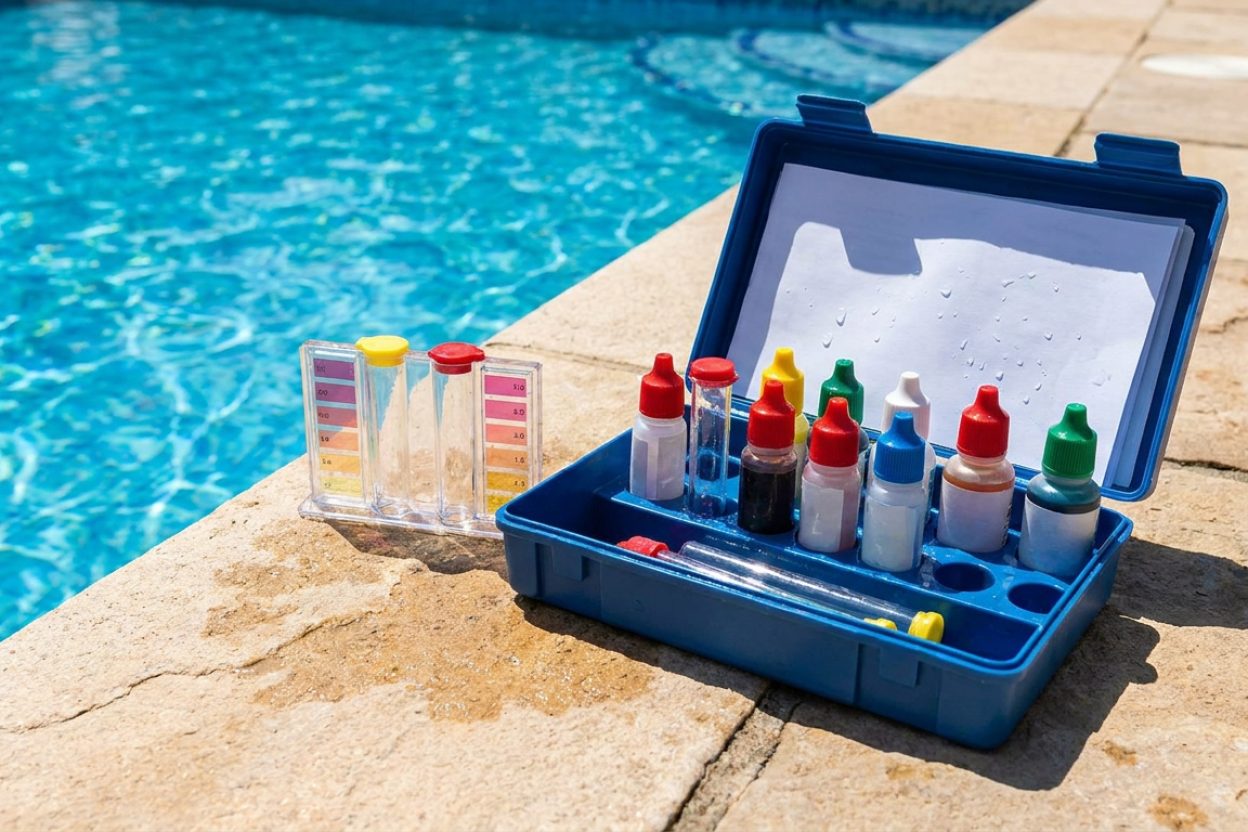
How to Raise Pool Alkalinity: Complete Step-by-Step Guide

What's the best way to bump up my pool's alkalinity levels?
Read full question
Last week my pool's alkalinity dropped and now I'm trying to decide between sodium bicarbonate and alkalinity increaser to get it back up. I've heard baking soda works but I'm not sure how much to use or what the process actually looks like.
Anyone have a step-by-step on the right amount to add and timing? Want to make sure I don't mess this up and end up with more chemistry issues than I started with!
Quick Answer
To raise pool alkalinity, add sodium bicarbonate (baking soda) at a rate of 1.5 pounds per 10,000 gallons to increase alkalinity by 10 ppm. Test first, add chemicals with pump running, and retest after 6 hours.
Understanding Pool Alkalinity
Total alkalinity (TATotal Alkalinity — The buffer that keeps your pH from bouncing around. Get this in range and pH gets a lot easier to manage. learn more →) acts as a pH buffer, preventing rapid pH swings that can damage equipment and make chlorine less effective. The ideal alkalinity range is 80-120 ppm for traditional chlorine pools and 60-80 ppm for salt water generator pools. Low alkalinity causes pH to bounce erratically, leading to equipment corrosion, plaster etching, and swimmer discomfort.
Testing Your Current Alkalinity Level
Before adding any chemicals, you need an accurate baseline reading. Use a reliable test kit like the Taylor K-2006C or a quality digital tester. Pool store test strips are notoriously unreliable for alkalinity readings. Test your water in the morning before the sun affects the chemistry, and ensure your hands are clean to avoid contaminating the sample.
If your alkalinity is below 80 ppm, you'll need to raise it. Calculate the difference between your current level and target level to determine how much sodium bicarbonate to add.
Calculating Sodium Bicarbonate Dosage
For the amount that fits your pool, try our easy-to-use pool calculator or browse our pool guides rather than scaling it by hand — then add gradually and retest.
For large adjustments over 20 ppm, split the addition into multiple doses over several days to avoid overshooting your target.
Step-by-Step Application Process
- Turn on your circulation system - The pump should run throughout the entire process and for at least 6 hours afterward
- Choose your sodium bicarbonate source - Pure baking soda from the grocery store works perfectly and costs less than pool-specific alkalinity increasers
- Pre-dissolve if adding large amounts - For additions over 5 pounds, dissolve the sodium bicarbonate in a bucket of pool water first
- Add gradually around the pool perimeter - Pour slowly while walking around the deep end, allowing the circulation system to distribute the chemical
- Brush the pool bottom - Any undissolved particles should be brushed to help them dissolve completely
- Wait before retesting - Allow 6-8 hours of circulation before testing again, as it takes time for the alkalinity to stabilize
- Adjust pH if necessary - Adding sodium bicarbonate will also raise pH, so you may need to lower it with muriatic acid afterward
The pH Connection
Raising alkalinity will also increase your pH, typically by 0.1-0.8 units depending on your starting alkalinity and pH levels. This is normal and expected. After your alkalinity stabilizes, test your pH. If it's above 7.6, you'll need to lower it using muriatic acid. Add acid slowly and retest, as lowering pH will also slightly reduce alkalinity.
This pH-alkalinity relationship is why water balancing requires patience. Make one adjustment at a time and allow the chemistry to stabilize before making additional changes.
Alternative Products and Methods
While sodium bicarbonate is the preferred method, other options include:
- Sodium sesquicarbonate - Raises both alkalinity and pH, similar to baking soda, but typically costs more
- Sodium carbonate (soda ash) - Primarily for pH but will slightly increase alkalinity
- Commercial alkalinity increasers - Usually sodium bicarbonate with a higher price tag
Avoid using calcium carbonate or lime, as these can cloud your water and create scaling issues.
Common Mistakes to Avoid
Don't dump chemicals in one spot - This can cause temporary high-concentration areas that may bleach vinyl liners or damage plaster.
Don't add multiple chemicals simultaneously - Wait at least 4 hours between different chemical additions to avoid unexpected reactions.
Don't rely on store water testing - Many pool stores use old reagents or untrained staff, leading to incorrect chemical recommendations.
Don't ignore circulation - Adding chemicals without proper circulation leads to uneven distribution and inaccurate test results.
Maintaining Proper Alkalinity Long-Term
Once you achieve proper alkalinity levels, maintaining them requires regular monitoring. Test weekly during swimming season and monthly during winter. Heavy rains can dilute alkalinity, while heavy bather loads and regular acid additions for pH control will gradually lower it.
Keep sodium bicarbonate on hand for minor adjustments. Small, frequent corrections are easier and more accurate than large, infrequent ones. A properly balanced pool with stable alkalinity will require fewer chemical adjustments overall, saving both time and money.
For the full breakdown of safe chlorine levels by CYACyanuric Acid (stabilizer) — Sunscreen for your chlorine — it keeps sunlight from burning it off. The catch: the more you have, the more chlorine you need to keep. learn more → level, see our pool water chemistry guide. For the free chlorine target for your CYA, use the FC/CYAFC/CYA chart — The chart that sets your chlorine target from your stabilizer (CYA) level — the two go together. see the chart → relationship — our all-in-one pool calculator estimates the free chlorine target for your CYA.
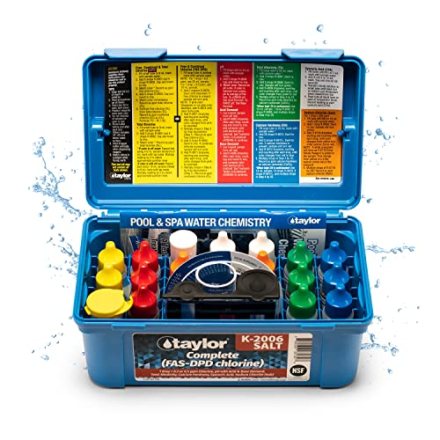
 Taylor K-2006C Complete FAS-DPD Pool & Spa Test Kit
The FAS-DPD kit pool pros trust — reads chlorine accurately even at shock/SLAM levels, plus pH, alkalinity, calcium hardness and CYA. View on Amazon →
Taylor K-2006C Complete FAS-DPD Pool & Spa Test Kit
The FAS-DPD kit pool pros trust — reads chlorine accurately even at shock/SLAM levels, plus pH, alkalinity, calcium hardness and CYA. View on Amazon →
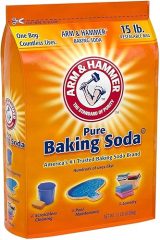 Arm & Hammer Pure Baking Soda (Alkalinity Up)
Raises Total Alkalinity cheaply View on Amazon →
Arm & Hammer Pure Baking Soda (Alkalinity Up)
Raises Total Alkalinity cheaply View on Amazon →
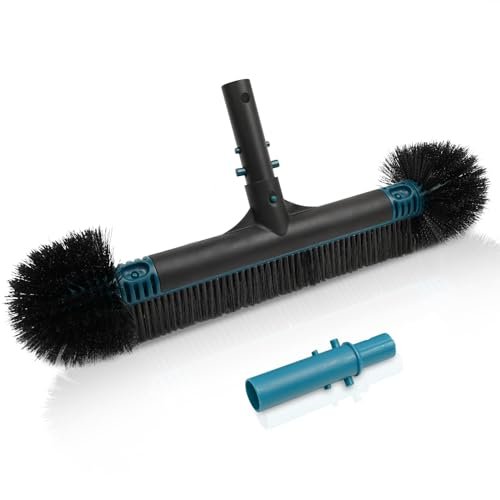 Poolvio 20" 2-in-1 Pool Brush Head (Walls & Floor)
Sturdy 20-inch brush head that clips onto any standard telescopic pole. View on Amazon →
Poolvio 20" 2-in-1 Pool Brush Head (Walls & Floor)
Sturdy 20-inch brush head that clips onto any standard telescopic pole. View on Amazon →
Still need help? Ask a Pool & Spa Expert AD
Get a personalized answer from PoolGuy810 — 30 years owning a pool and spa repair company. Describe your issue and get step-by-step help.
Related Pool Guides
Need More Help?
Try our free pool calculators and tools to help diagnose and fix your pool problems.
Browse Pool ToolsSLAM calculator, pH calculator, salt dosing & more