
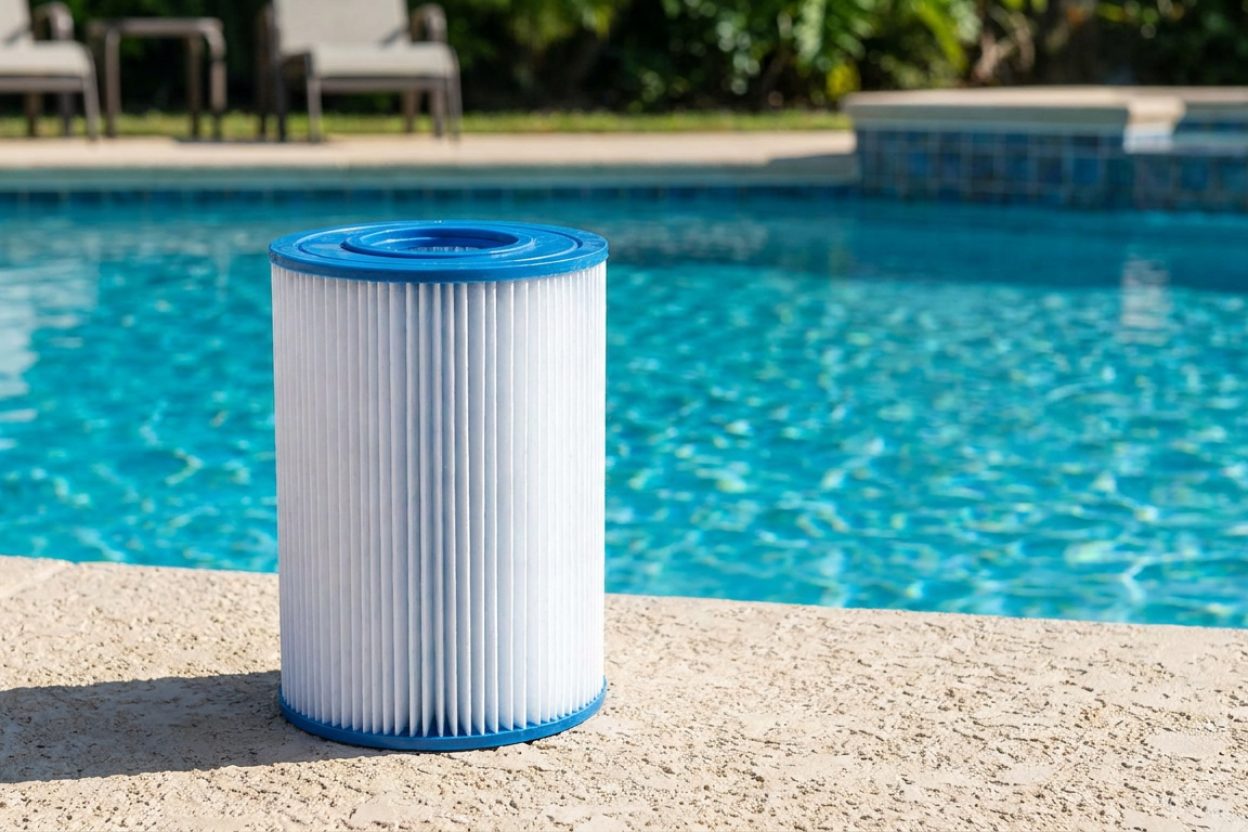
How to Clean Pool Filters: Complete DIY Cleaning Guide

How often should I clean my pool filters and what's the process?
Read full question
Replaced my pool filter cartridge but now I'm standing in the pool supply store aisle staring at all these cleaning products with no clue which ones I actually need. I've got a cartridge filter system and I'm honestly not sure how often I should be cleaning them or what the actual process looks like.
I keep seeing conflicting info online - some people say weekly, others say monthly. And I have no clue if I'm supposed to just spray them off or if there's more involved. Would love some straightforward guidance on timing and the actual steps so I don't mess anything up!
Quick Answer
Yes, you can clean pool filters and should do so regularly. Cartridge filters need an occasional rinse and a chemical deep-clean only about 1-3 times a year (or when pressure rises ~25% above clean), sand filters should be backwashed when the pressure gauge rises ~20-25% (about 8-10 PSI) above the clean starting pressure rather than on a fixed schedule, and DE filters need backwashing and annual teardowns.
Cleaning Cartridge Filters
Cartridge filters are the easiest to clean and most common in residential pools. Here's how to properly maintain them:
Basic Cleaning (Every 2-4 Weeks)
- Turn off the pump and release system pressure through the air relief valve
- Remove the filter housing lid carefully to avoid damaging the O-ring
- Lift out the cartridge(s) using the top handle - never grab the pleated material
- Rinse with a garden hose from top to bottom, working between each pleat
- Rotate the cartridge and rinse from the inside out to remove trapped debris
- Inspect for damage - look for frayed pleats, collapsed areas, or excessive wear
- Reinstall when clean and restart your system
Deep Cleaning (1-3 Times Per Year)
For thorough cleaning, cartridge filters need chemical treatment to remove oils, lotions, and mineral buildup:
- Prepare a cleaning solution using either TSP (trisodium phosphate) or specialized cartridge cleaner
- Soak the cartridge for 8-12 hours in the cleaning solution
- Rinse thoroughly with fresh water before reinstalling
- Consider rotating cartridges - use one set while cleaning another for uninterrupted filtration
Pro tip: Replace cartridge elements every 2-5 years, or sooner if the pleated material starts deteriorating.
Cleaning Sand Filters
Sand filters require regular backwashing to remove trapped contaminants and maintain flow rates:
Backwash by Pressure, Not Schedule
- Turn off the pump and set the multiport valve to "Backwash"
- Turn the pump back on and run for 2-3 minutes until the sight glass runs clear
- Turn off the pump and switch to "Rinse" mode
- Run for 30 seconds to settle the sand bed
- Return to "Filter" mode and resume normal operation
When Pressure Rises
Backwash immediately when your pressure gauge reads 8-10 PSI above the clean starting pressure. This ensures optimal filtration efficiency and prevents strain on your pump motor.
Annual Sand Replacement
Sand rarely needs replacing if the water is kept balanced — replace it mainly when you see channeling or heavy calcium scaling, which is often well beyond 5-7 years. Signs you need new sand include:
- Frequent backwashing requirements
- Cloudy water despite proper chemical balance
- Sand particles returning to the pool
- Channeling in the sand bed
Cleaning DE (Diatomaceous Earth) Filters
DE filters provide the finest filtration but require more maintenance attention:
Regular Backwashing
- Backwash when pressure rises 8-10 PSI above starting pressure
- Add fresh DE powder after each backwashing - according to your filter manufacturer's specifications (typically 1 pound per 10 square feet, but always check your specific model's requirements)
- Add DE through the skimmer with the pump running to ensure even distribution
Annual Teardown and Deep Cleaning
- Disassemble the filter housing and remove all DE grids
- Hose down each grid thoroughly to remove old DE and debris
- Inspect grids for tears in the fabric - repair or replace damaged grids
- Clean the manifold and tank of any accumulated DE residue
- Reassemble carefully ensuring proper grid alignment
- Add fresh DE according to manufacturer specifications
Warning Signs Your Filter Needs Attention
Watch for these indicators that your filter cleaning routine needs adjustment:
- Rising pressure gauge readings - clean or backwash immediately
- Decreased water flow from return jets
- Cloudy or dull water despite balanced chemistry
- Shorter intervals between cleanings
- Visible debris bypassing the filter
Safety and Maintenance Tips
Always turn off power to your pump before opening any filter housing. Water under pressure can cause serious injury.
Keep spare parts handy: O-rings, cartridge sets, and DE powder should be readily available for routine maintenance.
Test water chemistry regularly using a reliable test kit like Taylor K-2006. Clean filters work more effectively with properly balanced water chemistry - maintain FCFree Chlorine — The chlorine actively sanitizing your water right now. This is the number you keep an eye on. how much you need → levels according to your CYACyanuric Acid (stabilizer) — Sunscreen for your chlorine — it keeps sunlight from burning it off. The catch: the more you have, the more chlorine you need to keep. learn more → reading using the all-in-one pool calculator.
Document your maintenance: Keep a log of cleaning dates, pressure readings, and any issues. This helps identify patterns and optimize your cleaning schedule.
Regular filter cleaning is one of the most important aspects of pool maintenance. Clean filters not only provide crystal-clear water but also protect your expensive pump motor from overworking and reduce chemical consumption by maintaining optimal water circulation.
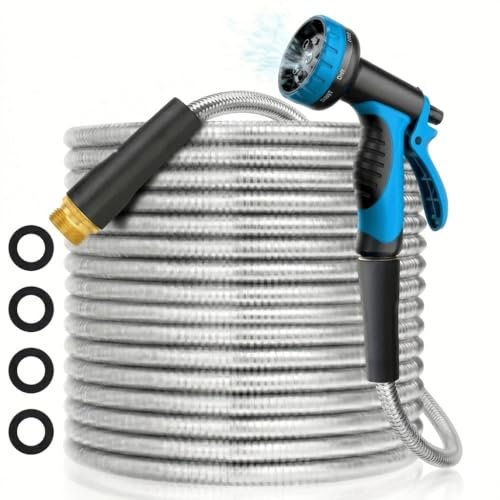 50 ft Flexible Metal Garden Hose (Kink-Free)
Durable hose for filling, priming, and rinsing equipment. View on Amazon →
50 ft Flexible Metal Garden Hose (Kink-Free)
Durable hose for filling, priming, and rinsing equipment. View on Amazon →
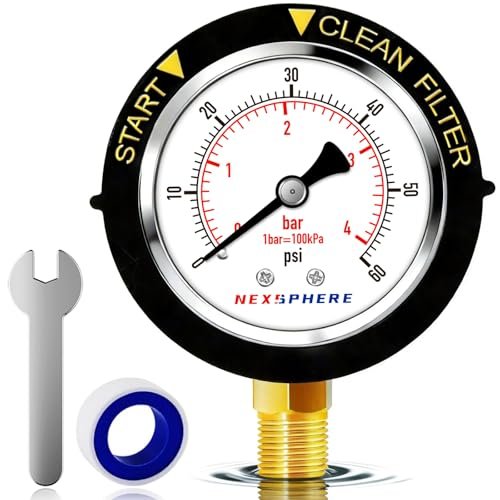 NexSphere Pool Filter Pressure Gauge, 0–60 PSI, 2 in Dial
Replacement back-mount gauge so you can read filter pressure and know when to backwash. View on Amazon →
NexSphere Pool Filter Pressure Gauge, 0–60 PSI, 2 in Dial
Replacement back-mount gauge so you can read filter pressure and know when to backwash. View on Amazon →
Still need help? Ask a Pool & Spa Expert AD
Get a personalized answer from PoolGuy810 — 30 years owning a pool and spa repair company. Describe your issue and get step-by-step help.
Related Pool Guides
Need More Help?
Try our free pool calculators and tools to help diagnose and fix your pool problems.
Browse Pool ToolsSLAM calculator, pH calculator, salt dosing & more