
How Long Before Green Pool Turns Blue? Complete Timeline

New pool owner - how long until my green water clears up?
Read full question
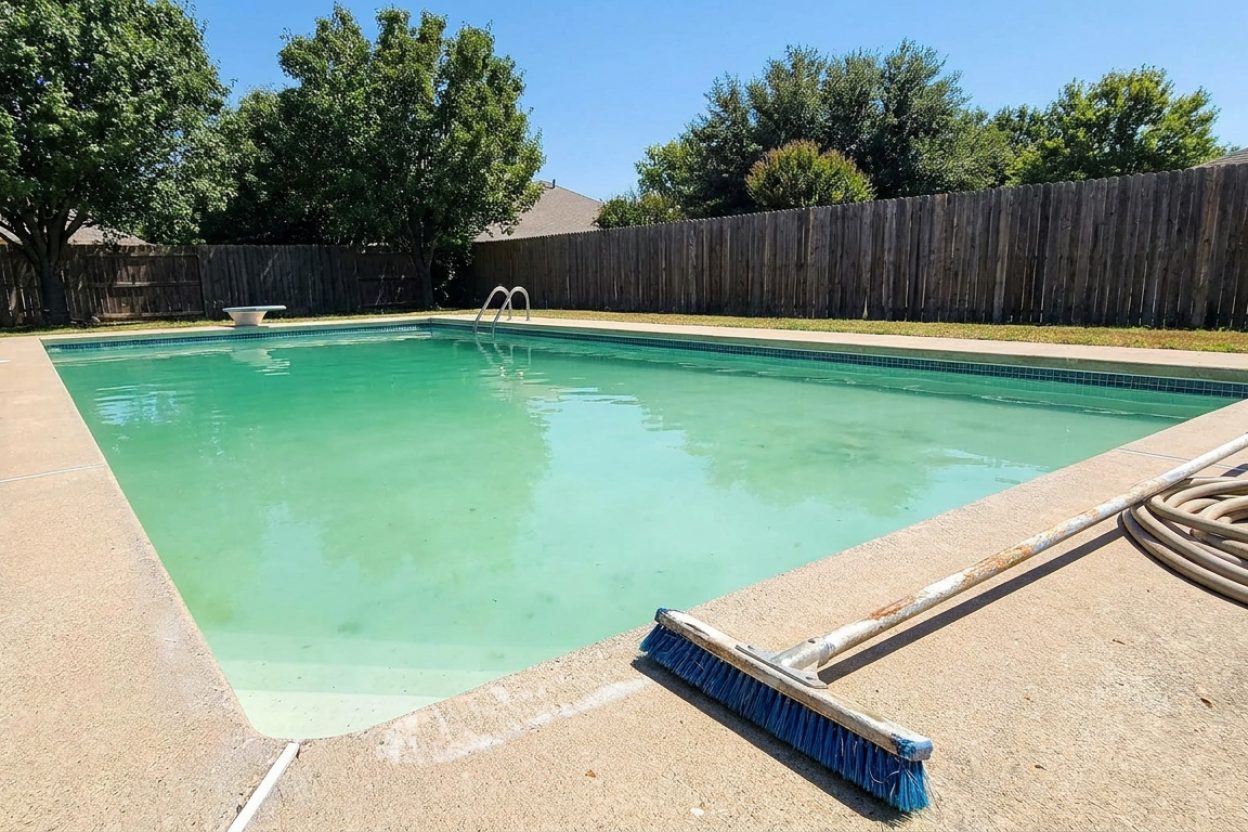
Our chlorine levels hit 3 ppm after two shock treatments, but every guide says the pool should be crystal blue by now—ours looks like a green swamp. Came back to find it completely green - like swamp water green. The pool store told me about something called the SLAM method and sold me a bunch of chemicals.
I've started the treatment but I'm wondering how long this is going to take? My neighbor said it could be days or weeks depending on how bad it is. The algae seems pretty thick and I can barely see a foot into the water. I've got the filter running 24/7 like they told me, but I'm just anxious to know what kind of timeline I'm looking at before I can actually swim again. Any guidance from experienced pool owners would be really appreciated!
Quick Answer
A green pool typically clears in about 2-7 days with the SLAM method — light blooms in a day or two, but heavy "swamp" pools commonly take 3-7 days or longer, especially with a sand filter. The timeline depends on algae severity, proper chemical levels, and continuous filtration.
Timeline Based on Pool Condition
Light Green Pool (12-24 Hours)
If your pool has a light green tint but you can still see the bottom, expect relatively quick results. These pools typically have minimal algae growth and will respond rapidly to proper chlorination. You should see the water begin to turn blue within the first 6-12 hours of treatment.
Medium Green Pool (24-48 Hours)
Pools with moderate green coloration where you cannot see the bottom clearly will take longer. The algae biomass is more substantial, requiring sustained chlorine levels to kill and oxidize all organic matter. Most pools in this category show dramatic improvement by day two.
Dark Green or Black Pool (3-7 Days)
Severely algae-infested pools require patience and persistence. These pools may initially turn lighter shades of green or even cloudy white before becoming blue. Don't get discouraged if progress seems slow - maintain proper chemical levels and the pool will clear.
The SLAM Process Timeline
Day 1: Initial Treatment
Start by testing and adjusting your water chemistry. Your pH should be between 7.2-7.6, with 7.2-7.4 being preferred for maximum chlorine effectiveness, and total alkalinity between 80-120 ppm for traditional chlorine pools. Add liquid chlorine to reach your shock level based on your CYACyanuric Acid (stabilizer) — Sunscreen for your chlorine — it keeps sunlight from burning it off. The catch: the more you have, the more chlorine you need to keep. learn more → (cyanuric acid) level. For 30 ppm CYA, maintain 12 ppm free chlorine continuously; for 50 ppm CYA, maintain 20 ppm free chlorine continuously.
Run your filter 24/7 and brush the pool thoroughly every few hours. You should see the water begin to lighten within 6-12 hours if your chlorine levels are correct.
Day 2-3: Continued Progress
Test chlorine levels every 2-4 hours and add liquid chlorine as needed to maintain shock level. The water should be noticeably clearer, possibly with a cloudy appearance as dead algae particles are filtered out. Backwash or clean your filter as pressure increases - you may need to do this multiple times daily.
Continue brushing vigorously, especially areas where algae tends to hide: steps, corners, behind ladders, and around lights.
Day 3-5: Final Clearing
Most pools achieve crystal clear blue water during this phase. The key indicator is passing the overnight chlorine loss test - when your chlorine level drops less than 1 ppm overnight, you've successfully eliminated the algae.
Factors That Affect Clearing Time
Filtration System Performance
Your filter system dramatically impacts clearing speed. Sand filters may take longer than cartridge or DE filters to remove dead algae particles. Clean or backwash frequently - a clogged filter cannot remove debris effectively, prolonging the process.
Chemical Balance
Improper pH levels slow chlorine effectiveness. High pH (above 7.8) reduces chlorine's killing power, while low pH can corrode equipment and etch pool surfaces. Maintain pH between 7.2-7.6, with 7.2-7.4 being preferred for maximum chlorine effectiveness during SLAMShock Level And Maintain — raise free chlorine to a target based on your CYA and hold it there until the algae is gone. It's a process, not a one-time dose. the SLAM walkthrough → treatment.
CYA Levels and Chlorine Type
Use liquid chlorine (sodium hypochlorite) rather than granular shock, which often contains stabilizer. Too much CYA (above 80 ppm) requires extremely high chlorine levels to be effective. If CYA is over 80 ppm, consider partially draining and refilling your pool. For salt pools, aim for a CYA level of 70-80 ppm.
Water Temperature
Warmer water consumes chlorine faster, so you'll need more frequent additions to hold the same CYA-based shock level — the target FCFree Chlorine — The chlorine actively sanitizing your water right now. This is the number you keep an eye on. how much you need → itself doesn't change with temperature.
Signs Your Pool Is Clearing Properly
Visual Indicators
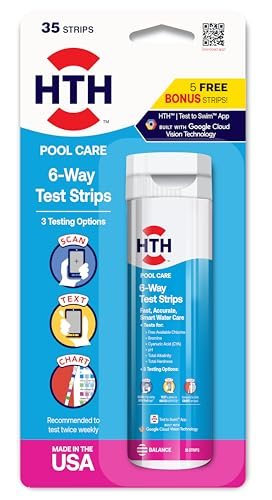
Proper treatment shows progressive lightening from dark green to light green to cloudy blue-white, and finally to crystal clear blue. If your pool isn't lightening after 24 hours of proper chemical levels, recheck your calculations and use liquid test kits rather than test strips for accurate SLAM-level chlorine readings.
Chemical Indicators
Your chlorine demand will decrease as algae dies off. Initially, you may need to add chlorine every few hours. As the pool clears, chlorine will last longer between additions. The overnight loss test is your final confirmation - less than 1 ppm loss, combined chlorine (CCCombined Chlorine — "Used-up" chlorine left over from doing its job. Above about 0.5 ppm is the classic sign water needs a shock. learn more →) of 0.5 ppm or less, and crystal-clear water mean you're done with the SLAM process.
Common Mistakes That Delay Clearing
Don't use algaecide during a SLAM - the high chlorine already kills the algae and will just break the algaecide down, so it's wasted money. Polyquat algaecides also foam at SLAM chlorine levels. Avoid clarifiers throughout the entire SLAM process as they can clog filters. During a SLAM avoid stabilized shock (dichlor or trichlor), which raises CYA and makes the SLAM harder; plain liquid chlorine or cal-hypo is fine, since neither adds stabilizer.
Maintain continuous filtration and proper chemical levels. Stopping treatment too early allows surviving algae to regrow, requiring you to start over.
For the full breakdown of safe chlorine levels by CYA level, see our pool water chemistry guide or use the FC/CYAFC/CYA chart — The chart that sets your chlorine target from your stabilizer (CYA) level — the two go together. see the chart → relationship — our all-in-one pool calculator estimates the free chlorine target for your CYA.
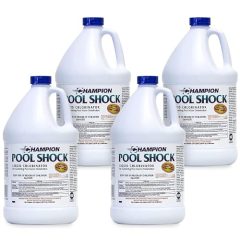 Liquid Chlorine / Sodium Hypochlorite (12.5%)
Everyday sanitizer — the B in BBB View on Amazon →
Liquid Chlorine / Sodium Hypochlorite (12.5%)
Everyday sanitizer — the B in BBB View on Amazon →
 Taylor K-2006C Complete FAS-DPD Pool & Spa Test Kit
The FAS-DPD kit pool pros trust — reads chlorine accurately even at shock/SLAM levels, plus pH, alkalinity, calcium hardness and CYA. View on Amazon →
Taylor K-2006C Complete FAS-DPD Pool & Spa Test Kit
The FAS-DPD kit pool pros trust — reads chlorine accurately even at shock/SLAM levels, plus pH, alkalinity, calcium hardness and CYA. View on Amazon →
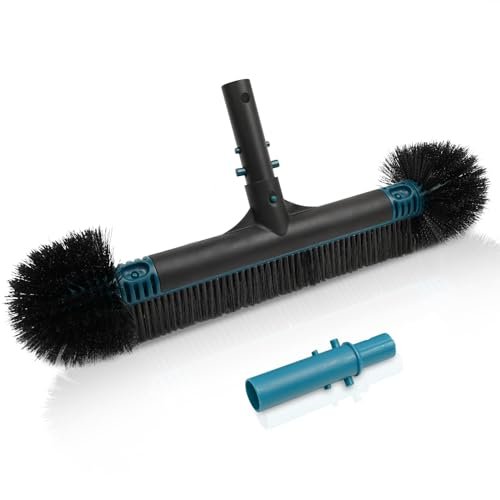 Poolvio 20" 2-in-1 Pool Brush Head (Walls & Floor)
Sturdy 20-inch brush head that clips onto any standard telescopic pole. View on Amazon →
Poolvio 20" 2-in-1 Pool Brush Head (Walls & Floor)
Sturdy 20-inch brush head that clips onto any standard telescopic pole. View on Amazon →
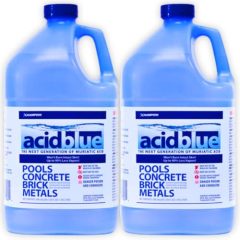 Acid Blue - Low Fume Muriatic Acid for Swimming Pools & Spas - Lower's pH, Reduces Alkalinity - 2 Gallon
View on Amazon →
Acid Blue - Low Fume Muriatic Acid for Swimming Pools & Spas - Lower's pH, Reduces Alkalinity - 2 Gallon
View on Amazon →
Still need help? Ask a Pool & Spa Expert AD
Get a personalized answer from PoolGuy810 — 30 years owning a pool and spa repair company. Describe your issue and get step-by-step help.
Related Pool Guides
Need More Help?
Try our free pool calculators and tools to help diagnose and fix your pool problems.
Browse Pool ToolsSLAM calculator, pH calculator, salt dosing & more