
Do Pools Need Calcium? Complete Hardness Level Guide

What calcium hardness levels should I maintain in my pool?
Read full question
Noticed my 15,000 gallon inground pool is still etching the plaster walls even though pH and chlorine levels are perfectly balanced. Have a plaster pool and not sure what levels to target. Also curious if vinyl and fiberglass pools need different ranges.
What happens if calcium gets too low? Will it damage my equipment or pool surface?
Quick Answer
Whether a pool needs calcium depends on its surface: plaster/gunite pools need it (250-350 ppm) to prevent etching, while vinyl and fiberglass pools don't need it for the surface — keep a modest 150-250 ppm mainly for equipment/heater protection and water balance, and avoid high levels that scale.
Understanding Calcium Hardness in Pool Water
Calcium hardness (CH) refers to the amount of dissolved calcium in your pool water, measured in parts per million (ppm). This isn't just another number to track – calcium hardness is a fundamental component of proper water balance that directly affects your pool's equipment, surfaces, and overall water quality.
When water lacks sufficient calcium, it becomes "aggressive" or "hungry" water that will actively seek calcium from any available source. In your pool, this means it will leach calcium from plaster walls, concrete decking, tile grout, and even metal equipment components. Conversely, excessive calcium creates its own problems by precipitating out of solution and forming unsightly scale deposits.
Ideal Calcium Hardness Levels by Pool Type
Plaster and Concrete Pools
For traditional plaster or concrete pools, maintain calcium hardness between 250-350 ppm. These surfaces contain calcium compounds that can be dissolved by aggressive water, making adequate calcium levels essential for surface protection. New plaster pools may require slightly higher levels (300-350 ppm) during the first month to prevent aggressive water from etching the fresh plaster surface.
Vinyl and Fiberglass Pools
Vinyl liner and fiberglass pools can operate safely with lower calcium levels, typically 150-250 ppm. Since these surfaces don't contain calcium compounds, the primary concern is protecting metal equipment components like heat exchangers, pump housings, and ladder hardware from corrosion.
Saltwater Pools
Saltwater chlorine generator pools should maintain calcium hardness on the lower end of the recommended range (250-300 ppm for plaster, 175-225 ppm for vinyl/fiberglass) because the electrolytic process can cause calcium to precipitate more readily, leading to scale buildup on the generator cell.
Testing Calcium Hardness Levels
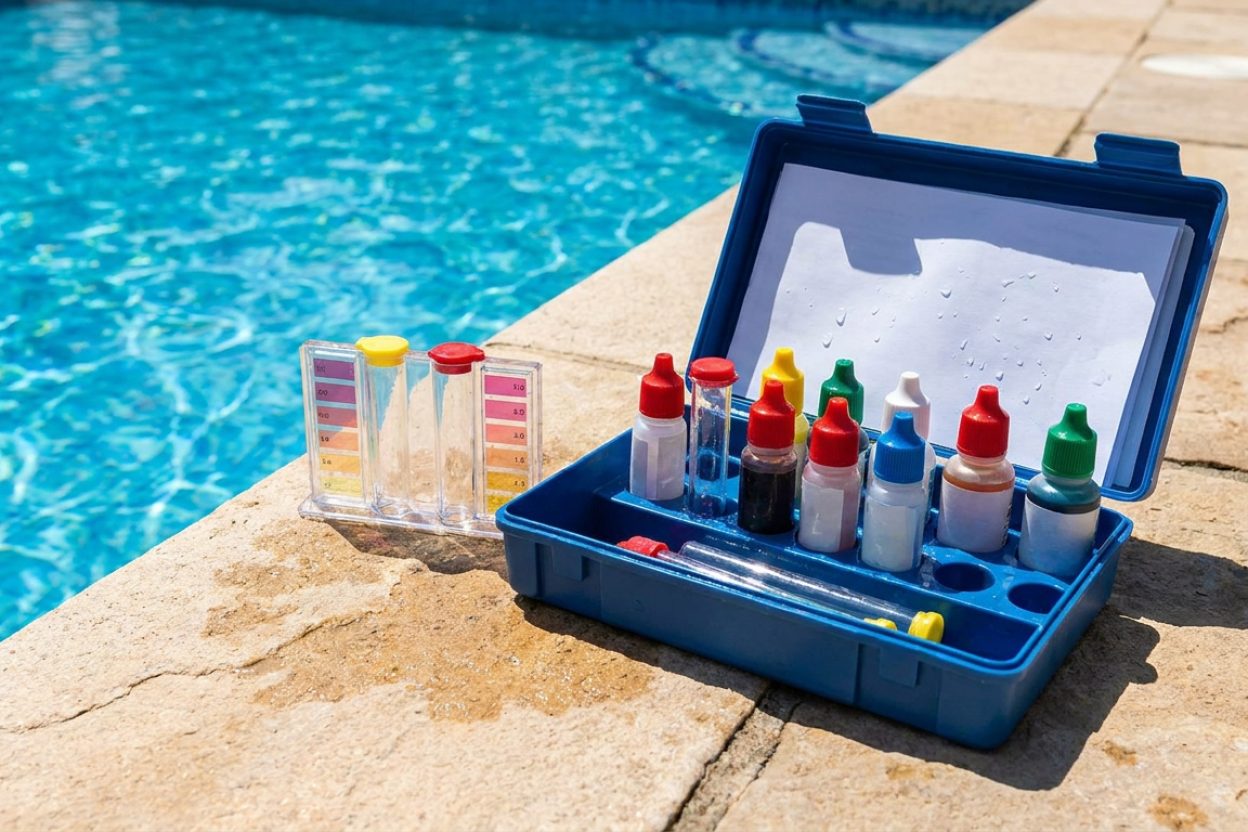
Test calcium hardness monthly using a reliable test kit. The Taylor K-2006 test kit gives an accurate calcium hardness reading using a drop-count titration method. Digital test strips can provide quick readings but may be less precise for calcium measurements.
When testing, collect water from elbow depth, away from return jets and skimmers. Test water that's been circulating for at least 8 hours and is within normal temperature range. Extremely hot or cold water can affect calcium solubility and test accuracy.
Raising Calcium Hardness
To increase calcium hardness, add calcium chloride (also called calcium increaser or hardness increaser). The general dosage is:
- Add 1.25 pounds of calcium chloride per 10,000 gallons to raise hardness by 10 ppm
- Always dissolve calcium chloride in a bucket of water before adding to the pool
- Add the solution slowly around the pool perimeter with the pump running
- Brush pool surfaces after addition to prevent localized concentrations
- Wait 12-24 hours before retesting
Safety Warning: Calcium chloride generates heat when dissolved. Always add the chemical to water, never water to the chemical, and use proper protective equipment.
Lowering Calcium Hardness
Reducing calcium hardness is more challenging than increasing it. Your options include:
Partial Water Replacement
The most effective method is replacing a portion of pool water with fresh water that has lower calcium content. Calculate the percentage of water to replace using this formula: (Current CH - Target CH) ÷ Current CH = Percentage to replace
Reverse Osmosis Treatment
Professional mobile reverse osmosis services can filter existing pool water to remove excess minerals, including calcium. This option is cost-effective for large pools or when water conservation is important.
The Langelier Saturation Index Connection
Calcium hardness works in conjunction with pH, total alkalinity, water temperature, and total dissolved solids to determine your water's saturation level. The Langelier Saturation Index (LSI) calculates whether your water is balanced, aggressive, or scale-forming. Proper calcium levels help maintain an LSI between -0.3 and +0.3, indicating balanced water.
Common Calcium-Related Problems
Low Calcium Issues
- Etching and pitting of plaster surfaces
- Corrosion of metal equipment and fittings
- Difficulty maintaining proper pH levels
High Calcium Issues
- Cloudy water that doesn't clear with filtration
- Scale deposits on surfaces and equipment
- Clogged filters requiring frequent cleaning
Seasonal Calcium Management
Calcium hardness can fluctuate seasonally due to evaporation, rainfall, and temperature changes. Summer evaporation concentrates minerals, including calcium, while heavy rainfall dilutes levels. Test more frequently during extreme weather and after significant water loss or addition.
In areas with hard water, be particularly vigilant about scale formation during hot weather when calcium solubility decreases. Conversely, areas with soft water may need more frequent calcium additions, especially after heavy rains or when adding large amounts of fresh water.
Professional Testing and Adjustment
While basic calcium testing can be done at home, consider professional water analysis if you're experiencing persistent water balance issues or have recently had major pool work done. Pool professionals can perform comprehensive testing that includes factors like cyanuric acid levels and dissolved solids that affect calcium behavior in your specific water conditions.
For the full breakdown of safe chlorine levels by CYACyanuric Acid (stabilizer) — Sunscreen for your chlorine — it keeps sunlight from burning it off. The catch: the more you have, the more chlorine you need to keep. learn more → level, see our pool water chemistry guide.
 Taylor K-2006C Complete FAS-DPD Pool & Spa Test Kit
The FAS-DPD kit pool pros trust — reads chlorine accurately even at shock/SLAM levels, plus pH, alkalinity, calcium hardness and CYA. View on Amazon →
Taylor K-2006C Complete FAS-DPD Pool & Spa Test Kit
The FAS-DPD kit pool pros trust — reads chlorine accurately even at shock/SLAM levels, plus pH, alkalinity, calcium hardness and CYA. View on Amazon →
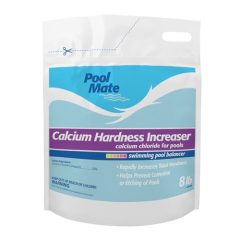 Calcium Chloride — Calcium Hardness Up
Raises calcium hardness (plaster pools) View on Amazon →
Calcium Chloride — Calcium Hardness Up
Raises calcium hardness (plaster pools) View on Amazon →
Still need help? Ask a Pool & Spa Expert AD
Get a personalized answer from PoolGuy810 — 30 years owning a pool and spa repair company. Describe your issue and get step-by-step help.
Related Pool Guides
Need More Help?
Try our free pool calculators and tools to help diagnose and fix your pool problems.
Browse Pool ToolsSLAM calculator, pH calculator, salt dosing & more