
Can You Shock Pool After Adding Muriatic Acid? Safe Timing

Is it safe to shock my pool right after adding muriatic acid?
Read full question
Our 2019 Intex Easy Set just got muriatic acid to lower the pH but now we're wondering if we can shock it right away. I added some muriatic acid to my pool yesterday to bring down the pH (it was reading around 8.2). Now I'm wondering if I can go ahead and shock the pool today or if I need to wait? I don't want to create any dangerous chemical reactions or damage anything. The pool store guy mentioned something about waiting between chemicals but I can't remember exactly what he said. Should I test the water first or just wait a certain amount of time? Thanks for any help - still learning all this pool chemistry stuff!
Quick Answer
Yes, you can shock your pool after adding muriatic acid — just give it a few hours first (around 4 is a good rule of thumb) and retest your water chemistry. Proper pH levels (7.2-7.6) are what really matter for chlorine shock to work effectively.
The Short Answer: Wait and Test First
Despite what you may have heard, adding shock to a pool shortly after dosing with muriatic acid won't destroy your pool equipment or create a dangerous chemical reaction when applied appropriately. Even so, it's worth giving the acid a few hours to fully circulate and adjust your pH first — that waiting time is what makes your shock treatment as effective as possible.
Getting your pH in the right range first is crucial for the shock to do its job effectively.
Why pH Matters Before Shocking
Here's the key point many pool owners miss: chlorine effectiveness is directly tied to pH levels. When your pH is high, a larger share of chlorine shifts to its weaker form, modestly slowing sanitizing and oxidation; in a stabilized pool the effect is small, and high pH mainly causes scaling and cloudiness.
By bringing your pH down to the ideal range of 7.2-7.6 with muriatic acid first, you'll get a slightly more efficient shock and more reliable test readings. In a stabilized pool the difference is modest - shock dosage is driven mainly by your CYACyanuric Acid (stabilizer) — Sunscreen for your chlorine — it keeps sunlight from burning it off. The catch: the more you have, the more chlorine you need to keep. learn more → level and contaminant load, not by small pH changes - but balancing pH first is still good practice.
Test Before You Shock
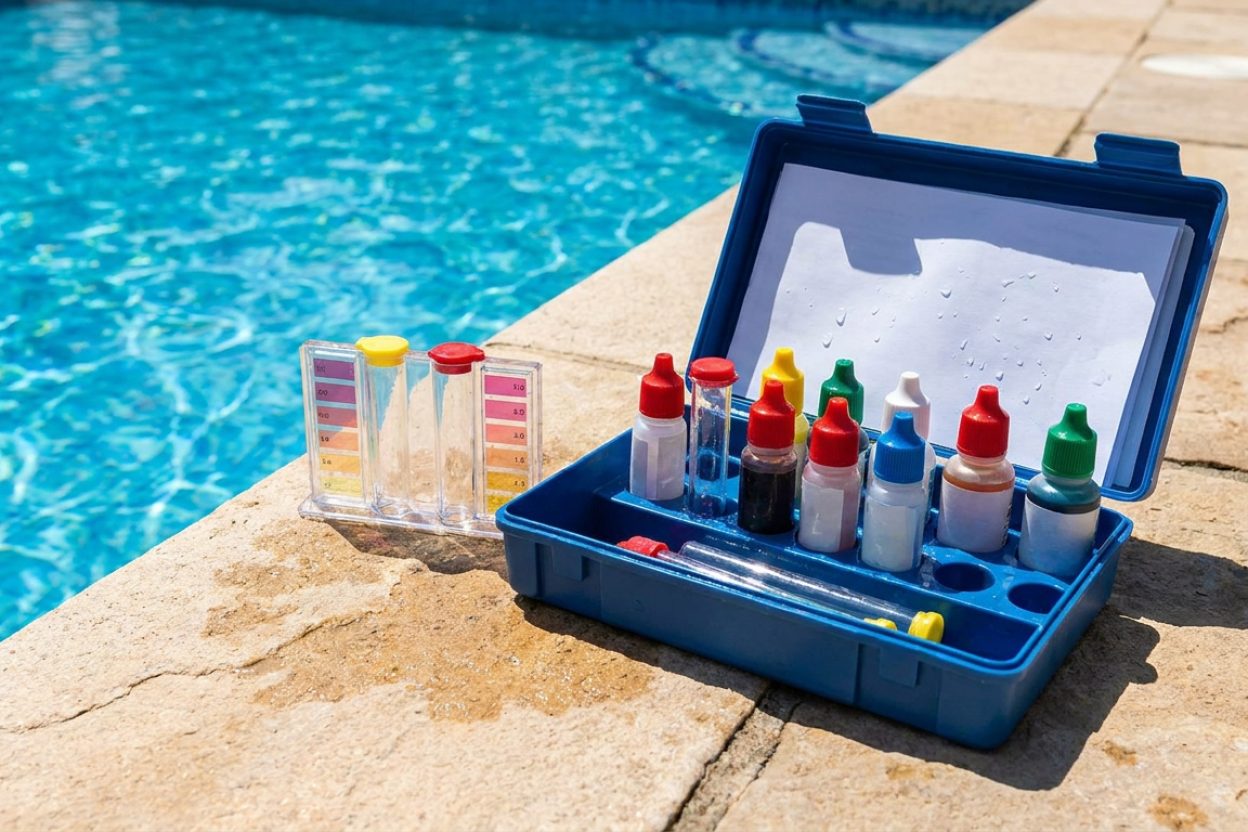
Before adding your shock, test these key parameters:
- pH: Should be between 7.2-7.6 for optimal chlorine effectiveness
- Total Alkalinity: Should be 80-120 ppm to prevent pH bounce
- Free Chlorine: Note your starting level to calculate proper shock dosage
- Combined Chlorine: If above 0.5 ppm, you definitely need to shock
You can use our chlorine calculator to estimate how much shock to add based on your current readings and pool size.
Proper Chemical Sequencing
When you need to add multiple chemicals, following the right sequence prevents problems and maximizes effectiveness:
- pH Adjusters First: Add muriatic acid or pH increaser and let circulate
- Wait and Test: Allow a few hours of circulation (about 4 is a good guideline), then retest
- Alkalinity Adjustments: If needed, adjust alkalinity next
- Sanitizer Last: Add shock or regular chlorine once pH is balanced
This sequence ensures each chemical can do its job without interference and prevents any potential for localized high concentrations that could cause equipment damage or ineffective treatment.
Safety Considerations
While there's no dangerous reaction between muriatic acid and chlorine shock when added hours apart, always follow these safety practices:
- Never mix chemicals in the same container or add simultaneously
- Always add chemicals to water, never water to chemicals
- Keep your pool pump running for at least 4 hours after adding any chemical
- Store muriatic acid and chlorine products separately and never transport together (mixing the two releases toxic chlorine gas)
What If You Need to Add Both Quickly?
If you're dealing with a green pool or urgent situation, you can add muriatic acid and wait just 30 minutes before shocking, but this is less ideal. The key is ensuring good circulation and never adding them at the same time or in the same area of the pool.
For comprehensive guidance on clearing problem water, check out our SLAM method guide which covers the proper chemical sequencing for severe algae situations.
Getting the Best Results
To maximize the effectiveness of your shock treatment after pH adjustment:
- Shock at dusk or night: Sunlight breaks down chlorine quickly
- Brush first: Brush walls and floor before shocking to expose hidden contaminants
- Run your filter: Keep filtration running for at least 8 hours after shocking
- Backwash if needed: Clean sand or DE filters before shocking if it's been a while
Your approach of getting the pH right first shows good instincts - many pool owners skip this step and wonder why their shock treatments don't seem to work well. By waiting for your pH to stabilize in the proper range, you'll get much better results from your shock treatment.
For the full breakdown of safe chlorine levels by CYA level, see our pool water chemistry guide.
 Taylor K-2006C Complete FAS-DPD Pool & Spa Test Kit
The FAS-DPD kit pool pros trust — reads chlorine accurately even at shock/SLAM levels, plus pH, alkalinity, calcium hardness and CYA. View on Amazon →
Taylor K-2006C Complete FAS-DPD Pool & Spa Test Kit
The FAS-DPD kit pool pros trust — reads chlorine accurately even at shock/SLAM levels, plus pH, alkalinity, calcium hardness and CYA. View on Amazon →
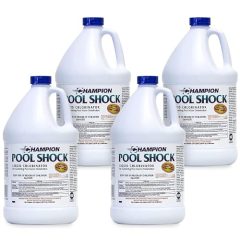 Liquid Chlorine / Sodium Hypochlorite (12.5%)
Everyday sanitizer — the B in BBB View on Amazon →
Liquid Chlorine / Sodium Hypochlorite (12.5%)
Everyday sanitizer — the B in BBB View on Amazon →
Still need help? Ask a Pool & Spa Expert AD
Get a personalized answer from PoolGuy810 — 30 years owning a pool and spa repair company. Describe your issue and get step-by-step help.
Related Pool Guides
Need More Help?
Try our free pool calculators and tools to help diagnose and fix your pool problems.
Browse Pool ToolsSLAM calculator, pH calculator, salt dosing & more